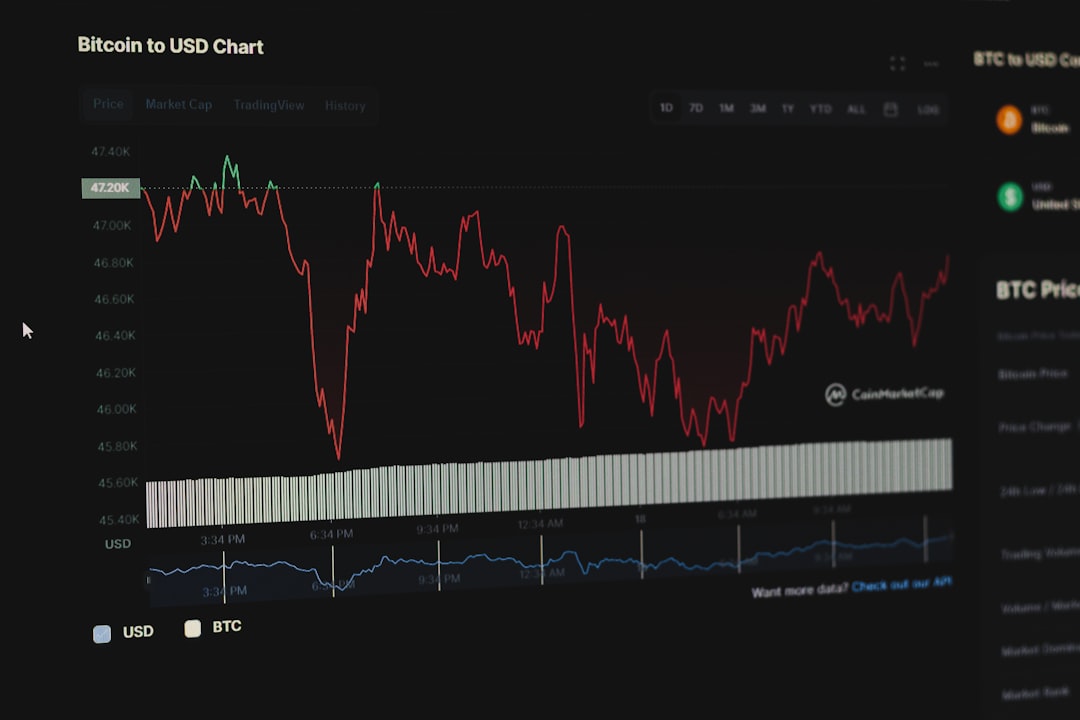
Have you ever felt overwhelmed by the sheer number of indicators cluttering your trading charts? You’re not alone! Many traders, myself included, have spent countless hours trying to decipher complex algorithms, only to find themselves more confused than when they started. What if I told you there’s a powerful, yet surprisingly simple, method that focuses purely on what the market is telling you directly? Welcome to the world of Price Action trading, a strategy that’s gaining even more traction in 2026 for its clarity and effectiveness. Let’s dive in and see how this approach can transform your FX trading journey! 😊
What Exactly is Price Action Trading? 🤔
At its core, Price Action trading is a methodology where traders make decisions based solely on the raw price movement of a financial asset, typically displayed on a “naked” chart without any lagging indicators. It’s about reading the story the market is telling through candlestick patterns, chart formations, and support and resistance levels. Instead of relying on derived data, you’re observing the direct interaction between buyers and sellers. This approach simplifies trading by concentrating only on what the market is doing, making it easier for traders to react quickly.
Many consider Price Action a subset of technical analysis, providing a valuable tool to understand market behavior. It’s a versatile strategy that can be applied to any market, including Forex, stocks, or commodities, and across various timeframes, from minutes to days.
Price Action trading emphasizes that all relevant information about a market is already reflected in its price. This means you don’t need to predict the news; you simply react to how the market is reacting to it through price movement.
The Dynamic FX Market in 2026: Trends and Statistics 📊
The Forex market continues to be the largest and most liquid financial market globally. As of April 2025, the average daily global FX trading volume reached an astonishing $9.6 trillion, a 28% increase from $7.5 trillion per day in 2022. This rapid expansion is expected to continue, with the market size projected to grow by approximately $582 billion between 2025 and 2029, at a compound annual growth rate of around 10.6%.
For 2026, economists are forecasting uneven global growth, with the US economy expected to cool, while increased spending in the EU could accelerate its growth, potentially boosting the Euro. The US dollar maintained its position as the most traded currency, being on either side of 89% of all traded currency pairs worldwide in April 2025. However, some predictions for 2026 suggest potential USD weakness due to aggressive Fed rate cuts, leading to major currencies like EUR, GBP, and JPY gaining ground.
A significant trend shaping the Forex market in 2026 is the increasing role of Artificial Intelligence (AI). AI-backed systems are moving beyond analysis into near-autonomous execution, reading news, assessing risk, and managing trades. This means manual traders need to be even more astute in reading market sentiment and positioning, making Price Action an invaluable skill. The market’s inherent volatility, driven by geopolitical risks and shifting monetary policies, will continue to create numerous trading opportunities.
Global FX Turnover by Instrument (April 2025)
| Instrument | Daily Turnover (Trillions USD) | Share of Total | Growth since April 2022 |
|---|---|---|---|
| FX Swaps | $3.99 | ~41.9% | Slightly increased |
| Spot | $2.96 | ~31.1% | ~40% increase |
| Outright Forwards | $1.85 | ~19.4% | ~59% increase |
| Total Daily Turnover | $9.51 (net-net) | 100% | ~27% increase |
*Data based on the Bank for International Settlements (BIS) 2025 Triennial Survey, April 2025.
While Price Action offers clarity, it’s not infallible. It can sometimes give false signals, especially in choppy or ranging markets. Effective risk management is absolutely essential to mitigate potential losses.
Key Checkpoints: Remember These Essentials! 📌
You’ve come this far! With all the information, it’s easy to forget the most crucial points. Let’s quickly recap the three essential takeaways you should always keep in mind.
-
✅
Price Action Simplifies Your View:
By focusing on raw price, you cut through the noise of indicators, allowing for clearer, more direct market interpretation. -
✅
Risk Management is Non-Negotiable:
Always define your risk per trade and use stop-losses to protect your capital, especially in volatile markets. -
✅
Practice and Patience are Key:
Mastering Price Action takes time and consistent practice to recognize patterns and develop disciplined decision-making.
Common Price Action Patterns for FX Traders 👩💼👨💻
Understanding common Price Action patterns is crucial for identifying potential entry and exit points. These patterns can signal either a continuation of the current trend or a reversal. Here are some of the most important ones to look out for:
- Head and Shoulders / Inverse Head and Shoulders: These are powerful reversal patterns. The Head and Shoulders pattern, often forming at the end of uptrends, signals a potential bearish reversal, while its inverse counterpart suggests a bullish reversal. They are statistically among the most accurate patterns, reaching their projected target almost 85% of the time.
- Double Top / Double Bottom: These are common reversal patterns. A double top forms after a market’s price reaches two highs consecutively with small declines in between, resembling an ‘M’ shape, indicating a bearish reversal. A double bottom, an inverted ‘M’ or ‘W’ shape, signals a bullish reversal.
- Bullish and Bearish Flags: These are continuation patterns that occur after a strong trending move, appearing as small rectangles tilted against the prevailing trend. They represent a brief hesitation before the trend continues.
- Ascending, Descending, and Symmetrical Triangles: These are popular continuation patterns, where the price trades in gradually narrowing ranges. An ascending triangle often signals a bullish continuation, a descending triangle a bearish continuation, and a symmetrical triangle can break in either direction.
- Pin Bars: These are candlestick patterns with a long wick and a small body, indicating a strong rejection of a certain price level. A bullish pin bar suggests buying pressure, while a bearish pin bar indicates selling pressure.
- Engulfing Patterns: These candlestick patterns occur when a large candle completely “engulfs” the previous smaller candle, signaling a strong shift in momentum. A bullish engulfing pattern suggests a potential upward move, and a bearish engulfing pattern suggests a downward move.
While individual patterns are important, always analyze them within the broader market context, considering the overall trend direction and key support/resistance levels for higher reliability.
Implementing Price Action with Robust Risk Management 📚
Price Action trading is powerful, but its profitability is significantly amplified when combined with robust risk management. It’s often said that capital preservation is your primary concern in trading. Here’s how to integrate both effectively:
- Define Your Risk Per Trade: Before entering any trade, know the exact dollar amount you’re willing to lose. A common guideline is to risk no more than 1-2% of your total trading capital per trade.
- Strategic Stop-Loss Placement: Price Action helps in placing logical stop-loss orders. For instance, after identifying a bullish pin bar, you might place your stop-loss slightly below its wick. For engulfing patterns, place it beyond the high/low of the engulfing candle. The goal is to place your stop-loss at a level where the trade setup is invalidated.
- Optimize Risk-Reward Ratios: Always aim for setups with a favorable risk-reward ratio, ideally at least 1:2 or higher (e.g., risking 50 pips to gain 100 pips). This ensures that even with a win rate below 50%, you can still be profitable.
- Position Sizing: Calculate your position size based on your defined risk per trade and the stop-loss distance. This ensures you’re not overleveraging your account.
- Diversification and Hedging: While Price Action focuses on individual assets, consider diversifying your investments across multiple markets or assets to mitigate the impact of adverse price movements in a single market. Hedging, by taking offsetting positions, can also protect against potential losses.
Real-World Scenario: Trading a Bullish Engulfing Pattern 📝
- Trader: Alex, an FX trader with a $10,000 account.
- Strategy: Price Action with 1% risk per trade.
- Market: EUR/USD, daily chart, in an established uptrend.
The Setup:
1) Alex identifies a strong bullish engulfing candlestick pattern forming at a key support level within the uptrend. This pattern signals a potential continuation of the upward movement.
2) He determines his stop-loss should be placed 30 pips below the low of the engulfing candle, which is also just below the support level.
Calculation Process:
– Max Risk: 1% of $10,000 = $100.
– Stop-Loss Distance: 30 pips.
– Pip Value (for EUR/USD standard lot): Approximately $10 per pip.
– Position Size Calculation: ($100 Risk) / (30 pips * $10/pip) = 0.33 standard lots (or 3.3 mini lots).
– Alex sets his take-profit at 90 pips, aiming for a 1:3 risk-reward ratio.
Final Result:
– Alex enters a long position with 0.33 standard lots. If the trade hits his stop-loss, he loses $100. If it hits his take-profit, he gains $300.
– This disciplined approach allows Alex to manage his risk effectively while capitalizing on a high-probability Price Action setup.
This example highlights how Price Action provides clear entry and exit signals, and when combined with a strict risk management plan, it offers a structured approach to trading.

Wrapping Up: Your Path to Profitable Price Action 📝
Price Action trading offers a refreshing and direct approach to navigating the complex Forex markets. By stripping away the clutter of indicators and focusing on the raw language of price, you can develop a deeper understanding of market dynamics and make more informed trading decisions. The simplicity and clarity it offers make it an attractive strategy for both beginners and experienced traders, especially in the evolving 2026 market landscape.
Remember, consistent profitability in FX trading isn’t about finding a magic formula; it’s about discipline, continuous learning, and unwavering risk management. While Price Action patterns can offer high-probability setups, always practice in a demo account, refine your strategy, and never risk more than you can afford to lose. If you have any questions or want to share your Price Action experiences, feel free to drop a comment below! Happy trading! 😊
Price Action Trading: Quick Guide
Always define risk and use stop-losses.