Have you ever felt overwhelmed by the sheer volume of indicators and complex strategies in the Forex market? It’s a common feeling, and honestly, it can be a real barrier to consistent profitability. Many traders, myself included, have found solace and success in simplifying their approach. That’s where Price Action trading, particularly when combined with the robust concepts of Support and Resistance, truly shines. It’s about cutting through the noise and focusing on what the market is telling you directly through its price movements. Ready to demystify FX trading and find a strategy that truly works? Let’s dive in! 😊
Understanding Price Action Trading 🤔
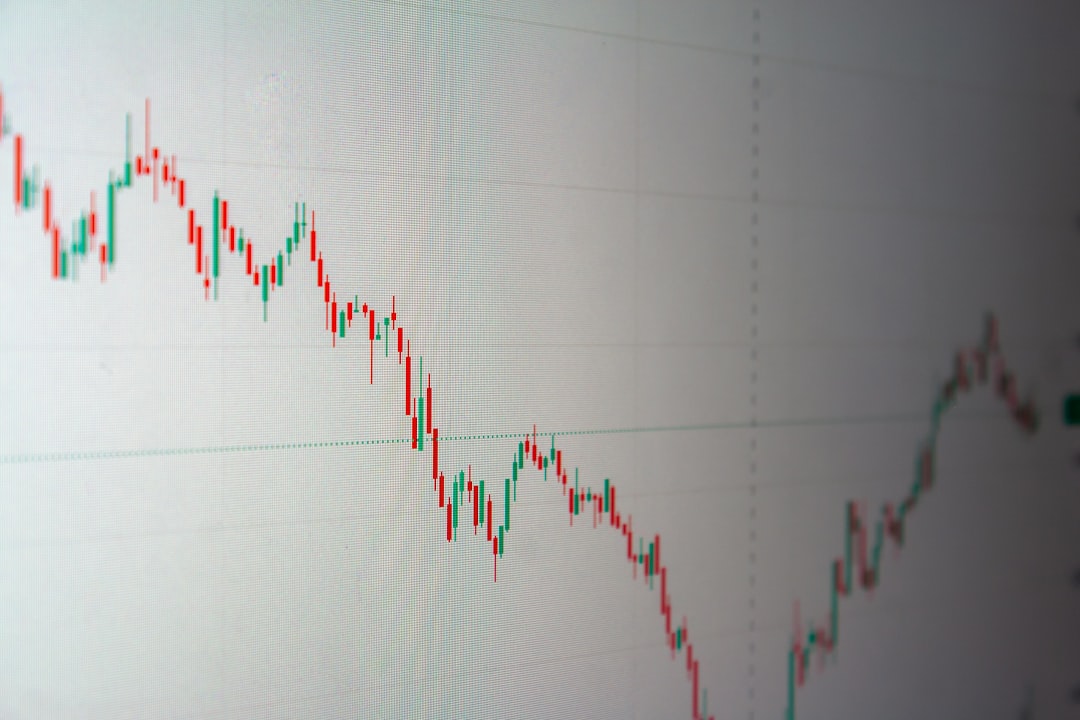
At its core, Price Action trading is the discipline of making trading decisions based on the raw price movement of a currency pair, without relying on lagging indicators. It’s about reading the “story” the market is telling you through candlestick patterns, chart formations, and the overall context of price behavior. This method assumes that all relevant information about a market is already reflected in its price. Traders who use price action believe that historical price patterns tend to repeat themselves, offering valuable insights into future movements.
This approach emphasizes understanding market psychology – the fear and greed of other traders – which is often expressed through how price reacts at certain levels. By focusing on price action, you learn to identify potential turning points, continuation patterns, and overall market sentiment directly from the charts. It’s a skill that, once developed, can provide a significant edge in the fast-paced Forex market.
Price Action is often considered a “pure” form of technical analysis. It empowers traders to react to real-time market dynamics rather than relying on delayed signals from indicators.
The Pillars: Support and Resistance Levels 📊
Support and Resistance (S&R) levels are fundamental to Price Action trading. They represent price points on a chart where the price has historically struggled to move beyond. Support is a price level where a downtrend is expected to pause due to a concentration of demand, while resistance is a price level where an uptrend is expected to pause due to a concentration of supply. These levels are not exact lines but rather zones, and their strength is often determined by how many times price has reacted to them and the volume of trading activity at those points.
Identifying strong S&R levels is crucial. They act as potential entry and exit points, as well as areas to place stop-losses. When price approaches a strong support level, traders look for bullish price action signals (e.g., hammer candlesticks, engulfing patterns) to enter long positions. Conversely, at a resistance level, bearish signals (e.g., shooting stars, bearish engulfing) indicate potential short opportunities.

Key Characteristics of Support & Resistance
| Characteristic | Description | Significance for Trading |
|---|---|---|
| Dynamic Nature | S&R levels are not static; they can break and often reverse roles (e.g., old resistance becomes new support). | Requires constant re-evaluation and adaptation to market changes. |
| Psychological Importance | These levels reflect collective market memory and psychological barriers. | Stronger psychological levels often lead to more significant price reactions. |
| Multiple Timeframes | S&R can be identified on various timeframes (e.g., daily, 4-hour, 1-hour). | Higher timeframe S&R levels are generally more significant. |
| Confluence | When multiple S&R indicators (e.g., horizontal lines, trendlines, moving averages) align. | Confluence strengthens the reliability of an S&R level. |
Never assume S&R levels will hold indefinitely. Always wait for clear price action confirmation before entering a trade. False breakouts are common!
Key Checkpoints: What to Remember! 📌
Have you followed along well so far? Since this article is quite long, let’s quickly recap the most important points. Please remember these three things above all else.
-
✅
Price Action is King:
Focus on raw price movements and candlestick patterns to understand market sentiment and make trading decisions. -
✅
Identify Strong S&R Zones:
Look for areas where price has historically reacted multiple times across different timeframes for higher probability setups. -
✅
Always Wait for Confirmation:
Never trade solely on the expectation of S&R holding. Wait for a clear price action signal (e.g., a strong rejection candlestick) before entering.
Integrating Price Action with S&R: Your Trading Edge 👩💼👨💻
The real power of this strategy comes from combining price action with well-defined support and resistance levels. It’s not enough to just draw lines on a chart; you need to understand how price behaves when it interacts with these critical zones. For instance, a strong bullish engulfing candle forming exactly at a major support level on a daily chart is a much more powerful signal than the same candle forming in the middle of nowhere.
Traders often look for specific candlestick patterns at S&R zones. Common patterns include:
- Pin Bars (Doji or Hammer/Shooting Star): These indicate a strong rejection of a price level. A bullish pin bar at support suggests buyers stepped in, while a bearish pin bar at resistance suggests sellers took control.
- Engulfing Bars: A large candle that completely “engulfs” the previous candle. A bullish engulfing at support is a strong buy signal, and a bearish engulfing at resistance is a strong sell signal.
- Inside Bars: A candle that is completely contained within the range of the previous candle. Often indicates indecision or a pause before a breakout.
By mastering these patterns and their context within S&R, you can develop a robust trading plan.
The higher the timeframe (e.g., daily vs. 15-minute chart), the more significant and reliable the price action signals and S&R levels tend to be. Always consider the broader market context.
Practical Example: Trading a Support Rejection 📚
Let’s walk through a hypothetical scenario to illustrate this strategy. Imagine you’re looking at the EUR/USD daily chart on January 15, 2026. You’ve identified a strong support zone around 1.0850, a level that has held multiple times over the past few months.
Trader’s Situation
- Currency Pair: EUR/USD
- Timeframe: Daily Chart
- Identified Support: 1.0850 (a strong historical level)
Observation & Execution
1) Price approaches the 1.0850 support level. Instead of breaking through, a large bullish pin bar forms, with a long lower wick rejecting the support. This indicates strong buying pressure at that level.
2) The next day, the candle closes higher, confirming the bullish sentiment. You decide to enter a long (buy) position at the open of the next candle, around 1.0870.
3) You place your stop-loss just below the low of the pin bar, at 1.0830, to protect against unexpected downside. Your target is the next major resistance level, perhaps around 1.1050.
Final Outcome
– Entry: 1.0870
– Stop-Loss: 1.0830 (40 pips risk)
– Take-Profit: 1.1050 (180 pips potential reward)
– Risk-Reward Ratio: 1:4.5 (180 pips / 40 pips)
This example demonstrates how waiting for clear price action at a significant S&R level can provide a high-probability trading setup with a favorable risk-reward ratio. It’s about patience and precision, not prediction.
Conclusion: Summarizing Key Insights 📝
Price Action trading, particularly when combined with the robust framework of Support and Resistance, offers a powerful and intuitive way to navigate the Forex markets. By focusing on the raw language of price, you can develop a deeper understanding of market dynamics and make more confident, informed trading decisions. It’s a strategy that prioritizes clarity over complexity, and patience over impulsive action.
Remember, consistent profitability in Forex comes from a well-defined strategy, disciplined execution, and continuous learning. Don’t be afraid to backtest this approach and practice identifying S&R levels and price action signals on your demo account. What are your thoughts on Price Action trading? Do you have any favorite candlestick patterns? Let me know in the comments below! 😊