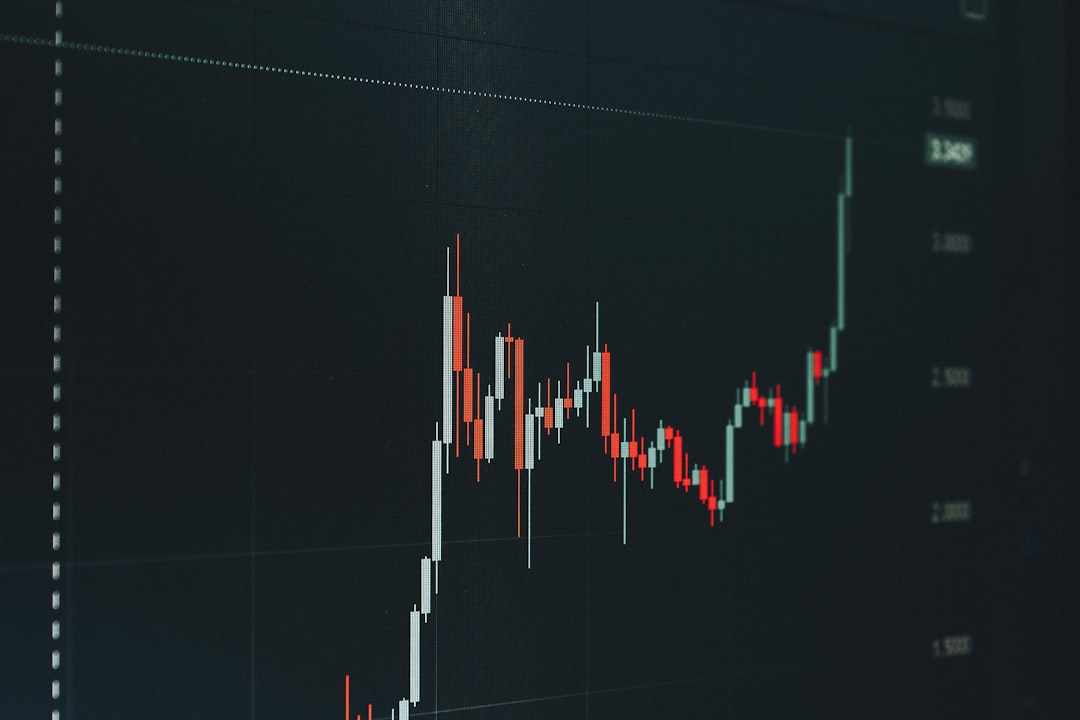
Have you ever felt overwhelmed by the sheer number of indicators cluttering your trading charts? It’s like trying to read a map covered in sticky notes! Many traders, myself included, have been there. In the fast-paced world of Forex, finding a clear, reliable method can feel like searching for a needle in a haystack. But what if the most powerful tool was right in front of you, stripped of all the noise? Today, we’re diving deep into Price Action Trading – a timeless strategy that’s more relevant than ever in 2026. Let’s simplify your trading journey! 😊
What Exactly is Price Action Trading? 🤔
At its core, Price Action Trading is an approach that analyzes the raw movement of price itself, without relying heavily on lagging technical indicators. Think of it as reading the market’s story directly from the chart. Instead of asking what an indicator says, price action traders ask what buyers and sellers are doing right now. This method treats price as the most honest source of information, reflecting the direct interplay of supply and demand.
It focuses on how price moves, forms structures, and reacts at certain key levels. By observing candlestick patterns, support and resistance levels, and overall market structure, traders aim to understand market psychology and make decisions based on real-time behavior.
Indicators are often calculated from past price data, meaning they lag behind current market movements. Price Action, by focusing on direct price, offers real-time insights, allowing for quicker decision-making.
Why Price Action Trading in 2026? Navigating Modern FX Markets 📊
The Forex market is constantly evolving, and 2026 is proving to be no exception. Understanding the current landscape helps us appreciate why Price Action remains a powerful tool.
2025-2026 FX Market Snapshot
| Category | 2025-2026 Trend/Statistic | Significance |
|---|---|---|
| Daily Turnover | Approximately $9.6 trillion in April 2025, up 28% from 2022. | Indicates massive market liquidity and growth. |
| Emerging Markets | Outsized growth in emerging market currency activity, more than double developed markets (3 years to April 2025). | New opportunities and shifting dynamics in currency pairs. |
| Market Volatility (Feb 2026) | Sharp swings due to central bank policy divergence, US tariff uncertainty, and mixed economic signals. | Highlights the need for adaptable strategies that react to real-time price. |
| Retail Trader Profitability | Statistics show that while institutional traders and experienced retail traders can achieve consistent profits (typically 8-22% annually), the majority of beginners still struggle to break even. | Emphasizes the importance of proper education, disciplined risk management, and a well-structured approach. |
In this dynamic environment, Price Action Trading offers several compelling advantages:
- Clarity and Simplicity: By stripping away indicators, charts become clean and easy to read, reducing cognitive overload.
- Real-time Market Insights: Price action provides immediate trading signals as market conditions develop, allowing traders to identify and enter positions at more advantageous price points.
- Universal Application: The principles of supply and demand and price patterns are universal, making Price Action applicable across diverse financial instruments (Forex, crypto, stocks) and timeframes.
- Improved Discipline: Relying on clear price signals rather than subjective indicator readings can foster greater trading discipline and reduce emotional decision-making.
- Adaptability: Price action analysis offers the advantage of providing useful trading signals in both trending and range-bound markets.
While new “AI-powered trading tools” are emerging, many simply repackage existing price data. Price action remains foundational, as indicators will continue to lag. Don’t chase the newest shiny object when the fundamentals still work.
Key Checkpoints: This is What You Need to Remember! 📌
Have you followed along well so far? The article might be long, so let’s recap the most important takeaways. Please remember these three things above all else.
-
✅
Price is King, Indicators are Secondary.
Price Action focuses on raw price movement, offering real-time insights that lagging indicators cannot provide. -
✅
The 2026 FX Market is Dynamic but Understandable.
High turnover and emerging market growth present opportunities, while volatility demands adaptable strategies. -
✅
Simplicity and Discipline Lead to Success.
Price Action’s clarity, universal application, and ability to foster discipline are crucial for consistent profitability.
Mastering Key Price Action Patterns 👩💼👨💻
The heart of Price Action Trading lies in recognizing recurring patterns on your charts. These patterns are visual representations of the ongoing battle between buyers and sellers, and they can signal potential reversals or continuations of trends. Understanding these patterns is crucial for making informed trading decisions.
Common Candlestick Patterns
- Pin Bar: A candlestick with a very small body and a long wick (or “tail”) extending significantly in one direction. It indicates a strong rejection of price at that level and a potential reversal. A long lower wick suggests rejection of lower prices (bullish), while a long upper wick suggests rejection of higher prices (bearish).
- Engulfing Patterns: A two-candle pattern where the second candle’s body completely engulfs the first candle’s body. This signals a strong shift in momentum. A bullish engulfing pattern forms after a downtrend, with a large bullish candle engulfing a smaller bearish one. A bearish engulfing pattern forms after an uptrend, with a large bearish candle engulfing a smaller bullish one.
- Inside Bar: A candlestick that is completely contained within the range (high to low) of the previous candle. It indicates indecision or consolidation in the market, often preceding a breakout.
Key Chart Patterns
- Double Tops and Double Bottoms: These are classic reversal patterns. A Double Top forms after an uptrend, with two peaks at roughly the same level, signaling a bearish reversal. A Double Bottom forms after a downtrend, with two troughs at similar levels, indicating a bullish reversal.
- Head and Shoulders: A powerful reversal pattern consisting of three peaks, with the middle peak (the “head”) being higher than the two surrounding peaks (the “shoulders”). It signals a potential reversal from a bullish to a bearish trend. The inverse Head and Shoulders pattern signals a bullish reversal. Statistically, these are among the most accurate price action patterns.
- Triangle Patterns (Ascending, Descending, Symmetrical): These are typically continuation patterns that form during a trend. They are characterized by price trading in gradually narrowing ranges, resembling a triangle. The direction of the breakout often confirms the continuation of the existing trend.
While these patterns are powerful, they don’t guarantee future price movements. Always consider the context in which a pattern forms, and remember that not every pattern will lead to a valid trade.
Implementing Price Action Trading: A Practical Example 📚
The beauty of Price Action is its practicality. It provides clear entry and exit signals, making it easier to manage your trades. The key pillars of price action trading include identifying the type of trend, recognizing support and resistance levels, and then narrowing down on specific price setups.
Core Entry and Exit Strategies
- Trading Support & Resistance: These are key price levels where the market has historically found buyers (support) or sellers (resistance). Traders look to enter long trades near support and short trades near resistance.
- Breakout Entries: This involves entering a trade when the price breaks above a resistance level (for a bullish move) or below a support level (for a bearish move) with strong momentum. Volume confirmation is often used to validate breakouts.
- Retracement Entries: After a strong move, price often pulls back (retraces) to a key level before continuing in the original trend direction. Traders look for price action signals (like a pin bar) at these retracement levels to confirm an entry in the direction of the main trend.
Real-World Scenario: EUR/USD Trend Continuation

- Market Context: The EUR/USD currency pair is in a clear uptrend, consistently making higher highs and higher lows on the 4-hour chart.
- Signal: Price pulls back to a previous resistance level, which now acts as a strong support zone. A large bullish pin bar forms at this support, with a long lower wick, indicating a strong rejection of lower prices.
Trading Steps
1) Entry: Enter a long trade on the open of the candle immediately following the bullish pin bar.
2) Stop Loss (SL): Place your stop loss just below the tail of the pin bar to protect against unexpected reversals.
3) Take Profit (TP): Set your take profit at the previous swing high, aligning with the established uptrend.
Potential Outcome
– Result: Price rallies in the direction of the main trend, hitting your take profit target.
This example illustrates how Price Action provides a clear, objective framework for making trading decisions. Remember, success in Price Action Trading requires extensive practice, strong emotional discipline, and a deep understanding of market dynamics. Combining it with proper risk management is absolutely essential.
Wrapping Up: Your Path to Trading Clarity 📝
We’ve explored Price Action Trading, a powerful and timeless strategy that cuts through the noise of complex indicators to focus on what truly matters: the direct movement of price. In a dynamic 2026 Forex market, its simplicity, real-time insights, and universal applicability offer a significant edge.
By mastering key candlestick and chart patterns, understanding support and resistance, and applying disciplined entry and exit strategies, you can develop a more intuitive and effective approach to trading. Remember, the journey to consistent profitability is built on continuous learning and practice. Don’t hesitate to ask any questions in the comments below – I’m here to help! 😊