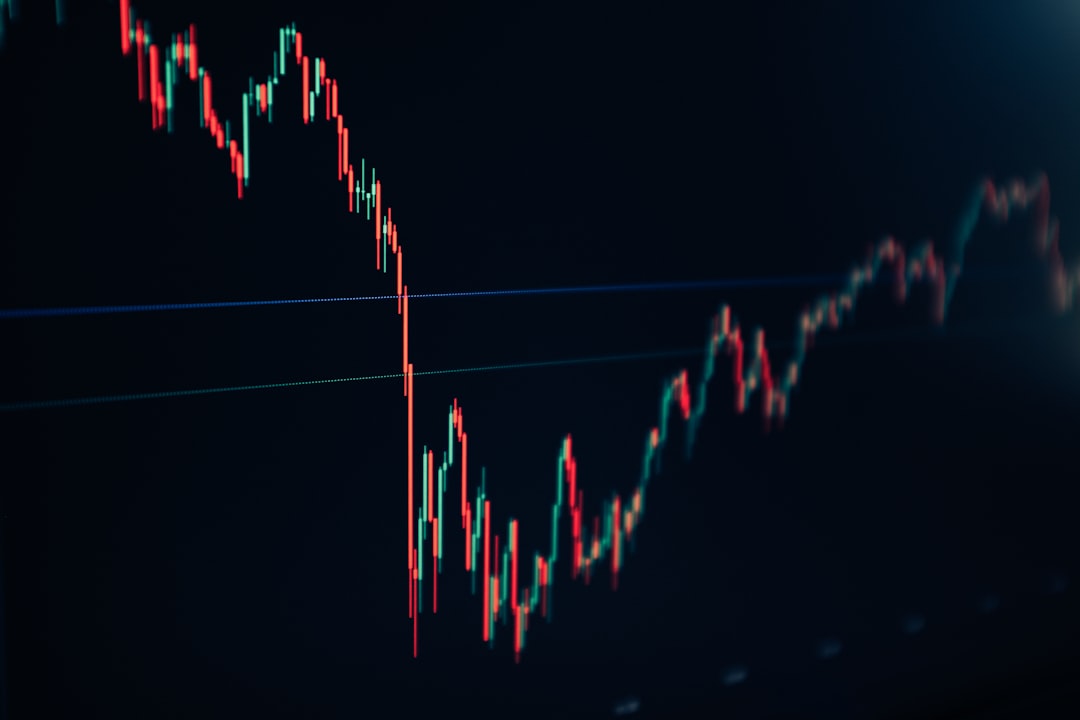
Have you ever felt like you’re missing out on market movements, but don’t have the time to be a day trader glued to your screen all day? Honestly, I’ve been there! The good news is, there’s a fantastic middle-ground strategy that allows you to capitalize on market volatility without the constant stress: swing trading. It’s about identifying those “swings” in price action and riding them for a few days or weeks. In 2026, with markets moving in faster, more defined cycles, mastering swing trading could be your ticket to consistent profits. Let’s dive in! 😊
What is Swing Trading and Why it Matters Now 🤔
Swing trading is a dynamic strategy where traders aim to capture short- to medium-term price movements in a stock or other financial instrument. Unlike day trading, which involves opening and closing positions within the same day, swing traders typically hold positions for a few days to several weeks. This approach is ideal for those who can’t constantly monitor the market but still want to benefit from significant price movements.
In 2026, understanding market volatility regimes is more crucial than ever. Markets are flipping between compression and expansion faster, meaning traders need to be adaptable and volatility-aware. The global markets are exhibiting faster, more defined cycles, driven by factors like the AI infrastructure boom and shifts towards green energy stocks.
Swing trading is the preferred style for 43.3% of traders, making it more popular than day trading (28.3%) as of January 2026. This highlights its growing appeal for active investors seeking a balance between time commitment and potential returns.
Essential Technical Indicators for 2026 Swing Traders 📊
To successfully navigate the markets, swing traders rely heavily on technical indicators to gain insights into trends, momentum, and potential reversal points. Here are some of the most effective indicators to use in 2026:
- Moving Averages (MA): These smooth out price data to help identify trends. Exponential Moving Averages (EMA) are particularly sensitive to recent price changes, making them valuable for swing traders. Look for crossovers where a short MA crosses above a long MA for buy signals, and vice-versa for sell signals.
- Relative Strength Index (RSI): A momentum oscillator that measures the speed and change of price movements. It’s often used to identify overbought or oversold conditions, signaling potential reversals.
- MACD (Moving Average Convergence Divergence): This trend-following momentum indicator shows the relationship between two moving averages of a stock’s price. It helps determine whether an emerging outcome is bullish or bearish.
- Bollinger Bands: These consist of three lines that measure volatility and potential breakouts. Prices tend to stay within the upper and lower bands, and a squeeze in the bands can signal an upcoming significant price move.
- Fibonacci Retracement: A powerful tool to identify potential support and resistance levels based on Fibonacci ratios. The 50% and 61.8% levels are often key entry points for swing traders.
Remember, combining two to four technical indicators from different groups can help build a more balanced view of the markets and reduce conflicting signals.
Key Indicator Applications for Swing Trading
| Indicator | Primary Use | Swing Trading Relevance | 2026 Insight |
|---|---|---|---|
| Moving Averages | Trend identification, dynamic S/R | Confirming overall market direction | 20/50 EMA crossovers particularly effective |
| RSI | Momentum, overbought/oversold | Precise entry points, reversal signals | RSI 45-55 often aligns with Fibonacci entries |
| MACD | Trend strength, momentum | Signal generation, bullish/bearish confirmation | Vital for determining emerging outcomes |
| Fibonacci Retracement | Support/resistance levels | Identifying potential entry/exit points | 50% and 61.8% levels are most reliable |
While technical indicators are powerful, they are often lagging by design. They are better suited for confirming existing market conditions rather than predicting the future. Avoid “analysis paralysis” by sticking to a small, consistent toolkit of 2-4 indicators.
Key Checkpoints: What Every Swing Trader Must Remember! 📌
You’ve made it this far, great job! With so much information, it’s easy to forget the essentials. Let’s recap the three most important takeaways for swing trading success. These are non-negotiable for navigating the markets effectively in 2026.
-
✅
Disciplined Risk Management is Your Shield
Never risk more than 1-2% of your total capital on a single trade. Implement strict stop-loss orders and define your risk-reward ratio before entering any position. -
✅
Process Over Prediction: Adapt, Don’t Guess
In 2026, success in swing trading hinges on process consistency, risk control, and emotional discipline. Markets evolve; wait for the market to speak to you and adjust your strategy accordingly. -
✅
Patience is a Virtue, Especially with Winners
Many swing traders make the mistake of selling too early. Allow your winning trades enough time (often 4-6 weeks) to fully develop and reach their potential targets.
Risk Management: Your Foundation for Sustainable Profits 👩💼👨💻
Let’s be real, trading involves risk. But successful trading isn’t about avoiding risk; it’s about managing it effectively. This is where a robust risk management plan comes into play, especially for swing trading where positions are exposed to overnight and weekend risks.
- The 1% Risk Rule: This is a golden rule for professional traders. Never risk more than 1% (or at most 2%) of your total trading capital on any single trade. For example, with a $10,000 account, your maximum loss per trade should be $100. This protects your capital even during losing streaks.
- Stop-Loss Orders: These are non-negotiable. A stop-loss order automatically sells your asset when it reaches a predetermined price, limiting your potential loss. Always use market stop-loss orders, not stop-limit orders, to ensure your position closes when needed.
- Risk-Reward Ratio: Aim for a minimum risk-reward ratio of 1:2 or 1:3. This means your potential profit should be at least twice or thrice the amount you’re risking. Even with a win rate below 50%, you can still be profitable with a favorable risk-reward ratio.
- Position Sizing: This goes hand-in-hand with the 1% rule. Your position size should reflect the distance to your stop-loss. Wider stops require smaller positions to maintain consistent risk.
- Diversification: Spread your investments across multiple sectors and asset classes to protect against sector-specific downturns. Avoid trading correlated stocks.
Image: A stock market chart illustrating an upward trend, representing potential opportunities for swing traders.
Market volatility in 2026 has been “average” by historical standards (around 15% annualized standard deviation for the CRSP US Total Market Index through April 10, 2026), but this average is skewed by extremes. This emphasizes the need for consistent risk management, as market gyrations are likely to continue mirroring geopolitical volatility.
Real-World Example: A Fibonacci Retracement Swing Trade 📚
Let’s walk through a hypothetical swing trade scenario using a Fibonacci retracement strategy, one of the five most reliable swing trading strategies in 2026.
Trader Jane’s Situation
- Account Size: $20,000
- Max Risk per Trade (1%): $200
- Identified Stock: “TechGrowth Inc.” (TGI), with strong recent momentum (up 25% in the prior 5 weeks) and an orderly pullback.
Trading Process
1) Identify Setup: Jane observes TGI pulling back towards its 50% Fibonacci retracement level, which also aligns with a previous support zone. The RSI is around 50, and a bullish reversal candle is forming.
2) Entry: Jane decides to enter TGI at $100 per share, just above the reversal candle’s high. Her stop-loss is set at $98 (below the 61.8% Fibonacci level), meaning a $2 risk per share.
3) Position Sizing: With a $200 max risk and a $2 risk per share, Jane buys 100 shares ($200 / $2 = 100 shares).
4) Target Setting: Her first profit target is the prior swing high at $106, offering a $6 profit per share. This gives her a favorable risk-reward ratio of 1:3 ($6 profit / $2 risk).
Final Outcome (Hypothetical)
– Result: TGI bounces off the Fibonacci level and reaches Jane’s target of $106 within 8 days.
– Profit: Jane earns $6 per share * 100 shares = $600 profit, a 3% return on her $20,000 account. This single trade exemplifies how a favorable risk-reward can lead to significant gains even with a modest win rate.
This example illustrates the power of combining technical analysis with strict risk management. While not every trade will be a winner, focusing on high-probability setups with a strong risk-reward ratio is key to long-term profitability in swing trading. Remember, the optimal holding window for many swing trades is often 4 to 6 weeks.
Wrapping Up: Your Swing Trading Journey Awaits 📝
Swing trading offers a compelling opportunity for traders to capitalize on market movements without the intensity of day trading. By understanding market trends, utilizing effective technical indicators, and, most importantly, implementing disciplined risk management, you can build a solid foundation for success in 2026 and beyond.
Remember, the market doesn’t reward effort; it rewards timing, patience, and flawless execution. Focus on process consistency, not just predicting outcomes. If you have more questions or want to share your swing trading experiences, please leave a comment below! I’d love to hear from you. 😊
Swing Trading Essentials: Quick Recap
Frequently Asked Questions ❓