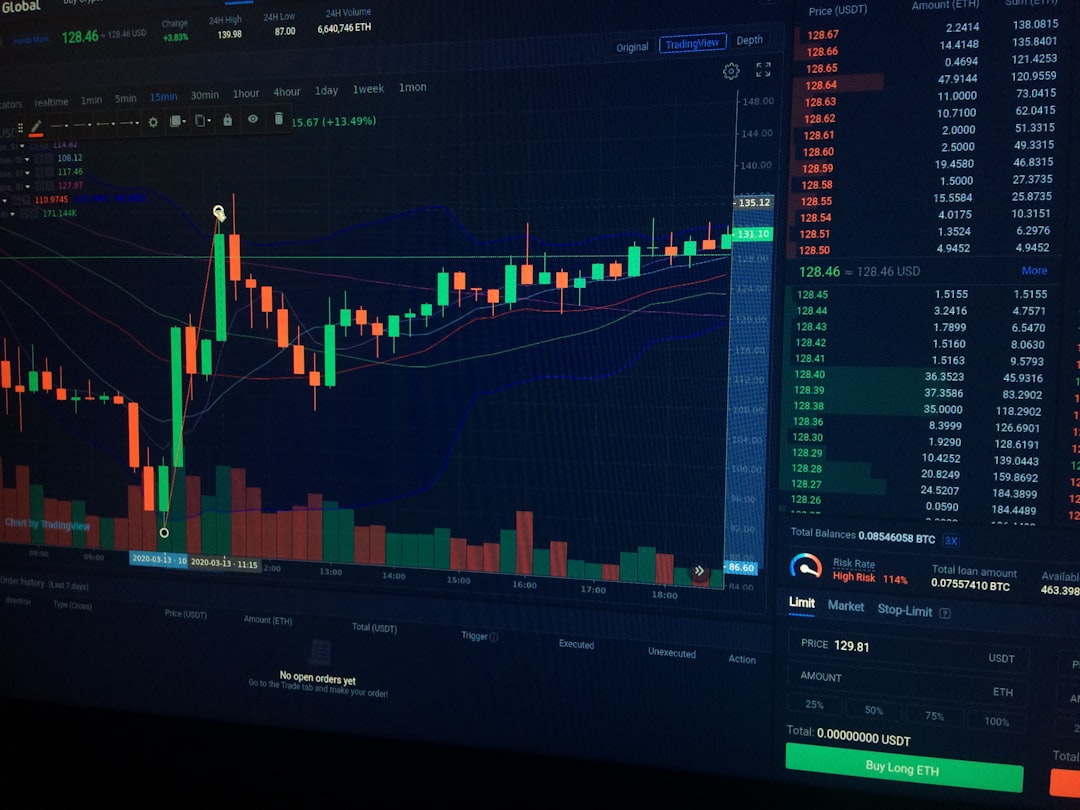
Ever felt like you’re missing out on market opportunities, stuck between the fast pace of day trading and the long wait of traditional investing? You’re not alone! Many investors struggle to find a strategy that balances potential returns with a manageable time commitment. What if there was a way to actively participate in the market, capture significant price moves, and still have a life? That’s where swing trading comes in, offering a compelling middle ground for profit generation. Let’s explore how this powerful technique can transform your trading journey! 😊
What Exactly is Swing Trading? 🤔
Swing trading is a popular stock trading strategy that aims to capture short to medium-term gains in a stock or any financial instrument over a period of a few days to several weeks. Unlike day traders who close positions by the end of the trading day, swing traders hold their positions overnight and sometimes for longer, seeking to profit from “swings” in price action. This approach allows traders to capitalize on trends, reversals, and other market movements that unfold over a slightly extended timeframe.
It’s essentially a sweet spot between the ultra-short-term focus of day trading and the long-term horizon of buy-and-hold investing. Swing traders typically use technical analysis to identify potential entry and exit points, looking for patterns and indicators that suggest a stock’s price is about to make a significant move in one direction or another. The goal isn’t to capture the entire trend, but rather a substantial portion of it.

Swing traders often look for stocks with good liquidity and sufficient volatility to ensure there are noticeable price swings to profit from.
Current Trends & Why Swing Trading Thrives in 2026 📊
The market landscape in early to mid-2026 presents a compelling environment for swing traders. Increased market volatility, driven by shifting interest rates and ongoing geopolitical events, creates more pronounced short-term price movements, which are the bread and butter of swing trading. We’re seeing strong opportunities in sectors like technology and renewable energy, where innovation and policy changes lead to frequent, identifiable price swings.
Furthermore, the advancements in AI-powered trading tools and algorithmic scanners over 2025-2026 have democratized access to sophisticated market analysis. Individual traders can now more easily identify potential entry and exit points, though it’s crucial to remember that human judgment and risk management remain irreplaceable.
Essential Technical Indicators for Swing Traders
| Indicator | Description | Purpose in Swing Trading |
|---|---|---|
| Relative Strength Index (RSI) | Measures the speed and change of price movements. | Identifies overbought or oversold conditions, signaling potential reversals. |
| Moving Average Convergence Divergence (MACD) | Reveals the strength, direction, momentum, and duration of a trend. | Signals trend changes and momentum shifts, indicating entry/exit points. |
| Bollinger Bands | Measures market volatility and identifies potential price extremes. | Helps identify periods of low volatility (consolidation) and high volatility (breakouts). |
While swing trading offers attractive profit potential, it also comes with risks. Always implement strict risk management, including setting stop-loss orders and never risking more than 1-2% of your capital on a single trade.
Key Checkpoints: Remember These Essentials! 📌
Have you been following along well? With all this information, it’s easy to forget the most important points. Let’s recap the three crucial takeaways you absolutely must remember.
-
✅
Swing Trading is About Capturing Portions of Trends
It’s not about catching the absolute bottom or top, but profiting from identifiable price movements over days or weeks. -
✅
Technical Analysis is Your Best Friend
Mastering indicators like RSI, MACD, and Bollinger Bands is crucial for identifying profitable setups. -
✅
Risk Management is Non-Negotiable
Always define your stop-loss and take-profit levels to protect your capital and ensure long-term viability.
Crafting Your Swing Trading Strategy 👩💼👨💻
Developing a robust swing trading strategy involves several key components. First, define your trading plan: what types of stocks will you trade? What are your risk tolerance and capital allocation per trade? Identifying clear entry and exit rules is paramount. Many traders focus on specific chart patterns like flags, pennants, head and shoulders, or double tops/bottoms, as these often precede significant price moves.
Once you’ve identified a potential trade, proper position sizing and setting stop-loss orders are critical for managing risk. A stop-loss limits your potential losses if the trade goes against you, while a take-profit order helps you lock in gains. Remember, consistency and discipline in following your rules are more important than any single trade’s outcome.
Backtesting your chosen strategy on historical data can help you understand its effectiveness and build confidence before deploying real capital.
Real-World Scenario: A Hypothetical Swing Trade 📚
Let’s walk through a simplified hypothetical example to illustrate how a swing trade might unfold. Imagine you’re eyeing “GreenTech Innovations Inc.” (GTII), a promising renewable energy stock, on May 7, 2026.
Scenario: GreenTech Innovations Inc. (GTII)
- Observation: GTII has been consolidating after a strong upward move, forming a bullish pennant pattern. RSI is near 40 (not oversold, but showing potential for upward momentum).
- Entry Signal: On May 9, GTII breaks above the pennant resistance on higher-than-average volume, confirming the pattern. Current price: $50.00.
Trade Execution
1) Buy Order: You decide to buy 100 shares of GTII at $50.00.
2) Stop-Loss: You place a stop-loss order at $48.50, just below the pennant’s support, to limit potential losses to $1.50 per share.
3) Take-Profit: Based on the pattern’s measured move, you set a take-profit target at $55.00, aiming for a $5.00 gain per share.
Outcome (Hypothetical)
– May 15: GTII rallies and hits your take-profit target of $55.00. You sell your 100 shares.
– Profit: ($55.00 – $50.00) * 100 shares = $500.00 (before commissions).
This example demonstrates how identifying a pattern, setting clear entry/exit points, and adhering to risk management principles can lead to profitable outcomes in swing trading. Remember, not every trade will be a winner, but a disciplined approach maximizes your chances of long-term success.
Wrapping Up: Your Path to Smarter Trading 📝
Swing trading offers a dynamic and potentially lucrative approach to navigating the stock market. By understanding its core principles, leveraging technical analysis, and, most importantly, implementing disciplined risk management, you can position yourself to capture significant profits from market swings.
The current market environment in 2026, with its volatility and technological advancements, makes swing trading more accessible and potentially rewarding than ever. Remember, continuous learning and adapting your strategy are key to sustained success. Got more questions or want to share your swing trading experiences? Drop a comment below – I’d love to hear from you! 😊