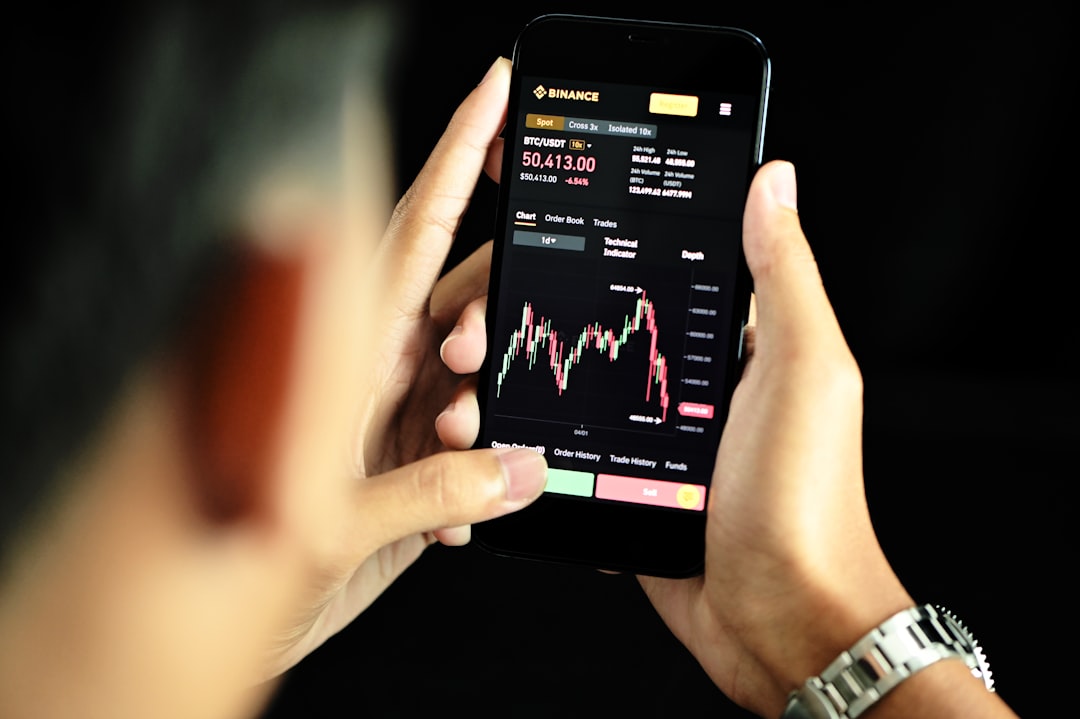
Have you ever felt the thrill of the market, wishing you could snatch those tiny, fleeting opportunities for profit? The Forex market, with its immense liquidity and constant fluctuations, offers just that for the sharp-eyed trader. While many focus on long-term trends, a select group of traders thrives on the rapid-fire action of scalping, aiming to make quick, small gains that accumulate over time. If you’re looking for a trading style that demands intense focus and quick decision-making, and has the potential for consistent returns, then FX scalping might just be your calling! Let’s dive in. 😊
Understanding FX Scalping: The Art of Rapid Gains 🤔
At its core, FX scalping is a high-frequency trading strategy where traders aim to profit from small price changes in currency pairs. Unlike swing traders who hold positions for days or weeks, or position traders who hold for months, scalpers open and close trades within seconds or minutes. The goal isn’t to capture large price swings, but rather to accumulate numerous small profits throughout the trading day. This strategy is particularly popular in highly liquid markets like Forex, where even minor price movements can offer opportunities due to high trading volumes.
Scalpers typically use very short-term charts, such as 1-minute or 5-minute timeframes, to identify entry and exit points. They rely heavily on technical analysis and often employ significant leverage to amplify their small gains. While individual profits per trade might be minuscule, a successful scalper can execute dozens, even hundreds, of trades a day, leading to substantial overall earnings. However, this also means the strategy demands extreme precision, speed, and strict risk management.
Scalping thrives on market volatility and liquidity. The more frequently a currency pair moves, and the easier it is to enter and exit positions without impacting the price, the better the conditions for scalping. Major currency pairs like EUR/USD, GBP/USD, and USD/JPY are often preferred due to their high liquidity.
Key Characteristics & Evolving Landscape of Scalping 📊
FX scalping is defined by its rapid execution and short holding periods. Traders typically hold positions for only a few seconds to a few minutes, rarely extending beyond a single trading session. This approach minimizes exposure to overnight market risks and large adverse price movements. Success in scalping hinges on identifying small, predictable price movements and capitalizing on them quickly.
The landscape of scalping is continuously evolving, especially with advancements in technology. In 2026, algorithmic trading and high-frequency trading (HFT) systems play an even more significant role. Many professional scalpers utilize automated systems to execute trades at lightning speed, eliminating emotional bias and exploiting even the smallest market inefficiencies. This trend highlights the increasing importance of technology, low-latency brokers, and robust trading platforms for anyone serious about scalping.
Comparing Trading Styles: A Quick Overview
| Feature | Scalping | Day Trading | Swing Trading |
|---|---|---|---|
| Holding Period | Seconds to Minutes | Minutes to Hours (within one day) | Days to Weeks |
| Profit Target | Very Small (1-10 pips) | Moderate (10-50 pips) | Larger (50-200+ pips) |
| Frequency | Very High (Dozens/Hundreds) | High (Several) | Low (Few) |
| Main Tool | Technical Analysis, Fast Execution | Technical Analysis, Intraday News | Technical & Fundamental Analysis |
While technology offers advantages, it also means the market is becoming increasingly efficient. Manual scalpers must compete with algorithmic traders, making speed and precision more critical than ever. Ensure your broker offers minimal slippage and fast execution.
Key Checkpoints: Remember These Essentials! 📌
Have you been following along? It’s easy to forget things in a longer article, so let’s recap the most crucial points. Please remember these three things above all else.
-
✅
Master Your Mindset
Emotional discipline is paramount. Scalping requires quick, unemotional decisions. Stick to your plan and avoid impulsive trades. -
✅
Choose the Right Tools
A reliable broker with tight spreads and fast execution is non-negotiable. Combine this with effective technical indicators for precise entries and exits. -
✅
Strict Risk Management
Even with small targets, losses can accumulate quickly. Always use stop-loss orders and only risk a small percentage of your capital per trade.
Essential Tools and Indicators for Successful Scalping 👩💼👨💻
To succeed in the fast-paced world of FX scalping, having the right tools is crucial. First and foremost, you need a broker that offers extremely tight spreads, low commissions, and ultra-fast execution speeds. Any delay or significant spread can eat into your tiny profit margins. ECN (Electronic Communication Network) brokers are often preferred by scalpers for their direct market access and competitive pricing.
Beyond the broker, technical indicators are a scalper’s best friend. They help identify potential entry and exit points on short timeframes. Some of the most commonly used indicators include:
- Moving Averages (MA): Especially Exponential Moving Averages (EMAs) on 5-minute or 1-minute charts. Crossovers can signal short-term trend changes.
- Relative Strength Index (RSI): Helps identify overbought or oversold conditions, signaling potential reversals.
- Stochastic Oscillator: Similar to RSI, it indicates momentum and potential reversal points.
- Bollinger Bands: Useful for identifying periods of high or low volatility and potential price breakouts or reversals.
- Volume Indicators: While less common in spot FX due to decentralized nature, some brokers offer aggregated volume data that can confirm momentum.
Price action analysis, which involves reading raw price movements on the chart without indicators, is also a vital skill for scalpers. Recognizing candlestick patterns and support/resistance levels quickly can provide crucial insights for rapid decision-making.
Many successful scalpers use a combination of 2-3 indicators to confirm signals, rather than relying on a single one. Practice on a demo account extensively to find the combination that works best with your chosen currency pairs and trading style.
Practical Example: A Hypothetical EUR/USD Scalp 📚
Let’s walk through a simplified example of an FX scalping trade on the EUR/USD currency pair. Remember, real-world trading involves more variables, but this illustrates the core concept.
Trader’s Scenario
- Currency Pair: EUR/USD
- Timeframe: 1-minute chart
- Capital: $5,000
- Leverage: 1:500 (standard for many retail brokers)
- Target Profit: 5 pips
- Max Loss (Stop-Loss): 3 pips
Trading Process
1) Market Observation: The trader observes EUR/USD on a 1-minute chart. They notice the price is consolidating after a slight dip, and an EMA crossover suggests a short-term upward momentum might be forming.
2) Entry: At 10:05 AM, EUR/USD is trading at 1.08500. Based on their analysis, the trader decides to go long (buy) 1 standard lot (100,000 units) of EUR/USD. They immediately set a take-profit at 1.08550 (5 pips higher) and a stop-loss at 1.08470 (3 pips lower).
3) Execution: Within 30 seconds, the price ticks up rapidly. At 10:05:25 AM, EUR/USD reaches 1.08550, and the trade is automatically closed for a profit.
Final Result
– Entry Price: 1.08500
– Exit Price: 1.08550
– Profit per pip (1 standard lot): $10
– Total Profit: 5 pips * $10/pip = $50 (minus spread/commission)
– Time in Trade: Less than 1 minute
This example illustrates how small, frequent profits can be generated. The key is the strict adherence to the profit target and stop-loss, and the speed of execution. Had the price gone against the trader, the stop-loss would have limited the loss to $30 (plus spread/commission), protecting the capital.

Wrapping Up: Key Takeaways 📝
FX scalping is undoubtedly a challenging yet potentially rewarding trading strategy. It demands a unique blend of analytical skill, lightning-fast execution, and iron-clad discipline. As we move through 2026, the technological edge continues to grow, making efficient brokers and potentially automated strategies more important than ever.
Remember, while the allure of quick profits is strong, the risks are equally significant. Thorough preparation, continuous learning, and strict adherence to your trading plan are your best allies. Are you ready to embrace the fast-paced world of scalping, or do you prefer a more laid-back approach? Let me know your thoughts in the comments below! 😊