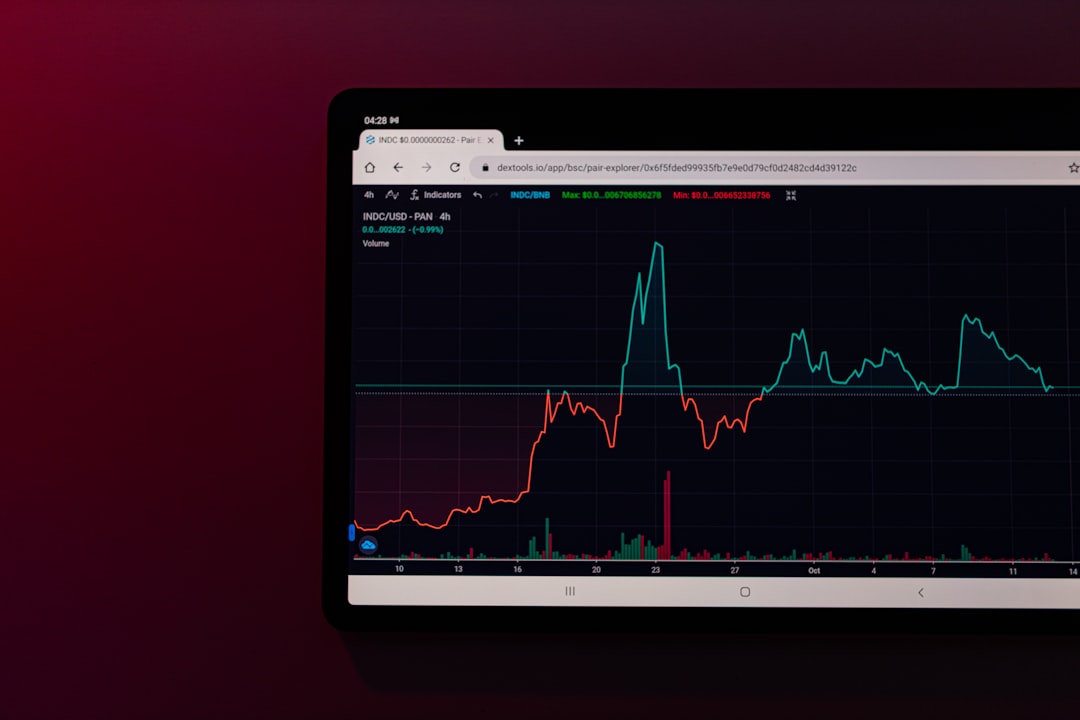
Have you ever felt overwhelmed by the fast pace of day trading or the long waits of traditional investing? Many of us are looking for a sweet spot in the market – a strategy that offers quicker returns than buy-and-hold, but without the intense pressure of hourly decisions. If that sounds like you, then swing trading might just be your answer! It’s a fantastic way to capture profits from market movements over days or weeks, offering a more balanced approach to active trading. Let’s dive in and explore how you can make it work for you. 😊
What Exactly is Swing Trading? 🤔
At its core, swing trading is a strategy designed to profit from the “swings” in a stock’s price. Unlike day traders who close positions by the end of the day, swing traders typically hold stocks for a few days to several weeks, aiming to capture gains from anticipated price movements within a larger trend. It’s about identifying potential reversals or continuations in price action and positioning yourself to benefit from them.
Think of it as riding a wave. You don’t try to catch every ripple (day trading), nor do you wait for the entire ocean tide to change (long-term investing). Instead, you focus on the significant, identifiable waves that offer good momentum. This approach requires patience and a keen eye for technical analysis, which we’ll explore shortly.
Swing trading typically involves holding positions for 2-6 days, though it can extend up to a few weeks. It’s ideal for those who can dedicate a few hours each day or evening to market analysis, but don’t want to be glued to their screens constantly.

The Core of Swing Trading: Technical Analysis 📊
Successful swing trading heavily relies on technical analysis – studying past price movements and volume to predict future price action. This isn’t guesswork; it’s about identifying patterns and signals that historically indicate a higher probability of certain outcomes. The current market environment, with its average daily volatility of around 1.2% in Q1 2026 for the S&P 500, makes technical analysis even more critical for identifying profitable short-term movements.
You’ll need a toolkit of indicators to help you make informed decisions. Here are some of the most widely used:
Key Technical Indicators for Swing Trading
| Category | Indicator | Description | Typical Use in Swing Trading |
|---|---|---|---|
| Trend | Moving Averages (MA) | Smooths price data to identify trend direction. | Identifying overall trend, support/resistance, crossover signals. |
| Momentum | Relative Strength Index (RSI) | Measures the speed and change of price movements. | Identifying overbought (>70) or oversold (<30) conditions. |
| Trend & Momentum | MACD (Moving Average Convergence Divergence) | Shows the relationship between two moving averages of a stock’s price. | Generating buy/sell signals through crossovers and divergences. |
| Volatility | Bollinger Bands | Measures market volatility and identifies overbought/oversold levels. | Detecting price breakouts and reversals when bands contract or expand. |
No single indicator is foolproof. Always use multiple indicators for confirmation and remember that past performance is not indicative of future results. Practice with a demo account before risking real capital!
Key Checkpoints: Remember These! 📌
Have you followed along well so far? With a lot of information, it’s easy to forget the essentials. Let’s recap the most important takeaways. Please keep these three things in mind:
-
✅
Swing Trading: A Balanced Approach
It’s a medium-term strategy, offering a sweet spot between rapid day trading and long-term investing, perfect for capturing significant price “swings.” -
✅
Technical Analysis is Your Compass
Utilize indicators like MAs, RSI, and MACD to identify trends, momentum, and potential entry/exit points in today’s dynamic markets. -
✅
Risk Management is Non-Negotiable
Always define your risk per trade with stop-loss orders and appropriate position sizing to protect your capital.
Risk Management and Current Market Trends 👩💼👨💻
Even the best trading strategy is incomplete without robust risk management. In the current market climate, where retail investor participation has remained robust through 2025-2026, the allure of quick gains can sometimes overshadow the importance of protecting capital. Here’s how to safeguard your swing trades:
- Position Sizing: Never risk more than a small percentage (e.g., 1-2%) of your total trading capital on any single trade. This means adjusting the number of shares you buy based on your stop-loss distance.
- Stop-Loss Orders: Always place a stop-loss order to automatically sell your position if the price moves against you beyond a predefined point. This is your ultimate safety net.
- Take-Profit Targets: Define your profit targets before entering a trade. Once reached, consider taking partial or full profits. Don’t get greedy!
- Diversification: While swing trading is short-term, avoid putting all your eggs in one basket. Spread your capital across different stocks or sectors to mitigate risk.
Develop a detailed trading plan. This includes your entry/exit criteria, risk tolerance, position sizing rules, and a clear understanding of when to cut losses. Stick to it rigorously, especially when emotions run high!
Real-World Application: A Hypothetical Swing Trade 📚
Let’s walk through a simplified example to see how a swing trade might play out. Imagine it’s early 2026, and you’re analyzing “Tech Innovations Inc.” (TII) for a potential swing opportunity.
Scenario: Tech Innovations Inc. (TII)
- Observation: TII has been in a short-term downtrend, but the 14-day RSI is now below 30 (oversold), and the MACD line is crossing above its signal line, indicating potential bullish momentum. Volume is also starting to pick up.
- Current Price: $50 per share.
- Your Capital: $10,000.
Your Trading Plan
1) Entry: Buy TII at $50 per share, anticipating a bounce.
2) Stop-Loss: Set a stop-loss at $48 (a 4% risk per share). With a 1% capital risk rule ($100), you can buy 50 shares ($100 / $2 risk per share).
3) Take-Profit: Set a target at $55 (a 10% potential gain per share), aiming for a 2.5:1 risk-reward ratio.
Outcome (Hypothetical)
– Day 1-3: TII consolidates around $50, then slowly starts to climb as volume increases further.
– Day 4: TII gaps up slightly and continues its upward trajectory, hitting $55. You execute your take-profit order.
In this hypothetical scenario, by following your plan and using technical signals, you successfully captured a short-term profit. This example highlights the importance of having clear entry/exit points and strict risk management, allowing you to participate in market movements without excessive exposure.
Wrapping It Up: Your Swing Trading Journey 📝
Swing trading offers a compelling opportunity for those looking to actively participate in the stock market without the round-the-clock commitment of day trading. By understanding the fundamentals of technical analysis, mastering key indicators, and diligently applying risk management principles, you can develop a robust strategy to capture profitable price swings.
Remember, consistency and discipline are your greatest allies. The market is always evolving, and continuous learning is key. Don’t be afraid to backtest new ideas and refine your approach. If you have any questions or want to share your swing trading experiences, feel free to drop a comment below! 😊