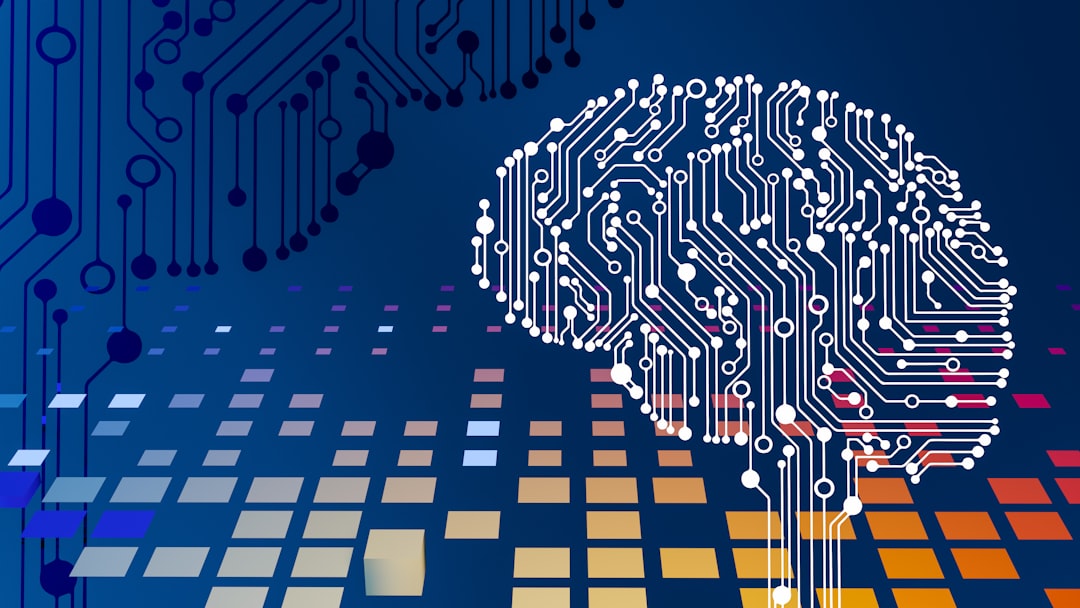
Remember when Generative AI was all about stunning images and remarkably coherent text? Well, buckle up, because the landscape has evolved dramatically! It feels like just yesterday we were marveling at AI-generated art, and now we’re seeing AI systems that can seamlessly blend text, images, video, and even 3D models. It’s truly incredible to witness this rapid pace of innovation, and honestly, it can be a bit overwhelming to keep up. That’s why I wanted to share my insights on where Generative AI stands today, in May 2026, and what we can expect from its multimodal future. Let’s explore together! 😊
The Generative AI Explosion: A Look Back and Forward 🤔
It’s no secret that Generative AI has been one of the hottest topics in technology for the past few years. What started as a niche field has rapidly transformed into a mainstream phenomenon, impacting everything from creative industries to software development. The market growth has been phenomenal, with projections continuing to climb. For instance, the global generative AI market size, valued at an estimated $10.9 billion in 2023, is projected to reach a staggering $118.1 billion by 2032, exhibiting a compound annual growth rate (CAGR) of 30.7% from 2024 to 2032. This isn’t just hype; it’s a fundamental shift in how we create and interact with digital content.
We’ve seen an incredible surge in powerful foundation models, becoming more accessible and capable than ever before. These models are not just getting bigger; they’re getting smarter, more efficient, and incredibly versatile. It’s like the early days of the internet, where every month brought a new, groundbreaking development. We’re still very much in that exciting phase with AI, and I personally find it fascinating to track these advancements.
Recent reports indicate that over 80% of enterprises are either experimenting with or have already implemented Generative AI solutions in some capacity as of early 2026. This widespread adoption underscores the technology’s growing maturity and perceived value.
Beyond Text & Images: The Rise of Multimodal AI 📊
While text and image generation captivated us, the real game-changer in 2026 is the rapid advancement of multimodal AI. This means AI systems are no longer confined to processing a single type of data. They can now understand, integrate, and generate content across various modalities – text, images, audio, video, and even 3D models – all within a unified framework. This is a huge leap forward!
Imagine describing a scene, and the AI not only generates a stunning image but also composes a fitting soundtrack and animates the characters, all from that single prompt. That’s the power of multimodal AI, and it’s fundamentally changing how we approach content creation and problem-solving. This integrated approach leads to more cohesive, rich, and immersive experiences.
Evolution of Generative AI Modalities
| Category | Description | Key Examples (2025-2026) | Impact |
|---|---|---|---|
| Text-to-X (Image, Video, Audio) | Generating various content types from text prompts. | Advanced image/video models, text-to-speech with emotion. | Democratizes content creation, accelerates prototyping. |
| Image-to-X (Text, 3D, Video) | Creating new content or descriptions from an input image. | Image-to-3D model conversion, detailed image captioning. | Enhances visual design workflows, aids accessibility. |
| Multimodal Fusion | Integrating multiple input modalities to generate a rich, coherent output. | Text+Image to Video, Text+Audio to Animated Characters. | Unlocks new creative possibilities, creates immersive experiences. |
| Specialized Generative AI | Models fine-tuned for specific domains or tasks. | AI for drug discovery, personalized education content, legal document generation. | Drives innovation in highly complex fields, boosts efficiency. |
While multimodal AI offers incredible potential, it also amplifies existing ethical concerns, such as the potential for generating hyper-realistic deepfakes, copyright infringement with generated content, and the energy consumption required to train and run these complex models. Responsible development and regulation are more crucial than ever.
Key Checkpoints: What to Remember! 📌
Have you been following along well? The article is quite long, so I’ll recap the most important takeaways. Please remember these three key points.
-
✅
Generative AI is booming!
The market is experiencing exponential growth, with projections indicating a massive expansion in the coming years, driven by widespread enterprise adoption. -
✅
Multimodal AI is the new frontier.
AI systems can now seamlessly integrate and generate content across text, images, video, and 3D, opening up unprecedented creative and functional possibilities. -
✅
Ethical considerations are paramount.
As AI capabilities advance, addressing issues like deepfakes, copyright, and environmental impact becomes increasingly critical for responsible innovation.
Generative AI’s Transformative Impact Across Industries 👩💼👨💻
The implications of multimodal Generative AI stretch far beyond just generating pretty pictures. Every industry is poised for significant disruption and innovation. In creative fields, it’s transforming workflows for artists, designers, and marketers, allowing them to rapidly prototype ideas and produce high-quality content at scale. Imagine an advertising agency generating multiple video ad concepts, complete with voiceovers and background music, in minutes instead of days!
In software development, AI is not just writing code but also debugging, optimizing, and even designing user interfaces based on high-level descriptions. Healthcare is seeing breakthroughs in drug discovery, personalized treatment plans, and even generating synthetic data for research. Education is leveraging AI to create adaptive learning materials and interactive simulations. It’s truly a renaissance of possibilities.
A key trend in 2026 is the increasing focus on “Agentic AI” – systems that can autonomously plan and execute complex tasks using generative models, rather than just responding to single prompts. This is moving AI from a tool to a proactive collaborator.
Real-World Applications: Concrete Examples 📚
Let’s look at a concrete example to illustrate the power of multimodal Generative AI. Consider a small game development studio trying to create a new fantasy world. Traditionally, this would involve concept artists, 3D modelers, sound designers, and writers, all working in silos.
The Studio’s Challenge
- Goal: Rapidly prototype a new game environment – “a mystical forest with ancient glowing runes and a hidden waterfall.”
- Traditional timeframe: Weeks, involving multiple specialists.
Generative AI Workflow
1) Initial Prompt: The lead designer inputs “a mystical forest at dusk, ancient glowing runes, a hidden waterfall, serene yet mysterious atmosphere.”
2) Multimodal Generation: An advanced AI system processes this prompt and generates:
- High-resolution concept art (image)
- A basic 3D model of the environment (3D)
- Ambient forest sounds with a subtle magical hum (audio)
- A short descriptive narrative text for lore (text)
Final Result
– Time Saved: From weeks to mere hours for initial concepts.
– Iteration Speed: Designers can rapidly iterate on ideas, making tweaks to the prompt and instantly seeing new variations.
This example highlights how Generative AI, especially in its multimodal form, acts as a powerful co-creator, accelerating the creative process and allowing human experts to focus on refinement and high-level vision rather than repetitive tasks. It’s a true game-changer for productivity and innovation!

The complex and interconnected nature of modern AI.
Wrapping Up: Key Takeaways 📝
The world of Generative AI is dynamic and ever-expanding, and 2026 marks a significant pivot towards truly multimodal capabilities. We’re moving beyond simple text and image generation into a future where AI can synthesize complex, integrated content across various forms. This evolution promises to unlock unprecedented creativity and efficiency across nearly every sector.
Staying informed and adapting to these changes is key for anyone looking to leverage the power of AI. It’s an exciting time to be involved, and I’m personally thrilled to see what new innovations emerge next. What are your thoughts on multimodal AI? Do you have any experiences to share or predictions for the future? Feel free to drop your questions or comments below! 😊