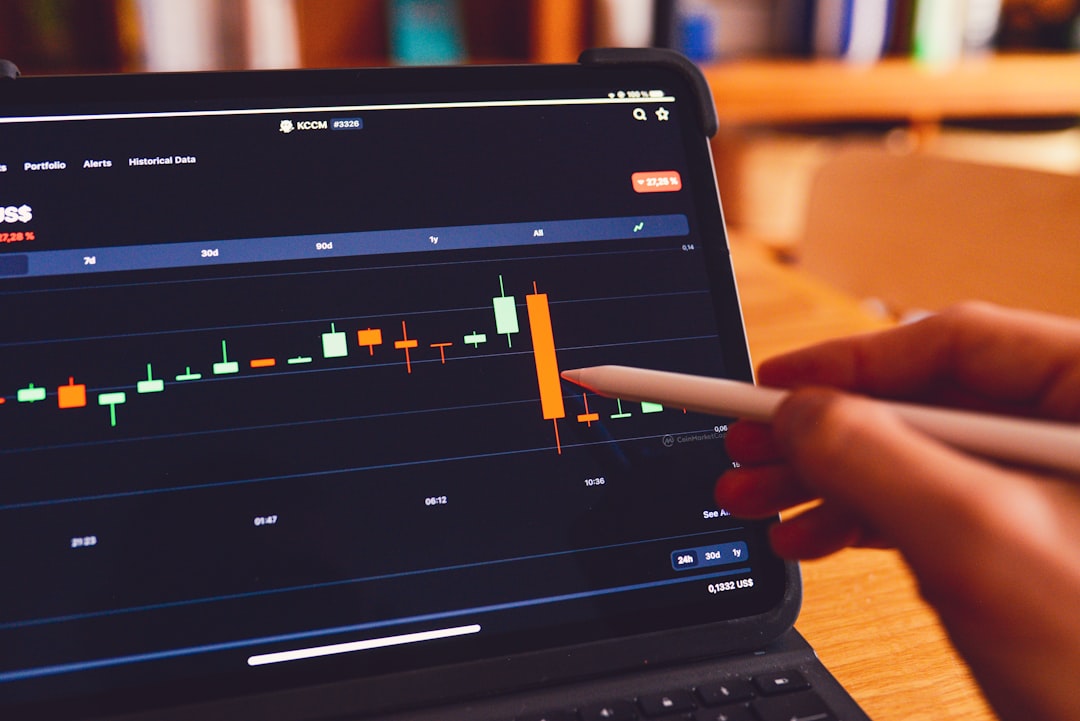
Have you ever felt caught between the rapid-fire demands of day trading and the long-term patience of investing? Many traders find themselves in this sweet spot, seeking a strategy that captures significant moves over days or weeks without the intense stress of constant monitoring. That’s where swing trading comes in! It offers a unique balance, providing an edge by riding medium-term trends and allowing you to participate selectively in the market. Ready to trade smarter, not harder, in 2026? Let’s dive in! 😊
What Exactly is Swing Trading? 🤔
At its core, swing trading is a trading style where you hold positions for anywhere from 2 days to several weeks, aiming to capture one complete directional move—one “swing”—within a larger price trend. You buy near the bottom of a swing and sell near the top, or short near the top and cover near the bottom. Unlike day trading, you are not trying to close every position by 4:00 PM. Unlike long-term investing, you are not holding through multiple market cycles.
Swing trading sits in the middle ground: active enough to generate frequent opportunities, but relaxed enough that you can check your positions once or twice a day rather than watching tick-by-tick. This makes swing trading one of the most popular styles for people who have full-time jobs, busy schedules, or simply do not want the intense stress of staring at one-minute charts all day. The daily chart is often your best friend as a swing trader, as most setups are identified, entered, and managed on this timeframe.
Stocks do not move in straight lines; they trend in waves—up, consolidate, up again, or down, bounce, down again. Swing traders aim to catch one of those directional waves and exit before the next reversal.
Why Swing Trading Matters in 2026 📊
The financial markets in 2026 are characterized by elevated interest rates, cooling but uneven inflation, and shifting central bank guidance, all contributing to uncertainty and regional divergence driving volatility and sector rotation. In this environment, swing trading offers significant benefits:
- Flexibility: Markets aren’t moving cleanly every day. Some weeks are quiet, while others see nonstop movement across various sectors and asset classes. Swing trading allows traders to participate selectively, avoiding the need to “manufacture action” out of boredom.
- Realistic Time Commitment: For those with full-time jobs or busy schedules, swing trading is far more realistic than day trading. Analysis can happen after hours, and alerts can manage monitoring.
- Leveraging Market Structure: The U.S. move to T+1 settlement has shortened settlement times, and fractional shares have made position sizing easier for smaller accounts. These structural changes directly benefit swing traders by making it easier to act on market movements with faster execution and better accessibility.
The democratization of advanced trading tools, once exclusive to institutional desks, is now available to retail traders with user-friendly interfaces and affordable access, further lowering the barrier to entry for swing trading.
Swing Trading vs. Other Trading Styles (2026 Snapshot)
| Factor | Swing Trading | Day Trading | Buy-and-Hold |
|---|---|---|---|
| Holding Period | 2 days – several weeks | Minutes to hours (same day) | Months to years |
| Time per Day | 30–60 min (pre/post market) | 4–8 hours at screen | Minutes per week |
| Stress Level | Moderate | Very high | Low |
| Capital Required | $2,000–$5,000+ | $25,000+ (PDT rule) | Any amount |
While swing trading offers flexibility, overnight gaps remain a real risk, especially around earnings, macro data, or geopolitical headlines. Stop-loss orders are not guaranteed during fast-moving conditions.
Key Components of a Successful Swing Trading Strategy 📌
To truly excel in swing trading, especially in the current market, you need a well-defined strategy built on a few core principles. It’s not just about picking stocks; it’s about having a systematic approach. The “buy and hold for 3-5 days” approach of the 2020s is considered outdated by some, with today’s edge coming from structure, not just stock picking.
-
✅
Defined Entry and Exit Rules:
Every successful swing trading strategy, such as mean reversion to the 20 EMA or breakout from consolidation, has specific entry criteria, stop rules, and target logic. Always wait for a candle close confirmation before entering a swing trade. -
✅
Robust Risk Management:
Disciplined risk management is paramount. Always use a stop-loss, and aim for a minimum 1:2 reward-to-risk ratio on most setups. Risk no more than 1-2% of your capital per trade. -
✅
Adaptability to Market Regimes:
A strategy that worked well in a strong trending market in 2023 might produce less favorable results in more volatile, choppy conditions in 2026. Continuously track your strategies to ensure they align with current market conditions.
Latest Trends and Statistics in Swing Trading (2026) 👩💼👨💻
The landscape of swing trading is continuously evolving, with technology playing an increasingly dominant role. Algorithmic players and AI are shaping the market, influencing how classic patterns perform. By 2025, AI is projected to handle almost 89% of the world’s trading volume, and in 2026, AI trading market hit $27.85 billion.
- AI and Algorithmic Trading: AI-powered bots can learn, adapt, and optimize in real-time, moving beyond static strategies. This means traders are increasingly adopting AI-driven algorithmic trading to navigate markets with precision and speed. Hybrid AI models that blend technical charts with news sentiment are also driving growth.
- Increased Volatility: Market volatility has returned with a vengeance in 2026, driven by factors like geopolitical tensions and central bank decisions. Gold, for instance, experienced a spectacular correction in January 2026, losing 9% of its value in a single session. This environment, while challenging, also presents opportunities for swing traders who can adapt.
- Success Rates: While some estimations suggest that as many as 90% of swing traders fail to make money, leading to an average success rate of around 10%, it’s important to note that many treat it more like gambling. Studies indicate that the success rate of swing trading strategies is approximately 60%, but this requires a large sample size of trades (hundreds, not just dozens) to be meaningful. Successful traders typically aim for 10-30% annual profit.
The future of algorithmic trading is being reshaped by machine learning, foundation models, cloud-native infrastructure, and tightening regulation. Retail traders now have access to tools that rival institutional-grade solutions.
Practical Swing Trading Strategies for Today 📚
In 2026, several swing trading strategies continue to be effective, especially when combined with disciplined execution and proper risk management. Here are a few to consider:
- Mean Reversion to the 20 EMA: This strategy is most effective in stocks that are in a clear uptrend on the weekly chart. The 20-period Exponential Moving Average (EMA) acts as a natural magnet in trending stocks. Entry typically occurs on the close of a reversal candle or a break of its high after price pulls back to within 2% of the 20 EMA, with the Relative Strength Index (RSI) between 40-55.
- Breakout from Consolidation: Identify stocks that have been range-bound for 5-15 days, showing shrinking daily ranges (a sign of “energy coiling”). A breakout from this range, accompanied by a volume surge, is a high-probability setup. Entry can be on the breakout candle close or a first pullback to the breakout level.
- Fibonacci Retracement Entry: Fibonacci retracements provide specific price levels where swing traders often cluster entries. The 50% and 61.8% levels are considered the most reliable, especially when they align with moving averages or previous support/resistance zones. This strategy tends to have a lower win rate (45-55%) but larger average winners due to tighter stops relative to targets.
- Pullback to Support or Moving Average: This fundamental strategy involves a stock in an uptrend (above the 50-day MA) pulling back to a meaningful support level or the 21 EMA, followed by a bullish confirmation candle.
Example: Mean Reversion to 20 EMA

Scenario: Tech Stock in a Strong Uptrend
- Information 1: A prominent tech stock, ‘InnovateCorp’ (IVC), has been in a consistent uptrend on its weekly chart for the past six months.
- Information 2: On the daily chart, IVC’s price pulls back towards its 20-day Exponential Moving Average (EMA). The Relative Strength Index (RSI) is currently at 48.
Trading Process
1) Entry: A bullish engulfing candle forms exactly at the 20 EMA, confirming a potential bounce. A swing trader enters the trade at the close of this candle.
2) Stop-Loss: The stop-loss is placed just below the low of the bullish engulfing candle, or 1.5% below the 20 EMA, whichever is smaller.
3) Target: The first target is set at the most recent swing high. The trader aims for a minimum 1.5:1 reward-to-risk ratio.
Final Result
– Outcome: InnovateCorp bounces strongly from the 20 EMA, reaching the previous swing high within three trading days. The trader exits the position for a profitable swing trade.
– Lesson: This example highlights the effectiveness of combining trend identification, technical indicators (EMA, RSI), and candlestick patterns for precise entry and risk management in a mean reversion strategy.
Remember, consistent execution of a winning strategy over the course of a year is not easy, but it is entirely feasible with discipline and continuous learning.
Wrapping Up: Your Path to Swing Trading Success 📝
Swing trading in 2026 presents a compelling opportunity for traders seeking to profit from market movements without the intense demands of day trading. By understanding the current market dynamics, leveraging proven strategies, and prioritizing robust risk management, you can significantly increase your chances of success.
The key lies in continuous learning, adapting to evolving market conditions, and meticulously tracking your trades to identify what truly works for your execution style. Don’t be afraid to backtest and refine your strategies. What are your thoughts on these strategies? Do you have any favorite swing trading techniques? Feel free to share in the comments below! 😊
Swing Trading Essentials: Quick Recap
Frequently Asked Questions ❓
Copyright © 2025 QHost365.com ®