Have you ever felt caught between the intense demands of day trading and the long-term patience required for investing? Many traders, myself included, eventually gravitate towards a middle ground that offers the best of both worlds. That sweet spot is often swing trading! It’s about seizing meaningful price movements that unfold over several days or weeks, allowing you to manage risk effectively without making trading a full-time monitoring job. In 2026, with market dynamics constantly evolving, swing trading has become an increasingly popular and accessible method for many. Let’s dive in and explore how you can leverage this powerful strategy! 😊
What Exactly is Swing Trading? 🤔
Swing trading is a dynamic strategy where traders aim to capture short to medium-term price movements, or “swings,” in the stock market over a period of a few days to several weeks. Unlike day trading, which involves frequent trades within a single day, swing trading allows for positions to be held longer, making it ideal for those who cannot constantly monitor the market but still want to capitalize on price fluctuations.
This approach focuses on identifying potential price swings and entering trades at the beginning of these moves, then exiting once the swing loses momentum. It’s a technical strategy that relies heavily on chart patterns, technical indicators, and market insights to predict future price direction.
Swing trades typically last from a few sessions to several weeks. Traders look for multi-day chart patterns to benefit from larger price moves than what’s usually seen in a single day. This offers a great compromise between trade frequency and time commitment.
Mastering the Key Principles of Swing Trading 📊
Successful swing trading hinges on a clear understanding of price trends, momentum, and patterns. By applying the right indicators and identifying key patterns, swing traders can make informed decisions and enhance their success rate. Here are some fundamental principles:
- Trend Identification: Always trade with the prevailing trend. Using daily charts and moving averages (like the 50-day or 200-day MA) helps determine if a stock is in an uptrend, downtrend, or sideways range. Trading with the trend significantly increases your odds of success.
- Pullbacks to Key Levels: Instead of chasing stocks at all-time highs, wait for them to pull back to meaningful support zones. This could be a previous consolidation area, a rising moving average (such as the 21 EMA), or a horizontal support level.
- Confirmation: Always wait for a candle close confirmation before entering a swing trade. This means the setup candle must fully close before you act, eliminating many false signals.
- Risk Management: This is arguably the most crucial aspect. Never risk more than 1% to 2% of your entire trading capital on any single trade. Always use mandatory stop-loss orders placed at a logical level that invalidates your trade idea. Furthermore, aim for a favorable risk-reward ratio, typically a minimum of 1:2 or 1:3, meaning potential profit should be at least twice or thrice the potential loss.
Special emphasis should be placed on position sizing. Calculate your position size so that your maximum loss remains a small percentage of your account, even if your stop-loss is hit. This disciplined approach is vital for long-term survival in the markets.
Common Swing Trading Setups in 2026
| Setup Type | Description | Entry Signal | Key Indicators |
|---|---|---|---|
| Breakout from Consolidation | Price moves outside a defined trading range, indicating a new trend. | Break above resistance with volume confirmation. | Volume, Bollinger Bands. |
| Mean Reversion to MA | Price pulls back to a key moving average (e.g., 20 EMA, 50 EMA) in a clear trend. | Bullish reversal candle at the MA. | Moving Averages (EMA, SMA), RSI. |
| Fibonacci Retracement | Price retraces to key Fibonacci levels (38.2%, 50%, 61.8%) before continuing the trend. | Bullish reversal pattern at a Fibonacci level. | Fibonacci Retracement, Candlestick patterns. |
| Earnings Gap & Go | Stock gaps up on earnings, consolidates, then continues its move. | Break above consolidation high with volume. | Volume, Price Action. |
One of the most significant risks in swing trading is holding positions overnight, especially over weekends or holidays. Unexpected news or events can cause price gaps at market open, potentially bypassing your stop-loss orders. Always be mindful of potential fundamental risks.
Core Checkpoints: Don’t Forget These Essentials! 📌
You’ve come this far, great job! With so much information, it’s easy to lose sight of the most critical aspects. Here are three fundamental takeaways you absolutely must remember to succeed in swing trading.
-
✅
Strict Risk Management is Non-Negotiable.
Always define your maximum risk per trade (1-2% of capital), use stop-loss orders, and aim for a minimum 1:2 or 1:3 risk-reward ratio. This protects your capital. -
✅
Trade with the Trend, Not Against It.
Identify the larger trend using daily charts and moving averages, then look for entry opportunities on pullbacks within that trend. This significantly boosts your probability of success. -
✅
Confirmation is Key.
Never rush into a trade. Always wait for a clear candle close confirmation at key support/resistance levels or after a pattern completes. Patience prevents false signals.
Essential Tools: Top Technical Indicators for Swing Trading 👩💼👨💻
In 2026, the landscape of trading tools is more sophisticated than ever. Many retail platforms now offer institutional-grade tools, making technical analysis more accessible. Here are some of the most effective indicators for swing trading:
- Moving Averages (MA/EMA): These smooth out price data to identify trends and potential reversals. Exponential Moving Averages (EMA) give more weight to recent prices, making them more responsive. The 9, 21, and 50 EMAs are popular for short-term trends and dynamic support/resistance.
- Relative Strength Index (RSI): A momentum oscillator that measures the speed and change of price movements, scaled from 0 to 100. Key levels for swing trading are below 30 (oversold) and above 70 (overbought). RSI divergence from price can signal weakening momentum.
- MACD (Moving Average Convergence Divergence): A trend-following momentum indicator that shows the relationship between two moving averages of a security’s price. It helps identify bullish or bearish outcomes and potential reversal points.
- Bollinger Bands: These bands measure volatility. When the bands contract, it indicates low volatility and potential price consolidation before a breakout.
- Fibonacci Retracement: Helps identify potential pullback support and resistance levels in a trending market based on Fibonacci ratios (38.2%, 50%, 61.8%). Traders look for reversal patterns at these levels.
- Williams %R: An often underutilized but highly effective momentum indicator for swing trading, known for its stability and solid risk-adjusted returns.

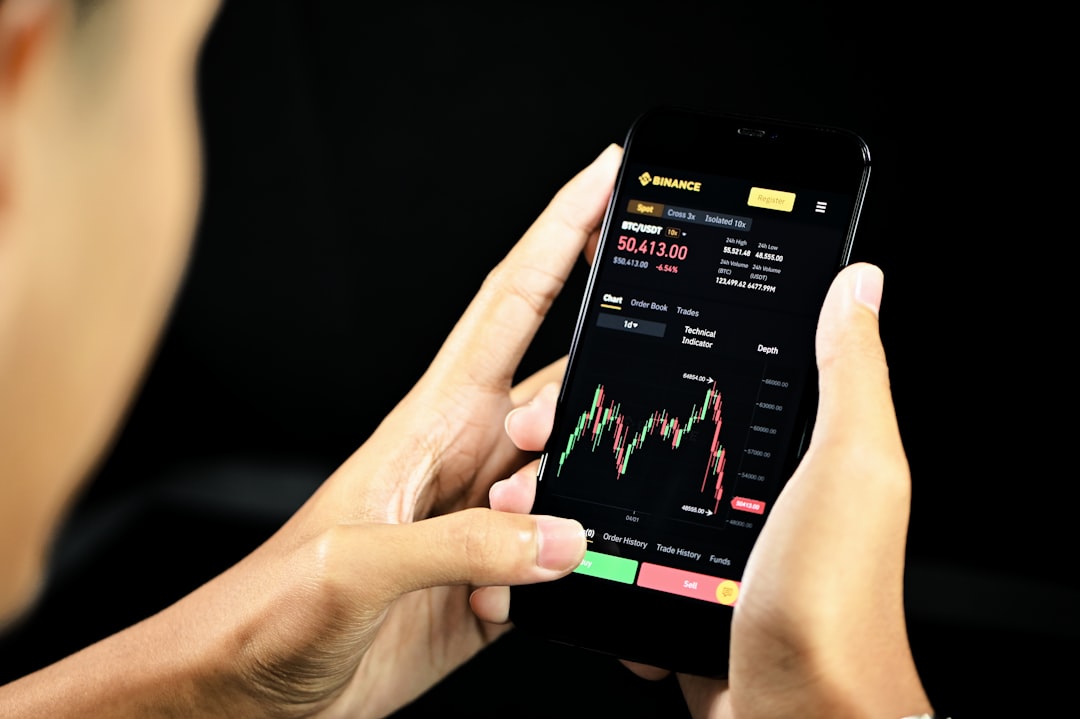
Image: A stock chart displaying various technical indicators, crucial for identifying swing trading opportunities.
While individual indicators are useful, combining them can significantly increase your win rate and filter out false signals. For instance, using Fibonacci retracement with candlestick confirmation can boost accuracy to 50-60%.
Practical Example: Swing Trading a Breakout 📚
Let’s consider a hypothetical scenario for a “Breakout from Consolidation” strategy, a high-probability swing trade setup. Imagine a stock, “TechInnovate Inc.” (TINV), has been trading sideways for 10 days, consolidating between $98 (support) and $102 (resistance). The daily ranges have been shrinking, indicating energy coiling.
Scenario: TechInnovate Inc. (TINV)
- Current Situation: TINV is range-bound between $98 and $102.
- Catalyst: A positive industry report is released, suggesting strong sector growth.
Trading Process
1) Identification: On June 25, 2026, TINV’s price breaks above $102 with a significant surge in volume (2x average daily volume). This is our breakout signal.
2) Entry: You decide to buy on the close of the breakout candle, which is $103. Alternatively, you could place a buy-stop order just above the high of the confirmation candle.
3) Stop-Loss: You place your stop-loss order just below the bottom of the consolidation range, at $97.50, ensuring your risk is defined.
4) Target: The height of the consolidation range is $102 – $98 = $4. You project this height above the breakout point: $103 + $4 = $107. This is your measured move target.
Outcome
– Risk: $103 (Entry) – $97.50 (Stop-Loss) = $5.50 per share.
– Reward: $107 (Target) – $103 (Entry) = $4.00 per share.
– Risk-Reward Ratio: Approximately 1:0.73 (In this specific scenario, the reward is less than the risk. A trader would ideally look for a better R:R or adjust the target/stop. However, this illustrates the calculation). A more ideal scenario would have the target further out, for example, a 1:2 or 1:3 ratio. Many swing traders aim for a 1:3 risk-reward minimum.
In this example, while the initial risk-reward wasn’t ideal, it demonstrates the systematic approach. A truly disciplined trader would only take trades meeting their minimum risk-reward criteria, perhaps waiting for a deeper pullback after the breakout or a more extended target. This adherence to a rules-based system is what separates consistent traders from those who rely on luck.
Conclusion: Your Path to Profitable Swing Trading 📝
Swing trading in 2026 continues to offer significant opportunities for traders who adopt a disciplined, rules-based approach. The current market environment, characterized by regional divergence driving volatility and sector rotation, provides fertile ground for capturing multi-day price movements. Remember, profitability in swing trading isn’t about winning every trade, but about producing a positive expectancy over time through consistent execution and robust risk management.
By focusing on well-defined strategies like breakout from consolidation or mean reversion to moving averages, utilizing effective technical indicators, and rigorously managing your risk, you can navigate the market with confidence. The accessibility of advanced trading tools and faster settlement times (like the U.S. move to T+1) further empower individual traders to implement these strategies efficiently. Keep learning, keep adapting, and always prioritize protecting your capital. What are your favorite swing trading strategies or indicators? Share your thoughts in the comments below! 😊
Swing Trading Essentials: A Quick Recap
Frequently Asked Questions ❓
Copyright © 2025 QHost365.com ®