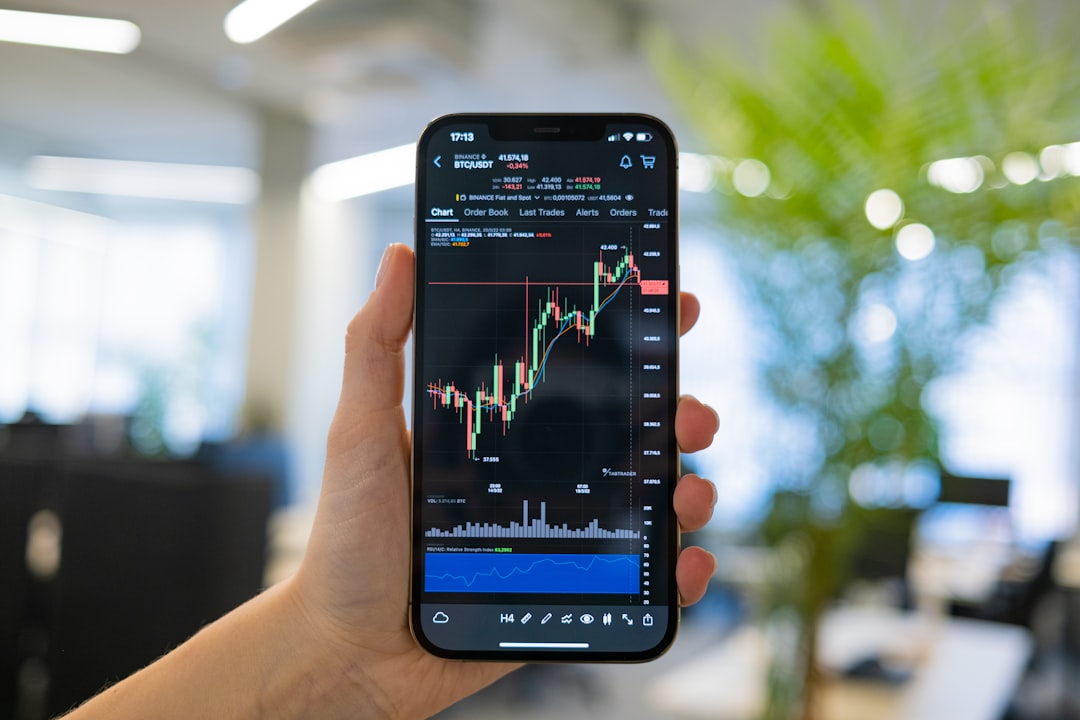
Have you ever felt caught between the rapid-fire decisions of day trading and the long-term commitment of traditional investing? It’s a common dilemma, and frankly, finding a middle ground that fits your lifestyle and financial goals can feel like searching for a needle in a haystack. But what if I told you there’s a powerful trading method that allows you to capitalize on market movements without constantly glued to your screen? Enter swing trading! This strategy has been gaining significant traction, especially with the evolving market dynamics of 2026, offering a fantastic opportunity for those seeking consistent profits. Let’s explore how you can leverage swing trading to unlock your potential. 😊
What Exactly is Swing Trading? 🤔
Swing trading is an active trading style where you hold positions for anywhere from two days to several weeks, aiming to capture one complete directional move—one “swing”—within a larger price trend. You essentially buy near the bottom of a swing and sell near the top, or short near the top and cover near the bottom. Unlike day trading, you’re not trying to close every position by the end of the trading day. And unlike long-term investing, you’re not holding through multiple market cycles.
This makes swing trading an appealing option for individuals with full-time jobs or busy schedules who cannot constantly monitor the market. Most swing traders spend about 30-60 minutes a day on analysis, then set their entries, stops, and targets. The daily chart is often a swing trader’s best friend, as most setups are identified, entered, and managed on this timeframe.
Swing trading provides a balance between the high-stress environment of day trading and the long-term patience required for buy-and-hold investing. It’s about capturing those medium-term price “waves” in the market.
Latest Trends and Statistics in Swing Trading for 2026 📊
The financial markets in 2026 are characterized by faster, more defined cycles, influenced by factors like the AI infrastructure boom and shifts in green energy stocks. Retail order flow is also more visible to institutional traders and algorithms, meaning classic patterns, while still working, are often “faded” more aggressively. This necessitates an adaptive approach, tracking strategy performance in different market regimes.
Recent market conditions in June 2026 show a somewhat mixed but generally bullish bias. The NASDAQ 100 (QQQ) was up 2.31% and the Russell 2000 (IWM) was up 4.01% in the week leading up to June 15, 2026. However, the S&P 500 (SPY) showed a weaker but still upward trend, with overall market volatility slightly higher than in calmer periods. Sectors like Materials (up 3.06%), Health Care, and Industrials have shown strong performance, while Info Tech has shown signs of weakening momentum.
For aspiring swing traders, the good news is that while swing trading can be profitable, it requires a specific setup with clear rules and consistent tracking of execution. Many traders fail not because strategies don’t work, but because they don’t measure their own execution. For instance, the 20 EMA reversion strategy typically yields a 55-65% win rate in trending markets.
Swing Trading vs. Other Styles (2026 Perspective)
| Factor | Swing Trading | Day Trading | Long-Term Investing |
|---|---|---|---|
| Holding Period | 2 days – several weeks | Minutes to hours (same day) | Months to years |
| Time per Day | 30–60 min (pre/post market) | 4–8 hours at screen | Minutes per week |
| Stress Level | Moderate | Very high | Low |
| Capital Required | $2,000–$5,000+ | $25,000+ (PDT rule) | Any amount |
While swing trading offers advantages, remember that no trading outcome is guaranteed. Markets are influenced by algorithms and fragmented momentum in 2026. Focus on structured approaches rather than just stock picking.
Key Checkpoints: Remember These Essentials! 📌
You’ve made it this far! With all the information, it’s easy to forget the core principles. So, let’s recap the most important takeaways for profitable swing trading. Keep these three points firmly in mind.
-
✅
Define Your Strategy & Track It
Don’t just blindly follow setups. Have specific entry/exit rules and track the performance of each strategy to know what truly works for you. -
✅
Prioritize Risk Management
Always set a stop-loss and a profit target before entering a trade. Aim for a minimum 2:1 risk-reward ratio. -
✅
Adapt to Market Conditions
Market regimes change. A strategy that worked in 2023 might not be as effective in 2026’s volatile or choppy conditions. Continuous adaptation is key.
Essential Swing Trading Strategies and Tools for 2026 👩💼👨💻
To succeed in swing trading in 2026, you need to employ proven strategies and utilize effective tools. The focus should be on rule-based systems that offer high-probability setups.
Top Strategies:
- Mean Reversion to the 20 EMA: This is considered one of the most reliable strategies, especially in trending markets. The 20-period Exponential Moving Average (EMA) acts as a natural magnet for trending stocks. You look for pullbacks to this EMA with a reversal candle for entry.
- Breakout from Consolidation: Identify stocks that have been trading within a narrow range. A breakout from this range, especially with a surge in volume, often signals the start of a new trend.
- Fibonacci Retracement Entry: Fibonacci levels (especially 50% and 61.8%) can indicate specific price points where traders might cluster entries, particularly after strong momentum and orderly pullbacks.
- Trend-Following Pullback Strategy: Wait for a stock in an established uptrend to pull back to a significant support level or moving average (like the 21 EMA or 50-day MA) before entering on a bullish confirmation candle.
Key Technical Indicators for 2026:
- Moving Averages (MA/EMA): Essential for identifying trend direction and dynamic support/resistance. The 9, 21, and 50 EMAs are widely used.
- Relative Strength Index (RSI): A momentum oscillator (0-100 scale) that helps identify overbought (above 70) and oversold (below 30) conditions. RSI divergences can signal weakening momentum.
- MACD (Moving Average Convergence Divergence): A trend-following momentum indicator that shows the relationship between two moving averages, generating buy/sell signals.
- Volume Indicators: Crucial for confirming breakouts and the strength of price moves. A surge in volume during a breakout suggests genuine participation.
- Williams %R: Identified by some research as a highly effective indicator for swing trading due to its stability and solid performance in risk-adjusted returns.
Many modern charting platforms, like ChartingLens, now offer AI-powered tools such as automated support and resistance drawing, stock screeners, and even AI buy/sell signals to streamline your analysis.
Real-World Example: The 20 EMA Reversion Strategy 📚
Let’s walk through a hypothetical scenario using one of the most reliable swing trading strategies: Mean Reversion to the 20 EMA. This strategy is particularly effective in stocks that are in a clear uptrend on the weekly chart.

Scenario: Tech Stock in an Uptrend
- Stock: Tech Innovations Inc. (TII)
- Market Condition: TII is in a clear uptrend on its weekly chart and above its 200 EMA on the daily chart.
- Observation: Price pulls back towards the 20 EMA on the daily chart. RSI is between 40-55, and volume on the pullback is below the 20-day average. A bullish engulfing candle forms right at the 20 EMA.
Trading Process
1) Entry: You enter a long position on the close of the bullish engulfing candle or at the market open the next day. Let’s say the entry price is $100.
2) Stop-Loss: Your stop-loss is placed just below the low of the reversal candle, or 1.5% below the 20 EMA, whichever is smaller. For example, $98.50.
3) Target: Your first target is the most recent swing high, perhaps $105. You aim for a minimum 2:1 risk-reward ratio. In this case, risking $1.50 to make $5, which is better than 2:1.
Outcome
– Result: TII bounces from the 20 EMA and rallies, hitting your first target at $105 within a few days.
– Lesson: This example demonstrates how identifying a clear trend, waiting for a pullback to a key dynamic support (20 EMA), and entering on a confirmation candle can lead to a successful swing trade. Discipline in setting stops and targets is paramount.
This structured approach minimizes emotional decision-making and ensures you have a clear plan for every trade. Remember, consistently executing your strategy and managing risk is more important than chasing perfect setups.
Conclusion: Your Path to Swing Trading Success 📝
Swing trading in 2026 offers a compelling pathway for traders looking to profit from market fluctuations without the intense commitment of day trading. We’ve explored how understanding current market trends, employing robust strategies like the 20 EMA reversion and breakout patterns, and rigorously applying risk management principles are vital for success. The market is dynamic, but with a disciplined approach, the right tools, and continuous adaptation, you can effectively navigate its complexities.
Remember, success in swing trading isn’t about predicting every market move; it’s about controlling risk, executing rule-based strategies consistently, and learning from your trades. So, take these insights, practice with paper trading, and build your own profitable swing trading journey. Do you have any favorite swing trading indicators or strategies that have worked well for you recently? Share your thoughts in the comments below! 😊
Swing Trading Essentials: Your Quick Guide
Always use stop-losses.