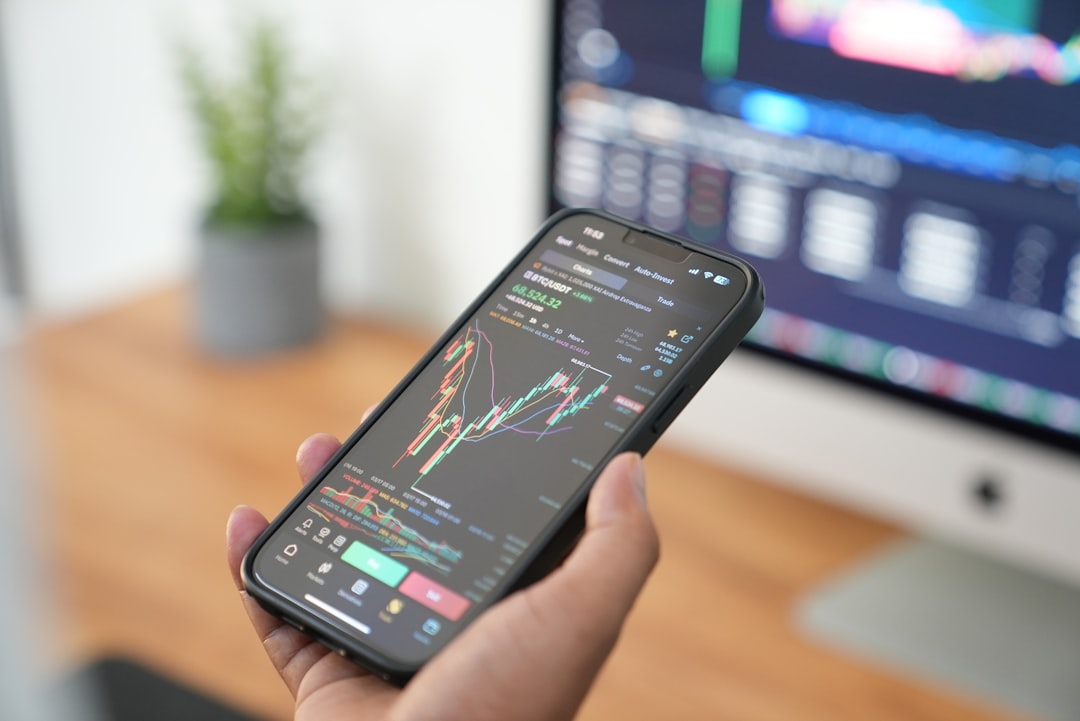
Have you ever felt overwhelmed by complex indicators, lagging signals, and the sheer volume of information in the Forex market? Trust me, you’re not alone! Many traders, myself included, have spent countless hours trying to decipher charts cluttered with lines and oscillators, only to find themselves more confused than ever. What if I told you there’s a simpler, yet incredibly powerful way to trade, focusing purely on what the market is telling you through its price movements? Welcome to the world of Price Action Trading, a strategy that cuts through the noise and gets straight to the heart of market psychology. Let’s dive in and uncover how this approach can transform your trading journey! 😊
What Exactly is Price Action Trading? 🤔
At its core, Price Action Trading is a methodology for financial market speculation that relies solely on the analysis of raw price movement over time. It means making trading decisions based on the patterns and formations created by candlesticks or bars on a chart, without the use of lagging technical indicators. Think of it as reading the market’s language directly, understanding the intentions of buyers and sellers as they unfold in real-time. This approach assumes that all relevant information about a market is already reflected in its price.
Instead of relying on mathematical calculations from past prices (which is what indicators do), price action traders focus on how price moves in relation to support and resistance levels, trend lines, and previous highs and lows. It’s about recognizing recurring patterns that signify potential shifts in momentum or continuation of trends. This fundamental concept makes it a timeless strategy, adaptable to any market condition and any timeframe.
Price action trading is often considered a “pure” form of technical analysis because it removes the subjective interpretation of indicators and focuses on the objective reality of price itself.
Why Price Action Trading Stands Out in 2026 📊
In the fast-paced and increasingly complex Forex market of 2026, where algorithmic trading and AI are becoming more prevalent, the simplicity and directness of price action trading offer a significant advantage. The global FX market continues to be the largest and most liquid financial market, with daily turnover consistently exceeding $7 trillion. This immense liquidity ensures that price action patterns remain relevant and reliable, as they reflect universal human psychology and supply/demand dynamics, which don’t change regardless of technological advancements.
Recent trends show that while many traders are exploring sophisticated tools, the core principles of market movement, often best identified through price action, are still key to success. Persistent inflation concerns, varied central bank policies, and geopolitical events continue to drive significant volatility, making clear entry and exit signals derived from price action invaluable. It allows traders to react swiftly to market shifts without the delay inherent in indicator-based strategies.
Price Action vs. Indicator-Based Trading
| Feature | Price Action Trading | Indicator-Based Trading | Key Advantage |
|---|---|---|---|
| Decision Basis | Raw price movements, chart patterns | Mathematical calculations of price data | Direct market interpretation |
| Lag | Minimal to none (real-time) | Inherent lag (based on past data) | Faster reaction to market changes |
| Complexity | Focus on simplicity and clarity | Can be complex with multiple indicators | Reduced cognitive load |
| Adaptability | Highly adaptable to all market conditions | Indicators can perform poorly in certain market types (e.g., ranging) | Robustness across diverse markets |
While price action is powerful, it requires practice and discipline to master. Avoid overtrading and always combine it with sound risk management.
Key Price Action Patterns to Master 📌
Ready to learn the market’s secret language? Understanding key price action patterns is like learning vocabulary. Here are some of the most crucial patterns that professional traders use:
-
✅
Pin Bars (Hammer/Hanging Man, Shooting Star):
These candles have a small body and a long wick (or “shadow”) indicating a strong rejection of a price level. A bullish pin bar suggests buying pressure at a low, while a bearish one shows selling pressure at a high. They are powerful reversal signals. -
✅
Engulfing Bars (Bullish/Bearish):
An engulfing bar completely “engulfs” the previous candle’s body, signaling a strong shift in momentum. A bullish engulfing bar after a downtrend can indicate a reversal, and vice-versa for a bearish engulfing bar after an uptrend. -
✅
Inside Bars:
An inside bar is contained within the high and low of the previous bar. It often signifies market indecision or consolidation, and a breakout from an inside bar can signal a strong move in the direction of the breakout.
Implementing Price Action: A Step-by-Step Guide 👩💼👨💻
Now that you understand the “what” and “why,” let’s get into the “how.” Implementing price action trading effectively involves a structured approach. Remember, consistency and discipline are your best friends here.

*A typical Forex chart showing candlestick patterns, essential for price action analysis.
Here’s a practical guide to integrate price action into your FX trading:
- Identify Key Support and Resistance Levels: These are the foundational elements of price action. Price tends to react strongly to these levels. Look for areas where price has historically reversed or consolidated.
- Draw Trend Lines and Channels: These help you understand the overall direction and momentum of the market. Trading with the trend significantly increases your probability of success.
- Look for Confluence: The strongest price action signals occur when a pattern forms at a significant support/resistance level, trend line, or previous high/low. This “confluence” adds weight to your trading decision.
- Spot Price Action Patterns: Once you’ve identified key levels and trends, look for the specific patterns we discussed (Pin Bars, Engulfing Bars, Inside Bars) forming at these confluent areas.
- Manage Your Risk: Always define your stop-loss and take-profit levels before entering a trade. A common rule is to place your stop-loss just beyond the price action pattern that triggered your entry.
Always practice identifying these patterns on demo accounts before risking real capital. Backtesting your observations can also build confidence in your strategy.
Real-World Example: A Bullish Engulfing Trade 📚
Let’s walk through a hypothetical scenario to see how price action could play out in a real trade. Imagine it’s June 2026, and you’re watching the EUR/USD pair on a 4-hour chart.
Scenario: EUR/USD Downtrend Reversal
- Market Context: EUR/USD has been in a clear downtrend for the past week, driven by stronger-than-expected US inflation data and hawkish Fed comments.
- Key Level Identified: Price approaches a significant historical support level at 1.0750, which has held firm multiple times in the past.
Trading Process
1) Observation: As price hits 1.0750, you notice a small bearish candle followed immediately by a large bullish candle that completely engulfs the previous bearish candle. This is a clear Bullish Engulfing Bar forming right at your key support level.
2) Confirmation: The bullish engulfing bar confirms that buyers have stepped in aggressively at this support, potentially signaling a reversal of the short-term downtrend.
3) Entry: You decide to enter a long (buy) position on the close of the bullish engulfing bar or on a retest of the support level.
4) Stop-Loss: You place your stop-loss order just below the low of the bullish engulfing bar, perhaps at 1.0730, to protect your capital if the reversal fails.
5) Take-Profit: You identify the next significant resistance level at 1.0850 as your initial take-profit target, aiming for a favorable risk-to-reward ratio.
Final Outcome (Hypothetical)
– Result Item 1: The market indeed reverses, pushing up towards 1.0850, hitting your take-profit target for a profitable trade.
– Result Item 2: This trade demonstrates how combining a strong price action signal with a key market level can lead to high-probability setups.
This example highlights the power of confluence: a strong price action pattern (Bullish Engulfing) occurring at a significant market structure (Support Level). It’s not just about seeing a pattern; it’s about seeing it in the right context.
Concluding Thoughts: Your Edge in the FX Market 📝
Price Action Trading offers a refreshing, clear, and robust approach to navigating the complex Forex markets. By stripping away the distractions of indicators and focusing on the raw language of price, you empower yourself to make more intuitive and timely trading decisions. It’s a skill that, once honed, can serve you across various market conditions and assets.
In a world where market data and news flow can be overwhelming, the ability to read the market’s intentions directly from the chart provides a distinct edge. Remember, continuous learning, disciplined practice, and rigorous risk management are paramount to long-term success. So, take these insights, start practicing, and let the charts tell you their story. Do you have any questions or personal experiences with price action trading? Share them in the comments below! 😊