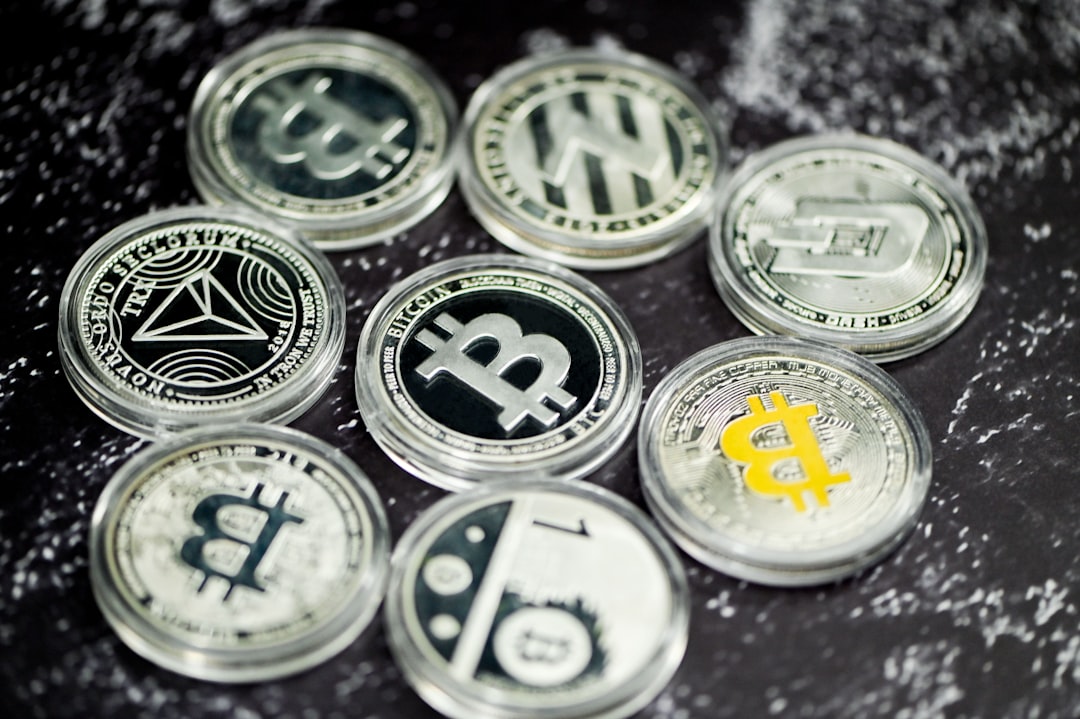
Have you ever wondered how some traders consistently find opportunities in the fast-paced world of cryptocurrency? The market never sleeps, and neither do the price differences that savvy investors can exploit. If you’re looking for a strategy to potentially generate consistent returns regardless of market direction, then you’ve come to the right place. Today, we’re diving deep into one of the most intriguing and potentially profitable trading techniques: cryptocurrency arbitrage trading. Ready to uncover the secrets? Let’s go! 😊
What is Cryptocurrency Arbitrage Trading? 🤔
Cryptocurrency arbitrage is a trading strategy that exploits temporary price differences for the same digital asset across different exchanges or markets. Essentially, it involves buying a cryptocurrency on one exchange where its price is lower and simultaneously selling it on another exchange where its price is higher, to capture the profit from the spread. This strategy does not rely on predicting market movement; instead, it profits from existing price discrepancies, making it distinct from directional trading.
These price differences arise due to the decentralized and fragmented nature of crypto markets. Hundreds of exchanges operate independently, each with its own order books, liquidity pools, and user base. Factors like varying trading volumes, regional demand, different fee structures, and even slow price updates contribute to these inefficiencies.
In 2026, crypto arbitrage remains profitable. Automated setups with proper infrastructure can target 15–35% monthly returns depending on the strategy and market conditions. However, individual trades in actively traded markets typically yield small profits, often between 0.05% and 0.15% per trade.
Types of Crypto Arbitrage and Current Trends 📊
The world of crypto arbitrage isn’t one-size-fits-all. Several distinct strategies have evolved to capitalize on different types of market inefficiencies. In 2026, the landscape is faster and more fragmented, creating constant price mismatches.
- Cross-Exchange (Spatial) Arbitrage: This is the most common form, involving buying an asset on one exchange (e.g., Binance) where it’s cheaper and simultaneously selling it on another (e.g., Kraken) where it’s priced higher.
- Triangular Arbitrage: This strategy exploits price discrepancies between three different cryptocurrency pairs on the same exchange. For example, converting BTC to ETH, then ETH to USDT, and finally USDT back to BTC, ending up with more BTC than you started.
- Statistical Arbitrage: More complex, this involves using quantitative models and big data analysis to identify mispricings between correlated crypto pairs based on historical data. This is typically employed by large institutional investors.
- DEX Arbitrage: Focuses on price differences between decentralized platforms (DEXs) or between centralized and decentralized exchanges, often due to automated market makers (AMMs).
- Cross-Border Arbitrage: Leverages regional price disparities driven by local demand, regulation, and fiat access. These opportunities can be longer-lived but present unique operational obstacles.
In 2026, several trends are shaping the arbitrage landscape. Automation is paramount, with AI trading agents and sophisticated bots monitoring markets and executing trades in milliseconds. Institutional adoption of crypto is accelerating, bringing more capital and advanced trading infrastructure. Regulatory frameworks are maturing across regions, creating both new challenges and opportunities for arbitrageurs to navigate.
Common Crypto Arbitrage Strategies Comparison
| Strategy Type | How It Works | Speed Required | Risk Level |
|---|---|---|---|
| Cross-Exchange | Buy low on Exchange A, sell high on Exchange B. | High (simultaneous execution). | Moderate (execution, fees, slippage). |
| Triangular | Exploit price differences between three pairs on one exchange. | Very High (algorithmic). | Low (within one exchange, but complex). |
| Statistical | Quantitative models detect mispricings between correlated assets. | Extremely High (HFT). | Moderate to High (model risk). |
| DEX Arbitrage | Exploits AMM price differences on decentralized exchanges. | High (sensitive to gas fees). | High (slippage, smart contract risk). |
While often perceived as “low risk,” real-world crypto arbitrage carries significant risks. These include price slippage, transaction delays, high fees, exchange outages, network congestion, and counterparty risks, especially with smaller exchanges. Each transaction is also a taxable event, requiring detailed record-keeping.
Key Checkpoints: Remember These! 📌
You’ve made it this far! Since this article is packed with information, let’s quickly recap the most crucial points. Please keep these three takeaways in mind:
-
✅
Arbitrage Exploits Market Inefficiencies
Crypto arbitrage capitalizes on temporary price differences across various exchanges, a direct result of market fragmentation and diverse liquidity. It’s about finding those fleeting gaps! -
✅
Automation is Key to Profitability in 2026
Manual trading is largely outdated for arbitrage. Automated bots and AI-powered systems are essential for detecting and executing trades quickly enough to capture small, fleeting profit margins. -
✅
Risks Remain Despite “Low Risk” Label
While theoretically low-risk, practical arbitrage involves significant challenges like slippage, high fees, execution failures, and regulatory complexities that can erode profits or lead to losses.
Strategies for Profitable Arbitrage in 2026 👩💼👨💻
To succeed in crypto arbitrage in 2026, it’s not enough to just understand the concept; you need a robust strategy and the right tools. Speed, low transaction fees, and deep liquidity are critical factors. The market has become highly competitive, with professional traders and high-frequency trading firms dominating the most liquid opportunities.
- Automation is Non-Negotiable: Manual execution is largely a thing of the past. Arbitrage bots are essential for scanning multiple exchanges, detecting price differences, calculating net profit after fees, and executing trades within milliseconds. Tools like Pionex, ArbitrageScanner, and 3Commas are popular choices.
- Capital Allocation: You need capital pre-positioned on multiple exchanges to execute simultaneous buy and sell orders. This avoids delays from asset transfers that can erase profit margins. A minimum of $400-$800 per exchange is often suggested to start.
- Fee Management: Exchange fees are the primary cost. With typical taker fees around 0.1% per side, a spread of at least 0.2% is needed just to break even. Aim for gaps of 0.3-0.8% for reliable profitability, and consider using maker orders (limit orders) for lower fees.
- Liquidity and Slippage: Choose exchanges with deep order books to minimize slippage, which occurs when large orders move the price unfavorably. Low liquidity can quickly turn a profitable opportunity into a loss.
- Regulatory Awareness: With maturing regulations, especially frameworks like Europe’s MiCA, traders must stay updated on compliance requirements across different jurisdictions. Regulatory changes can influence liquidity flows and create new, albeit complex, opportunities.
The convergence of DeFi, CeFi, and TradFi (Traditional Finance) is a major theme in 2026, potentially creating new hybrid arbitrage opportunities. Decentralized liquidity pools and cross-chain infrastructure are becoming increasingly critical.
Case Study: Spot Arbitrage in Action 📚
Let’s walk through a simplified, hypothetical example of a cross-exchange arbitrage opportunity you might encounter, keeping in mind that real-world execution is often automated and instantaneous.
Scenario: Exploiting a Bitcoin Price Discrepancy
- Date: July 7, 2026
- Asset: Bitcoin (BTC)
- Exchange A (Buy): Kraken, BTC price = $62,700
- Exchange B (Sell): Binance, BTC price = $62,850
- Capital: $10,000 pre-funded on both exchanges
- Trading Fees: 0.1% taker fee on both exchanges
Calculation Process
1) Identify Spread: Binance price ($62,850) – Kraken price ($62,700) = $150. This is a 0.239% spread ($150 / $62,700 * 100).
2) Calculate BTC to Buy: $10,000 / $62,700 = ~0.15949 BTC
3) Fees on Buy (Kraken): 0.1% of $10,000 = $10. Effective buy price: $10,000 + $10 = $10,010
4) Potential Sell Value (Binance): 0.15949 BTC * $62,850 = $10,022.37
5) Fees on Sell (Binance): 0.1% of $10,022.37 = $10.02. Effective sell value: $10,022.37 – $10.02 = $10,012.35
Final Outcome
– Net Profit: $10,012.35 (from Binance) – $10,010 (spent on Kraken) = $2.35
– Although the profit per trade might seem small, with automation and high volume, these small gains can accumulate significantly over time. For instance, executing this trade 100 times a day could yield $235 daily, excluding any capital redeployment efficiencies.
This example highlights that while the raw spread might look appealing, fees quickly eat into profits. Successful arbitrage demands razor-thin margins, extremely fast execution, and a high volume of trades, which is why automation is crucial.

Conclusion: Summarizing the Essentials 📝
Cryptocurrency arbitrage trading, while evolving rapidly, remains a viable and intriguing strategy for those looking to profit from market inefficiencies in 2026. It’s a game of speed, precision, and smart automation, leveraging the fragmented nature of the global crypto market. While the “risk-free” label often associated with arbitrage can be misleading, understanding and mitigating risks like slippage, high fees, and execution failures are paramount for success.
As institutional adoption grows and regulatory landscapes mature, the opportunities may become more sophisticated, but the core principle of buying low and selling high across different venues will endure. By embracing automation, carefully managing capital and fees, and staying informed about market trends, you can position yourself to potentially unlock consistent profits. Do you have any experience with crypto arbitrage, or are you considering diving in? Let us know in the comments below! 😊