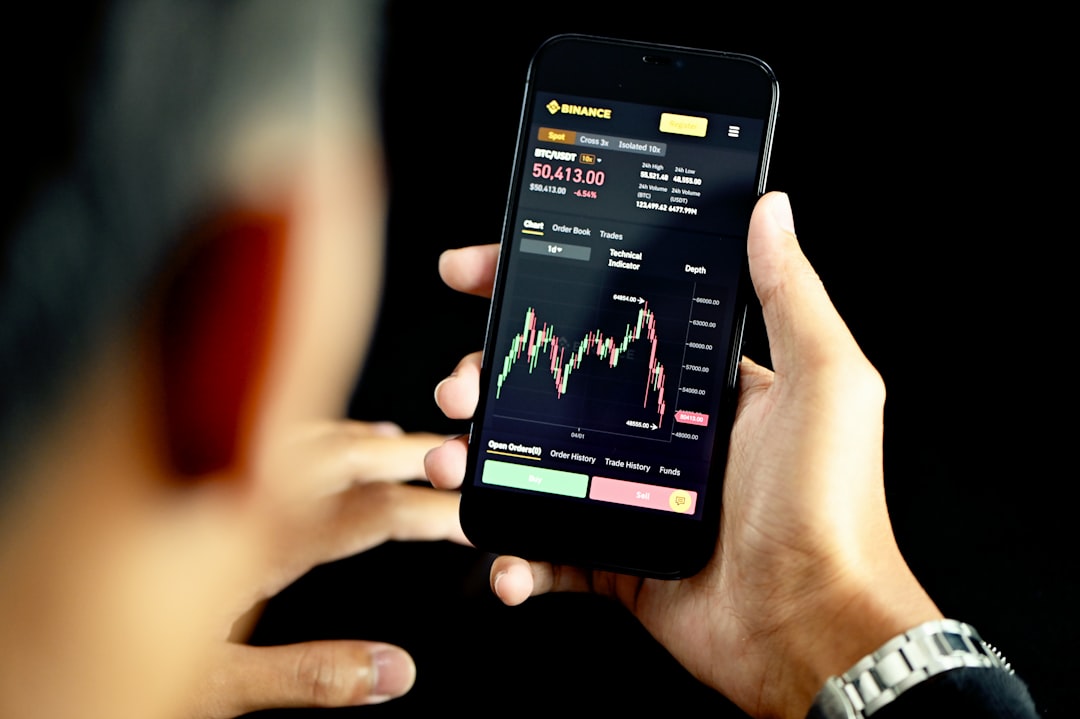
Have you ever felt overwhelmed by the sheer number of trading strategies out there? It’s like trying to find a needle in a haystack, especially when everyone claims their method is the “holy grail.” I’ve been there, and honestly, it can be frustrating trying to figure out which approach truly works and can stand the test of time in the fast-paced Forex market. Today, we’re going to cut through the noise and explore one of the most consistently profitable and adaptable strategies: Trend Following. It’s a methodology that has proven its resilience across various market conditions, and with the right understanding, it could be a game-changer for your trading journey! 😊
What Exactly is Trend Following in FX? 🤔
At its core, Trend Following is a trading strategy that attempts to capture gains by analyzing the momentum of an asset in a particular direction. Instead of predicting market reversals, trend followers aim to identify the prevailing direction of the market (up or down) and enter trades that align with that direction. They ride the trend for as long as it lasts, exiting when the trend shows signs of weakening or reversing. This approach is rooted in the belief that markets tend to move in sustained trends rather than random walks. For instance, if the EUR/USD pair is consistently moving upwards over several weeks, a trend follower would look to buy the pair and hold it until that upward momentum diminishes. It’s about letting the market tell you where it’s going, rather than trying to outsmart it.
This strategy often involves using various technical indicators to confirm trends and entry/exit points. It’s not about being the first to enter a trend, but rather confirming its existence and then participating. This often means missing the very beginning of a move, but it also helps to avoid false breakouts and whipsaws, which can be costly. It’s a patient approach that prioritizes confirmed momentum over speculative predictions.
Trend following is often considered a long-term strategy, though it can be adapted for shorter timeframes. The key is to define what constitutes a “trend” for your chosen timeframe and stick to your rules. It’s more about consistency than about hitting home runs on every trade.
Why Trend Following Now? Latest Market Insights & Statistics 📊
The Forex market in mid-2026 continues to present unique opportunities for trend followers. Recent geopolitical shifts and evolving economic policies globally have contributed to periods of sustained directional movement in major currency pairs. For example, the ongoing efforts by central banks to manage inflation and interest rates have created distinct trends in pairs like USD/JPY and EUR/GBP. Data from Q1 and Q2 2026 shows that currency pairs with strong interest rate differentials have exhibited particularly robust trends, offering fertile ground for this strategy.
According to a recent report by a leading financial analytics firm, trend-following strategies globally have shown a resurgence in performance, particularly during periods of increased market volatility and uncertainty, which characterized much of early 2026. The average daily volume in the Forex market remains consistently high, exceeding $7.5 trillion as of early 2026, indicating ample liquidity for executing trend-following trades without significant slippage. This high liquidity ensures that large positions can be entered and exited efficiently, which is crucial for capturing long-term trends.
Key Market Drivers for Trend Following in 2026
| Category | Impact on Trends | Current Status (Mid-2026) | Relevant Pairs |
|---|---|---|---|
| Interest Rate Policies | Creates sustained currency strength/weakness. | Divergence among major central banks. | USD/JPY, EUR/USD, GBP/USD |
| Geopolitical Events | Can trigger flight-to-safety or risk-on trends. | Ongoing regional conflicts, election cycles. | CHF/JPY, Gold (proxy for safe-haven) |
| Commodity Prices | Influences commodity-linked currencies. | Volatile energy and metal markets. | AUD/USD, CAD/JPY, NZD/USD |
| Technological Advancements | Enhances data analysis for trend identification. | AI/ML tools for predictive analytics. | All major pairs (improved analysis) |
While trend following can be highly profitable, it’s not without risks. Periods of choppy or range-bound markets can lead to multiple false signals and drawdowns. It’s crucial to have robust risk management in place to protect your capital during these times. Don’t chase every signal; wait for clear, confirmed trends.
Key Checkpoints: Remember These Essentials! 📌
So, you’ve made it this far! With a lot of information covered, it’s easy to forget the most crucial points. Let’s recap the three absolute must-remembers for successful trend following.
-
✅
Identify Clear Trends, Don’t Predict
The essence of trend following is reacting to existing market momentum, not forecasting future moves. Wait for confirmation before entering a trade. -
✅
Robust Risk Management is Non-Negotiable
Always define your stop-loss and position size before entering any trade. Protect your capital, especially during consolidation phases. -
✅
Patience and Discipline are Your Best Friends
Trend following requires patience to wait for strong trends and discipline to stick to your system, even during drawdowns.
Building Your Trend Following Toolkit: Essential Indicators & Risk Management 👩💼👨💻
To effectively implement a trend-following strategy, you’ll need a robust toolkit of technical indicators and a solid risk management plan. Common indicators include Moving Averages, the Average Directional Index (ADX), and the Relative Strength Index (RSI). Moving averages (e.g., 50-period and 200-period EMAs) help identify the direction of the trend, while ADX measures its strength. RSI can signal overbought or oversold conditions, which might suggest a trend is losing steam or consolidating.
Beyond indicators, risk management is paramount. This involves setting appropriate stop-loss orders to limit potential losses on any single trade and determining your position size based on your overall account equity and risk tolerance. A general rule of thumb is to risk no more than 1-2% of your trading capital on any single trade. This ensures that even a string of losing trades won’t significantly deplete your account. Also, consider trailing stops to lock in profits as the trend progresses.
Always backtest your chosen indicators and risk management parameters on historical data to understand their effectiveness in different market conditions. What works for one currency pair or timeframe might not work for another. Customization is key to finding a strategy that fits your trading style.
Real-World Example: Riding the USD/CAD Trend 📚
Let’s consider a hypothetical scenario from early 2026. Imagine the USD/CAD pair. Economic data indicated stronger-than-expected US employment figures and persistent inflation, leading the Federal Reserve to maintain a hawkish stance. Meanwhile, Canadian economic data was softer, and oil prices (a major factor for CAD) showed some weakness. This created a clear divergence in monetary policy expectations, setting the stage for a potential USD/CAD uptrend.
Trader Sarah’s Situation
- Account Size: $10,000
- Risk per Trade: 1% ($100)
- Indicators: 50 & 200-period Exponential Moving Averages (EMAs), ADX (above 25 for trend strength)

Trading Process
1) Trend Identification: Sarah observed the USD/CAD daily chart. The 50-period EMA crossed above the 200-period EMA, and both were sloping upwards. The ADX reading climbed above 25, confirming a strong uptrend. She also noted a series of higher highs and higher lows.
2) Entry: After a slight pullback to the 50-period EMA, Sarah entered a long position at 1.3550, confirming the bounce with a bullish candlestick pattern.
3) Stop-Loss & Take-Profit: She placed her initial stop-loss below the recent swing low at 1.3480 (70 pips risk). She aimed for a 1:2 risk-reward ratio, targeting 1.3690 (140 pips profit), but also planned to trail her stop.
Final Result
– The trend continued for several weeks. Sarah successfully trailed her stop-loss upwards, eventually exiting the trade at 1.3720 as the 50-period EMA flattened and ADX began to decline.
– Total Profit: 170 pips. With a position size risking $100 for 70 pips, each pip was worth approx. $1.42. Total profit was $1.42 * 170 = $241.40 (2.41% return on her account). This demonstrates how a single, well-managed trend trade can yield significant returns.
This example highlights the power of patience and disciplined execution in trend following. Sarah didn’t try to predict the bottom or top; she simply identified an existing trend, managed her risk, and let the market do the work. It’s a testament to the idea that sometimes, the simplest strategies, executed consistently, are the most effective.
Wrapping Up: Your Path to Profitable FX Trading 📝
The Trend Following strategy offers a robust and adaptable framework for navigating the Forex markets. By focusing on confirmed market momentum and adhering to strict risk management principles, traders can position themselves to capture significant moves and build consistent profitability. While no strategy guarantees success, understanding and diligently applying trend-following techniques can significantly enhance your trading edge, especially in the dynamic environment of 2026.
Remember, the journey to becoming a successful FX trader is about continuous learning, adaptation, and discipline. Don’t be afraid to backtest, refine your approach, and most importantly, stay patient. What are your thoughts on trend following? Have you used it successfully, or are you looking to implement it? Let me know in the comments below! 😊
Trend Following Strategy at a Glance
Frequently Asked Questions ❓
Copyright © 2025 QHost365.com ®