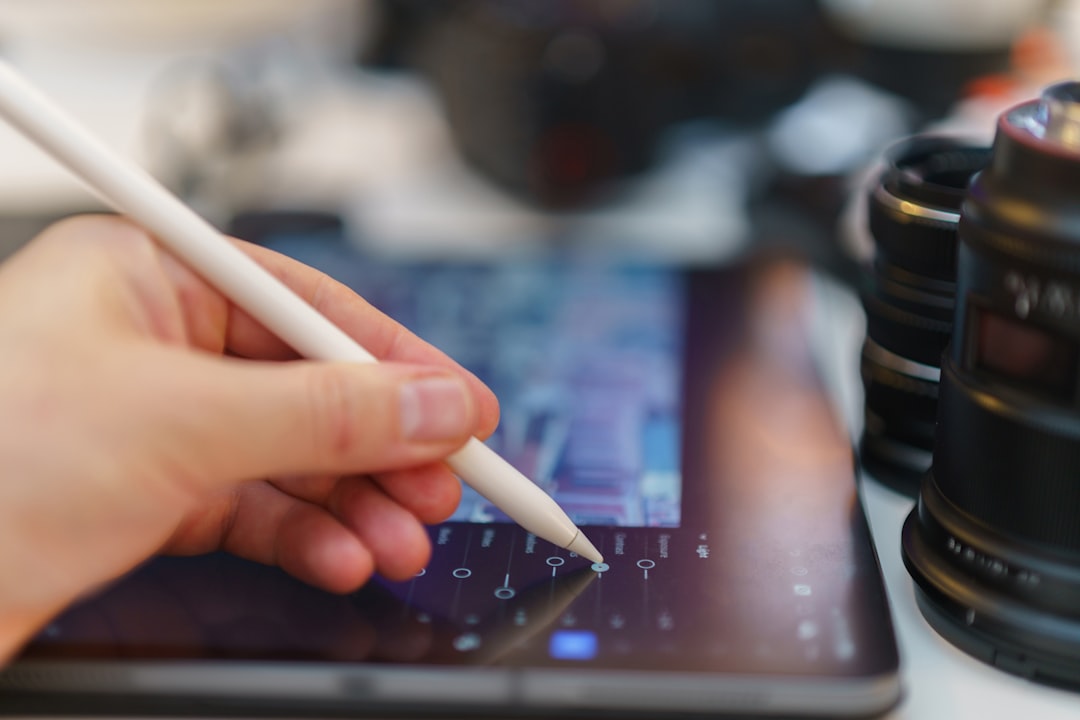
Have you ever felt that buzz, that undeniable shift in the air when a new technology truly takes hold? We’re living through one of those moments right now, especially in the world of creativity. What was once considered the exclusive domain of human ingenuity is now being profoundly influenced, and in many ways, amplified by Artificial Intelligence. From generating breathtaking art to composing intricate musical scores, AI is no longer just a tool for automation; it’s becoming a dynamic co-creator. But what does this really mean for us, the human creators? Let’s dive into how AI is not just changing, but revolutionizing creative industries in 2026! 😊
The Dawn of AI-Powered Creativity: What’s Happening? 🤔
The year 2026 marks a significant turning point in the relationship between AI and human creativity. What seemed like science fiction just a few years ago—machines composing music, generating artwork, writing stories, and producing videos—has become an everyday reality. AI has evolved into a powerful partner in creative processes across various industries, from digital art and filmmaking to marketing campaigns and software development.
Instead of starting from scratch, many creative professionals are now adopting AI-assisted workflows. They use AI to generate initial ideas or drafts, then refine them manually. For instance, a writer might use AI to create article outlines, a designer could develop concept art with AI-generated images, and a filmmaker might generate visual storyboards using AI.
Generative AI is a subset of AI that can produce new content, such as images, text, audio, and video, based on patterns learned from vast datasets. Tools like Midjourney, DALL-E, and ChatGPT are prime examples of this technology in action, enabling creators to explore new ideas and accelerate their workflows.
Statistics & Trends: The Creative Economy’s New Co-Pilot 📊
The numbers don’t lie: AI is rapidly integrating into creative workflows. According to Adobe’s 2026 Creators’ Toolkit Report, a staggering 87% of creators using creative AI say it has accelerated the growth of their business or audience. Furthermore, 75% describe creative AI as integrated or essential to how they work. This indicates a clear shift from AI being a novel concept to a necessary component of modern creative infrastructure.
The impact is particularly evident in fields like graphic design and music production. By 2026, AI tools like Adobe Firefly and Canva’s AI features are helping designers generate logos, fix layouts, and explore multiple design directions in a fraction of the time. In music, over 60% of producers now use AI tools for ideation, audio cleanup, stem separation, or mixing assistance. The generative AI in music market alone is projected to expand from $1.98 billion in 2026 to $18.04 billion by 2035.
AI Tools & Their Creative Applications (2026)
| Creative Field | AI Application | Examples of Tools | Benefit |
|---|---|---|---|
| Graphic Design | Layout generation, logo creation, image editing, concept art | Adobe Firefly, Canva AI, Midjourney | Speeds up repetitive tasks, sparks new ideas, rapid prototyping |
| Music Production | Melody/harmony generation, audio cleanup, stem separation, mastering | Suno AI, AIVA, Moises, LANDR | Assists with ideation, improves production quality, reduces manual work |
| Content Writing | Outline generation, drafting, editing, SEO recommendations, repurposing | ChatGPT, Claude, Jasper, Grammarly | Faster drafting, improved efficiency, consistent quality |
| Filmmaking & VFX | Storyboard generation, visual effects, 3D asset creation, editing | Runway, Hitem3D, Wonder Dynamics | Accelerates post-production, enables complex visuals, streamlines workflows |
While AI offers immense benefits, concerns about job displacement, copyright, and ethical use remain. Generative AI could automate up to 26% of tasks in arts, design, entertainment, and media sectors. However, the consensus among experts is that AI will augment, not entirely replace, human creativity.
Key Checkpoints: This is What You Absolutely Need to Remember! 📌
Made it this far? Great! With so much information, it’s easy to forget the most crucial points. Let’s quickly recap the three absolute must-knows from our discussion so far. Keep these in mind!
-
✅
AI is a Co-Pilot, Not a Replacement:
In 2026, AI primarily serves to enhance human capabilities, handling repetitive tasks and generating ideas, allowing creators to focus on strategic thinking and emotional depth. -
✅
Adaptation is Key for Creative Professionals:
Learning to effectively use AI tools and developing skills like prompt engineering and critical evaluation are becoming essential for staying competitive in the evolving creative landscape. -
✅
The Human Element Remains Irreplaceable:
While AI excels at generating content, human judgment, emotional intelligence, cultural understanding, and unique storytelling are what truly give creative work meaning and resonance.
The Human-AI Collaboration: A Symbiotic Future 👩💼👨💻
The narrative isn’t about AI replacing humans, but rather about a powerful synergy that combines the complementary strengths of both. AI’s computational capacity, data analysis, and pattern recognition, when combined with human creativity, intuition, and critical thinking, can unlock new possibilities across creative industries. A survey by Adobe even revealed that over 70% of creative professionals believe AI will significantly enhance and transform their work.
This collaborative approach helps overcome creative blocks and allows for the exploration of new ideas without the usual constraints. For instance, a writer facing a plot twist dilemma can use AI to generate multiple storyline possibilities, while a designer can quickly iterate on concept variations. The key is leveraging AI for speed and efficiency while maintaining human oversight for vision, direction, and emotional depth.
New creative professions are emerging, such as AI creative directors, prompt engineers for generative AI, and AI-assisted storytellers. These roles emphasize guiding AI and integrating its outputs into a cohesive, human-driven creative vision.
Real-World Examples: AI in Action Across Creative Fields 📚
Let’s look at some concrete examples of how AI is being used in the creative world today, showcasing the power of human-AI collaboration.
Case Study: Filmmaking with AI
- **Situation:** Filmmaker Dave Clark, co-founder of Promise, uses generative AI to visualize films before financing.
- **Goal:** To show studios what a film can become through AI-generated work that can be owned, insured, edited, and released.
The Process
1) **Ideation & Visualization:** Clark’s software, Muse, records prompts, settings, and approvals, allowing for rapid visualization of concepts.
2) **IP Management:** Copyright Guardian checks for potential intellectual-property conflicts, a crucial step for studios.
3) **Human-AI Integration:** Projects like “Hardcore 94” combine AI-native artists with experienced filmmakers, demonstrating a blended approach.
Final Result
– **Streamlined Pre-production:** AI significantly speeds up the visualization and conceptualization phases, reducing the time and cost associated with traditional methods.
– **Enhanced Storytelling:** Filmmakers can explore more creative directions and present a clearer vision to stakeholders, ultimately leading to more compelling narratives.
This case illustrates that AI in filmmaking is not about replacing the director or the artist, but about providing powerful tools to accelerate workflows and unlock new possibilities, allowing human creativity to shine through more efficiently.
Wrapping Up: Key Takeaways 📝
Well, there you have it! The creative landscape in 2026 is undoubtedly being reshaped by AI, but not in the dystopian, job-stealing way some once feared. Instead, we’re seeing a powerful evolution towards human-AI co-creation, where machines serve as incredible accelerators and idea generators, freeing up human minds for deeper strategic thinking and emotional storytelling.
The future of creativity is bright for those who embrace this technological partnership. By adapting, learning new tools, and focusing on our uniquely human strengths—like judgment, empathy, and original vision—we can unlock unprecedented levels of innovation. What are your thoughts on AI in creative fields? Have you used any AI tools in your work? Share your experiences in the comments below! 😊
AI in Creative Industries: Key Insights for 2026
Frequently Asked Questions ❓