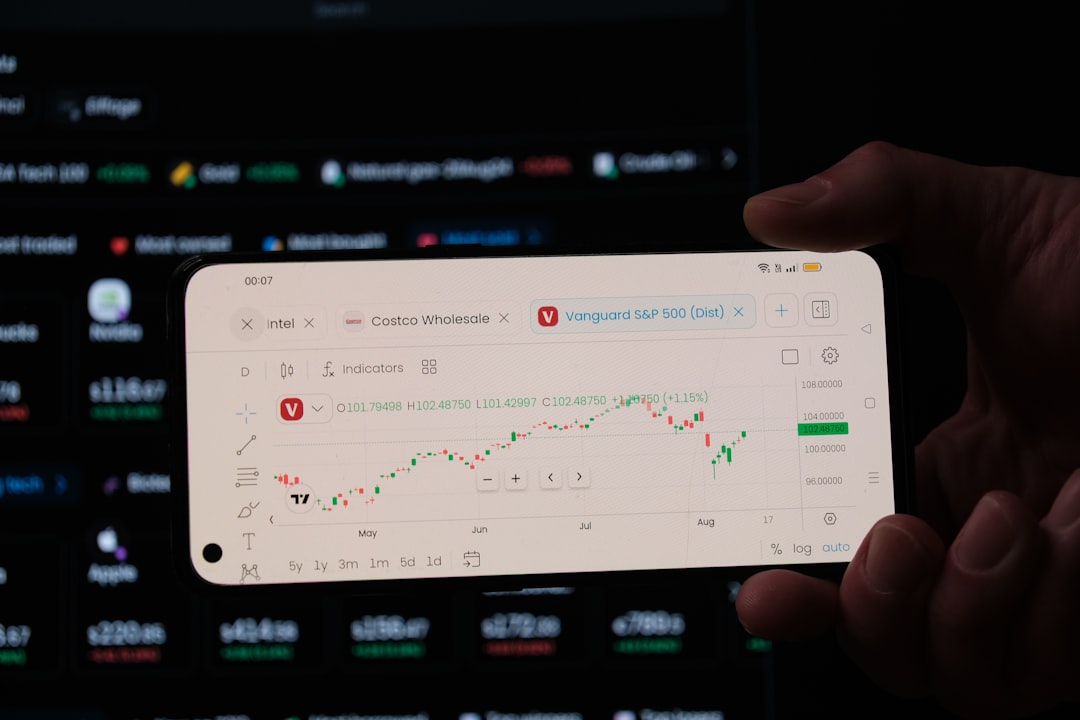
Ever felt the thrill of quick decisions and immediate results in the financial markets? For many traders, the allure of making rapid profits from tiny price movements is irresistible. This is where FX scalping comes into play – a dynamic trading strategy focused on capitalizing on small fluctuations in currency pairs. If you’re looking for a fast-paced approach to potentially boost your trading account, you’ve come to the right place! Let’s dive into the world of scalping and explore how you can make it work for you. 😊
What Exactly is FX Scalping? 🤔
FX scalping is a short-term trading strategy where traders aim to make small profits from minor price changes, often closing trades within minutes or even seconds. The idea is to take advantage of the sheer volume of trades and leverage to accumulate profits over a trading session, rather than waiting for large price swings. Think of it as collecting many small coins rather than waiting for one big bill.
Unlike day trading, which might hold positions for hours, scalpers are in and out of the market extremely quickly. This requires intense focus, rapid decision-making, and a keen eye on market microstructure. It’s a high-stress, high-reward approach that isn’t for everyone, but for those who master it, it can be incredibly lucrative.
Scalping often involves trading highly liquid currency pairs like EUR/USD, GBP/USD, and USD/JPY, where spreads are typically tighter and price movements are frequent enough to offer numerous opportunities.
Key Characteristics & Latest Trends in Scalping 📊
The forex market is constantly evolving, and scalping is no exception. As of mid-2026, we’re seeing continued trends in automation and the importance of technological edge. The global foreign exchange market turnover reached an average of $7.5 trillion per day in April 2022, and this figure is projected to grow, indicating vast liquidity for scalpers to tap into.

One of the most significant trends is the rise of algorithmic trading and Expert Advisors (EAs). Many scalpers now utilize automated systems to execute trades at lightning speed, removing human emotion from the equation. This allows for consistent application of strategies and the ability to monitor multiple pairs simultaneously. However, even with automation, careful oversight and adaptation to changing market conditions are crucial.
Scalping in the Modern Market (2026)
| Aspect | Description | Relevance to Scalping | Key Takeaway |
|---|---|---|---|
| High Volatility | Frequent, rapid price swings due to geopolitical events, economic data. | Creates numerous entry/exit points for small gains. | Requires quick adaptation and tight stops. |
| Algorithmic Trading | Increased use of automated systems and EAs. | Faster execution, reduced human error, 24/5 monitoring. | Requires robust backtesting and regular optimization. |
| Tight Spreads | Competition among brokers leading to lower bid-ask spreads. | Crucial for profitability, as small gains can be eaten by spreads. | Choose brokers with competitive pricing models. |
| Technological Edge | Fast internet, powerful computers, direct market access (DMA). | Minimizes latency, ensuring trades are executed at desired prices. | Invest in reliable infrastructure for optimal performance. |
Scalping can incur significant transaction costs due to the high volume of trades. Always factor in spreads and commissions when evaluating your potential profits.
Core Checkpoints: Don’t Forget These! 📌
Have you been following along well? Since this article is quite detailed, I’ll recap the most important takeaways. Please remember these three key points.
-
✅
Speed and Precision are Paramount
FX scalping demands extremely fast execution and accurate entry/exit points to capture fleeting opportunities. -
✅
Robust Risk Management is Non-Negotiable
Always use tight stop-losses and never risk more than a tiny percentage of your capital per trade. -
✅
Technology and Automation Offer an Edge
Leveraging EAs and a reliable trading infrastructure can significantly improve your scalping performance.
Popular FX Scalping Strategies 👩💼👨💻
While scalping relies on quick movements, having a structured strategy is vital. Successful scalpers often combine technical indicators with a deep understanding of market behavior. Here are a few common approaches:
- Support and Resistance Scalping: Identifying key price levels where the market tends to bounce or break. Scalpers enter trades near these levels, expecting a quick reversal or continuation for a few pips.
- Moving Average Crossover: Using multiple moving averages (e.g., 5-period and 10-period) on very short timeframes (1-minute charts). A crossover can signal a short-term trend reversal, prompting a quick entry and exit.
- Bollinger Bands Squeeze: When Bollinger Bands narrow, it often signals low volatility, which can precede a significant price breakout. Scalpers look to enter trades as the bands expand, capturing the initial burst of movement.
- Order Flow Scalping: This advanced technique involves analyzing the real-time flow of buy and sell orders to anticipate immediate price direction. It requires specialized tools and a deep understanding of market mechanics.
No single strategy guarantees success. The best scalpers often adapt and combine elements from various techniques, constantly refining their approach based on current market conditions.
Practical Example: A Scalping Scenario 📚
Let’s walk through a hypothetical scalping trade to see how it might play out in real-time. This example simplifies the process, but it illustrates the core mechanics.
Trader’s Situation
- Currency Pair: EUR/USD
- Timeframe: 1-minute chart
- Strategy: Support/Resistance with a 5-period Moving Average (MA)
- Current Price: 1.08500
- Identified Support: 1.08480
Execution Process
1) The EUR/USD price approaches the identified support level of 1.08480. The 5-period MA is also showing signs of flattening, indicating potential short-term consolidation or bounce.
2) As the price touches 1.08480 and shows a slight rejection (e.g., a bullish candlestick forms), the trader quickly places a BUY order for 1 standard lot (100,000 units) at 1.08485 (accounting for a small spread).
3) Simultaneously, a tight stop-loss is placed at 1.08460 (2.5 pips below entry) and a take-profit order at 1.08515 (3 pips above entry).
Final Result
– Outcome: Within 30 seconds, the price moves up to 1.08515, hitting the take-profit target.
– Profit: 3 pips x $10/pip (for 1 standard lot) = $30 (minus any commission/spread costs).
This example shows how a scalper aims for small, consistent gains. While $30 might seem small, imagine executing 10-20 such trades successfully in a day. That’s the power of compounding small profits!
Conclusion: Summarizing Key Takeaways 📝
FX scalping is a high-octane trading strategy that, when executed with discipline and a solid understanding of the market, can be incredibly rewarding. It demands focus, quick reflexes, and robust risk management. As we move further into 2026, the integration of technology and automated systems will continue to play a crucial role in giving scalpers an edge.
Remember, success in scalping isn’t about hitting one huge trade, but consistently capturing small, manageable profits. Start with a demo account, refine your strategy, and always prioritize protecting your capital. Do you have any burning questions about scalping or perhaps a favorite strategy you’d like to share? Let me know in the comments below! 😊