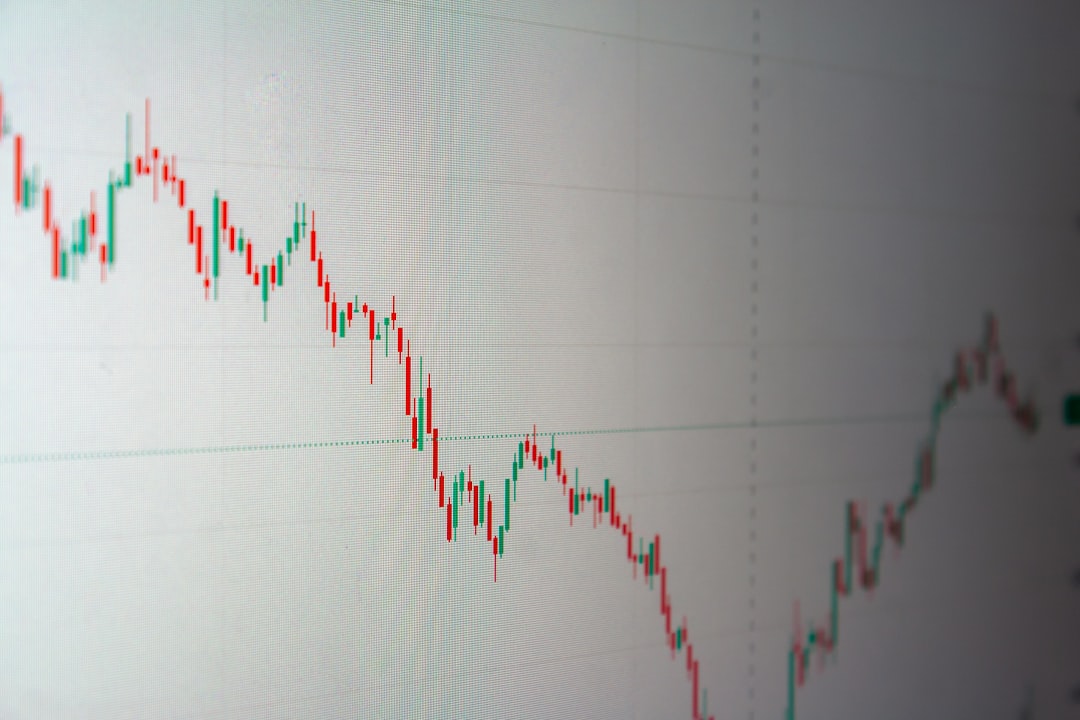
Ever felt like the “buy and hold” strategy is a bit too slow, but day trading is just too intense? You’re not alone! Many investors are seeking ways to actively participate in the market without the constant screen time or the multi-year commitment. That’s where swing trading comes in, offering a flexible and potentially profitable alternative. It’s about riding the market’s waves, not getting lost in the daily choppiness. Ready to explore a strategy that balances opportunity with a manageable time commitment? Let’s dive in! 😊
What Exactly is Swing Trading? 🤔
Swing trading is a speculative trading strategy where you hold a tradable asset for more than one day, typically for several days to a few weeks, to profit from anticipated price “swings” or changes. Unlike day traders who close all positions within a single trading day, swing traders are comfortable holding positions overnight, allowing them to capture larger price movements that unfold over a slightly longer timeframe. This makes it a popular choice for those who want to be active in the market but can’t dedicate full-time attention to it.
The core idea is to identify stocks or other financial instruments that are showing a tendency to move within well-defined channels or trends. Swing traders aim to buy near the bottom of a short-term dip within an uptrend and sell near the top of that swing, or vice versa in a downtrend (short selling). This strategy often relies heavily on technical analysis to spot price patterns and predict potential entry and exit points.
Swing trading is considered a middle-ground strategy between the very short-term day trading and the long-term buy-and-hold investing. It offers a balance of frequent opportunities and a more relaxed pace, making it suitable for individuals with full-time jobs or busy schedules.
The Appeal of Swing Trading: Trends & Statistics in 2026 📊
In 2026, swing trading continues to be a highly relevant and increasingly popular strategy. The current market environment, characterized by elevated interest rates, cooling inflation, and shifting central bank guidance, creates significant regional divergence and volatility across various asset classes. This dynamic landscape presents frequent opportunities for swing traders to capitalize on short-to-medium term price movements.
One of the biggest draws in 2026 is the flexibility and lower time commitment compared to day trading. Many traders find it more realistic to manage swing trades around work and family responsibilities, often checking positions once or twice a day rather than constantly monitoring tick-by-tick charts. The increased accessibility of advanced trading tools, once exclusive to institutional desks, on retail platforms with user-friendly interfaces has also lowered the barrier to entry.

Swing Trading Success Rates & Profitability
| Metric | Description | Latest Data (2024-2026) | Implication |
|---|---|---|---|
| Profitability Rate | Percentage of swing traders who achieve annual profits. | Around 10% (VectorVest). Some estimations suggest up to 90% fail to make money. | Highlights the importance of discipline, strategy, and risk management. |
| Average Returns (Successful Traders) | Typical percentage gains per trade or annually. | 10% to 30% annually. Experienced traders report 12% to 45% per trade. | Significant profit potential for skilled and disciplined traders. |
| Time Commitment | Daily hours required for analysis and monitoring. | Approximately 1-2 hours daily for scanning and journaling. | More flexible than day trading, suitable for those with other commitments. |
| Key Market Themes (2026) | Sectors providing frequent swing opportunities. | AI stocks, semiconductor stocks, clean energy, high-growth tech. | Focus on these sectors for potential swing trade candidates. |
While appealing, swing trading comes with significant risks. The most common is “gap risk,” where unexpected news or events occurring overnight or over a weekend can cause a stock’s price to open significantly higher or lower than its previous close, potentially bypassing your stop-loss orders.
Key Checkpoints: Essential for Swing Trading Success! 📌
You’ve made it this far! With all the information, it’s easy to forget the crucial details. Let’s recap the absolute essentials for swing trading. Keep these three points firmly in mind.
-
✅
Risk Management is Paramount
Always define your risk before entering a trade, use stop-loss orders, and adhere to a strict risk-reward ratio (e.g., 1:3 minimum). Never risk more than 1-2% of your capital per trade. -
✅
Master Technical Analysis & Key Indicators
Learn to read charts and utilize indicators like Moving Averages (MA), Relative Strength Index (RSI), and MACD to identify trends, momentum, and potential reversal points. -
✅
Patience and Discipline are Your Best Allies
Avoid overtrading, wait for high-probability setups, and be patient with breakouts. Emotional discipline is crucial for consistent profits.
Developing Your Swing Trading Strategy 👩💼👨💻
A successful swing trading strategy demands rigorous planning and a deep understanding of market dynamics. In 2026, the market is characterized by algorithmic players, event-driven volatility, and fragmented momentum, meaning the old “buy and hold for 3-5 days” approach is less effective. Today’s edge comes from understanding market structure rather than just picking stocks.
Here’s a breakdown of key components to build your strategy:
- Technical Analysis: This is the backbone of swing trading. You’ll use charts and various indicators to identify trends, support and resistance levels, and potential reversal points.
- Indicator Selection: While many indicators exist, focusing on 2-3 for optimal results is recommended. A good combination might include one for trend (like EMAs), one for momentum (RSI or MACD), and one for confirmation (Volume or Bollinger Bands).
- Risk-Reward Ratio: Always aim for a favorable risk-reward, such as a 1:3 minimum (for every 1% risk, target 3% potential reward). This ensures that even with a win rate below 50%, you can still be profitable.
- Stop-Loss Orders: Essential for limiting potential losses. Determine your stop-loss level before entering any trade.
- Entry and Exit Points: Develop clear rules for when to enter a trade (e.g., after market confirmation of a direction change, or buying short-term weakness) and when to take profits (e.g., near the upper channel line).
The daily chart is often a swing trader’s best friend. Most setups are identified, entered, and managed on the daily timeframe, allowing for a less stressful trading experience compared to shorter timeframes.
A Practical Example: Identifying a Swing Trade 📚
Let’s walk through a hypothetical scenario to illustrate how a swing trade might be identified and executed, keeping in mind the 2026 market dynamics.
Scenario: AI Tech Stock (Ticker: AITech)
- Context: AITech is a leading AI stock, a sector with strong institutional flows in 2026. It has been in a clear uptrend on the weekly chart but has recently pulled back on the daily chart.
- Observation: On the daily chart, AITech has pulled back to its 50-day Exponential Moving Average (EMA), which has acted as dynamic support multiple times in the past. The Relative Strength Index (RSI) is currently around 45, indicating it’s neither overbought nor oversold, but showing a healthy pullback within the trend. Volume has decreased during the pullback, suggesting selling pressure is waning.
Actionable Steps
1) Entry Signal: The price consolidates near the 50 EMA and shows a bullish candlestick pattern (e.g., a hammer or engulfing pattern) with an increase in volume, confirming buyer interest. You place a buy order at $150.
2) Risk Management: A protective stop-loss is placed at $145 (just below the 50 EMA and previous low), limiting the risk to $5 per share. This represents a manageable 3.3% risk of your capital per share if your position size is appropriate.
3) Profit Target: Based on previous swing highs and Fibonacci extension levels, you identify a target of $165, aiming for a $15 profit per share. This gives you a favorable 1:3 risk-reward ratio ($5 risk for $15 reward).
Potential Outcome
– Positive: AITech bounces off the 50 EMA, breaks previous resistance, and reaches your target of $165 within a few days to a week. You close the position for a 10% gain ($15 profit on a $150 entry).
– Negative: AITech fails to hold the 50 EMA and drops, hitting your stop-loss at $145. You exit the trade, limiting your loss to 3.3%.
This example highlights the importance of combining technical analysis with strict risk management. While the market is unpredictable, a well-defined strategy allows you to participate in potential upside while protecting your capital from significant drawdowns.
Wrapping Up: Your Path to Profitable Swing Trading 📝
Swing trading, in essence, is about harnessing the market’s natural rhythm. It’s a journey that demands continuous learning, adaptability, and unwavering discipline. As we navigate the dynamic markets of 2026, understanding market structure and embracing volatility-aware strategies will be key to your success.
Remember, the goal isn’t to win every trade, but to ensure your winning trades are larger than your losing ones. By focusing on robust risk management, mastering technical indicators, and cultivating emotional discipline, you can build a sustainable and potentially profitable swing trading practice. What are your biggest questions about getting started? Share them in the comments below – I’d love to hear from you! 😊