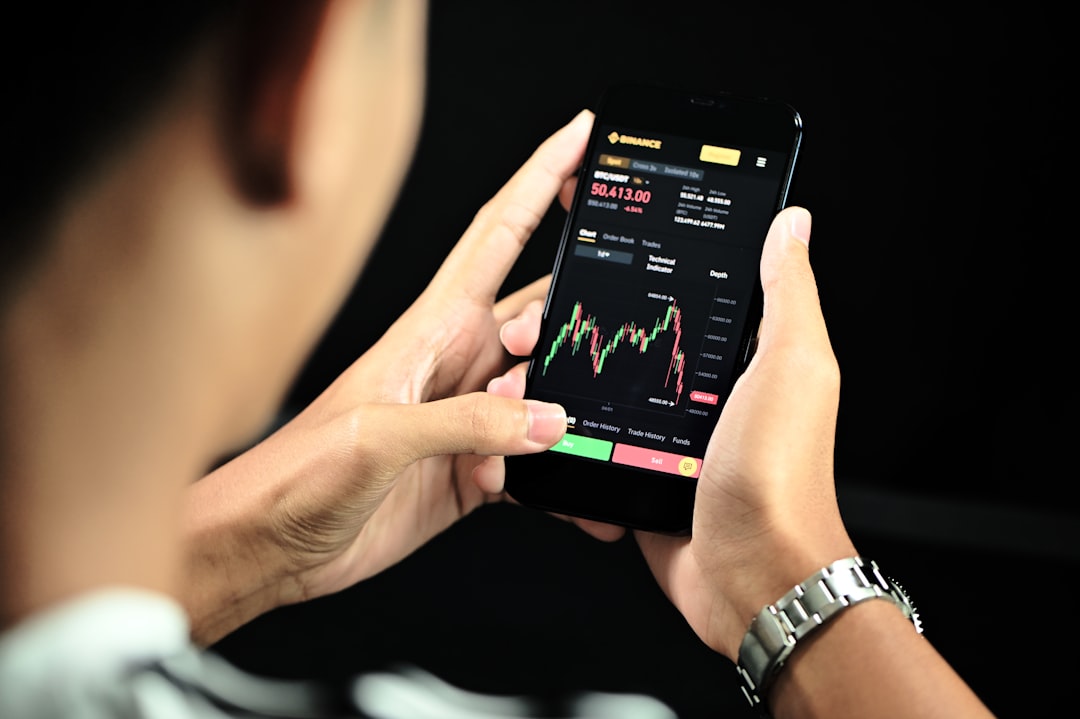
Have you ever felt frustrated watching the stock market swing wildly, wishing you could capture those rapid ups and downs for profit? You’re not alone! Many investors find long-term strategies too slow or day trading too intense. That’s where swing trading comes in, offering a compelling middle ground to potentially generate significant returns. Let’s dive into how this powerful technique can become a cornerstone of your trading arsenal! 😊
What is Swing Trading and Why Does It Matter? 🤔
Swing trading is a popular trading strategy that involves holding a stock or other asset for one to several days, or even a few weeks, to profit from price swings. Unlike day traders who close positions by the end of the trading day, swing traders aim to capture larger price movements that unfold over a slightly longer period. This approach typically involves analyzing technical indicators to identify potential price trends and reversals.
The beauty of swing trading lies in its balance. It offers more flexibility than day trading, as you don’t need to constantly monitor the market, yet it provides more opportunities for profit than long-term investing, especially in volatile markets. With the current market landscape, marked by rapid technological shifts and economic adjustments, understanding and implementing effective swing trading strategies is more relevant than ever.
Swing trading typically targets stocks with moderate to high liquidity and volatility, allowing for clear entry and exit points. It’s not about predicting the future, but rather reacting to identified patterns and probabilities.
Key Indicators and Tools for Successful Swing Trading 📊
Successful swing trading heavily relies on technical analysis. This involves studying past market data, primarily price and volume, to identify patterns and predict future price movements. Several key indicators help traders make informed decisions.
In 2026, the integration of Artificial Intelligence (AI) and Machine Learning (ML) into trading platforms has significantly enhanced the power of these indicators. AI algorithms can now analyze vast amounts of data, identify complex patterns, and even provide predictive insights that human traders might miss, making these tools even more potent.

Essential Technical Indicators for Swing Traders
| Category | Indicator | Purpose | Key Signal |
|---|---|---|---|
| Momentum | Relative Strength Index (RSI) | Measures the speed and change of price movements. | Overbought (>70) or Oversold (<30) conditions. |
| Trend | Moving Average Convergence Divergence (MACD) | Reveals changes in the strength, direction, momentum, and duration of a trend. | Crossovers of the MACD line and signal line. |
| Volatility | Bollinger Bands | Measures market volatility and identifies potential overbought/oversold conditions. | Price touching or breaking outside the bands. |
| Support/Resistance | Moving Averages (SMA/EMA) | Smooths out price data to identify trend direction. | Price crossing above/below moving averages. |
While these indicators are powerful, they are not foolproof. Always use them in conjunction with other analysis and proper risk management. Over-reliance on a single indicator can lead to poor decisions.
Core Checkpoints: What You Must Remember! 📌
You’ve made it this far! With all this information, it’s easy to forget the essentials. Let’s recap the most crucial points. Please keep these three things in mind:
-
✅
Understand the Market Context:
Always consider broader market trends and economic news. Even the best technical setup can fail against strong market headwinds. -
✅
Implement Strict Risk Management:
Never risk more than a small percentage of your capital on a single trade. Use stop-loss orders diligently to protect your capital. -
✅
Continuous Learning and Adaptation:
The market is constantly evolving. Stay updated on new strategies, tools, and market dynamics, especially with the rise of AI in trading.
Latest Trends and Market Insights for Swing Trading (2026) 👩💼👨💻
As of late 2026, the trading landscape continues to be shaped by several significant trends. Increased market volatility, driven by global macroeconomic shifts and geopolitical events, presents both challenges and amplified opportunities for swing traders. We’re seeing more pronounced short-term trends, making swing trading a favored approach for active investors.
Another major development is the growing adoption of AI-driven analytics and algorithmic trading. Platforms are offering sophisticated tools that can backtest strategies, identify high-probability setups, and even automate trade execution based on predefined swing trading rules. This technological edge allows traders to analyze more data faster and remove emotional biases.
The rise of fractional shares and commission-free trading continues to lower barriers to entry, leading to a more diverse and active retail trading community. This increased participation often contributes to the liquidity and short-term momentum that swing traders seek.
Practical Example: A Swing Trade Scenario 📚
Let’s walk through a hypothetical swing trade to illustrate how these concepts come together. Imagine a stock, “Tech Innovations Inc. (TII),” has been consolidating after a strong earnings report. A swing trader identifies a potential entry.
Trader’s Situation
- Observation: TII’s price has been bouncing between $95 and $105 for the past week, forming a clear consolidation pattern. The RSI is around 45, indicating neither overbought nor oversold.
- Catalyst: A major tech conference is scheduled in two days, where TII is expected to announce a new product.
Trading Process
1) Entry: The trader sees TII’s price approach the $98 support level, coinciding with a bullish MACD crossover. They decide to enter a long position at $98.50 per share, anticipating a breakout. They buy 100 shares.
2) Risk Management: A stop-loss order is placed at $96.00 (limiting potential loss to $2.50 per share). A target profit is set at $108.00 (a potential gain of $9.50 per share).
3) Execution: The news from the tech conference is positive, and TII’s stock price rallies. The stock hits $108.00 two days later, and the trader’s position is automatically closed.
Final Outcome
– Shares Bought: 100
– Entry Price: $98.50
– Exit Price: $108.00
– Gross Profit: ($108.00 – $98.50) * 100 = $950.00
This example highlights the importance of identifying consolidation patterns, using technical indicators for entry, and critically, having a clear risk-reward strategy with defined stop-loss and take-profit levels. Even with a good setup, unexpected market moves can occur, making risk management paramount.
Conclusion: Summarizing Key Takeaways 📝
Swing trading offers a dynamic and potentially lucrative way to engage with the stock market. By focusing on short-to-medium term price movements and leveraging technical analysis, traders can capitalize on market volatility. Remember, discipline, continuous learning, and robust risk management are your best allies in this journey. The evolving landscape, especially with advancements in AI, means that informed and adaptable traders have an exciting future ahead.
Don’t let market swings intimidate you; instead, learn to ride them! If you have any questions or want to share your swing trading experiences, feel free to leave a comment below! 😊