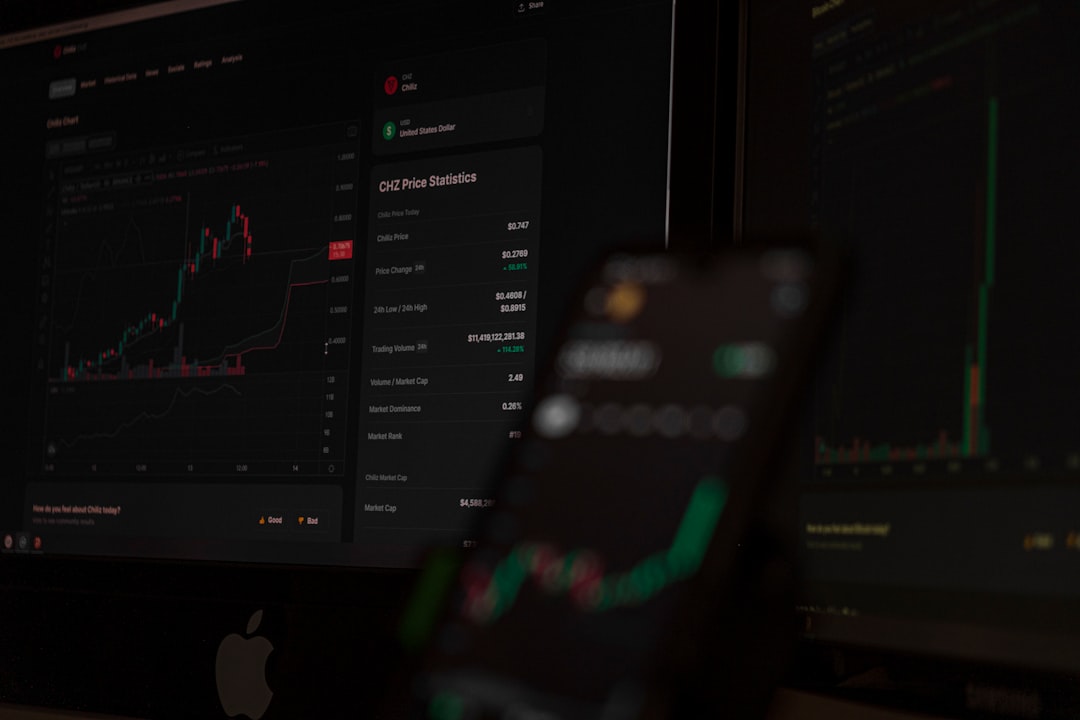
Have you ever felt caught between the slow, steady pace of long-term investing and the high-stress, lightning-fast world of day trading? It’s a common dilemma for many aspiring traders. You want to actively grow your capital, but perhaps not at the expense of your entire day, glued to charts. Well, what if I told you there’s a powerful middle ground that allows you to profit from market movements without needing to monitor every tick? That’s where swing trading comes in, offering a strategic approach to capture dynamic returns. Let’s dive in and explore how you can leverage this method to your advantage! 😊
What Exactly is Swing Trading? 🤔
Swing trading is a popular trading strategy that involves holding a stock or other financial asset for a period of a few days to several weeks. The primary goal is to profit from “swings” in price, meaning short-to-medium term price movements within a larger trend. Unlike day traders who close all positions before the market closes, swing traders are comfortable holding positions overnight, aiming to capture larger price moves that unfold over a longer period.
This strategy heavily relies on technical analysis, using chart patterns, indicators, and candlestick formations to identify potential entry and exit points. Traders look for assets that are showing signs of an impending price swing, often after a period of consolidation or a reversal from a trend. It’s a balance between patience and quick decision-making, requiring a solid understanding of market dynamics.
Swing trading typically involves holding positions for a few days to several weeks, aiming to capture short-to-medium term gains, making it less intense than day trading but more active than long-term investing.
Latest Trends & Statistics in Swing Trading 📊
As of September 2026, the financial markets continue to exhibit significant volatility, presenting both opportunities and challenges for swing traders. One of the most prominent trends is the increasing integration of AI and Machine Learning tools for identifying trading signals and optimizing entry/exit points. These advanced analytics help traders sift through vast amounts of data more efficiently, recognizing patterns that might be missed by the human eye.
While specific profitability statistics for swing trading are hard to quantify universally (as success varies greatly among individual traders), recent data suggests that disciplined traders employing robust risk management strategies have seen consistent returns. The average successful swing trade often targets a 10-20% gain, with a strict risk-to-reward ratio of at least 1:2 or 1:3. The rise of options-based swing trading is also noteworthy, allowing traders to leverage capital and manage risk more dynamically in volatile environments.
Swing Trading vs. Other Strategies
| Category | Swing Trading | Day Trading | Long-Term Investing |
|---|---|---|---|
| Holding Period | Days to Weeks | Minutes to Hours (within a day) | Months to Years |
| Primary Analysis | Technical | Technical | Fundamental |
| Frequency of Trades | Moderate | High | Low |
| Market Volatility | Opportunities | High Risk/Reward | Short-term Noise |
While promising, swing trading carries inherent risks like overnight gaps (when a stock opens significantly higher or lower than its previous close) and sudden market reversals. Always use stop-loss orders to protect your capital!
Key Checkpoints: Don’t Forget These! 📌
Made it this far? With a lot of information covered, here are the absolute essentials to remember. Keep these three points in mind.
-
✅
Master Technical Analysis
Successful swing trading hinges on your ability to read charts, identify patterns, and interpret indicators like Moving Averages, RSI, and MACD. -
✅
Risk Management is Paramount
Protect your capital by always setting stop-loss orders, defining your risk-to-reward ratio, and sizing your positions appropriately. Never risk more than 1-2% of your total capital on a single trade. -
✅
Adapt to Market Conditions
Markets are dynamic. Continuously learn, refine your strategies, and be flexible to adapt to changing volatility, trends, and economic news.
Essential Tools & Techniques for Success 👩💼👨💻
To become a proficient swing trader, you’ll need a reliable set of tools and a disciplined approach. Key technical indicators include Moving Averages (MA) to identify trends, the Relative Strength Index (RSI) to gauge overbought or oversold conditions, and the Moving Average Convergence Divergence (MACD) for momentum. Chart patterns like flags, pennants, and head and shoulders formations are also invaluable for predicting future price movements.
Beyond identifying entry signals, robust risk management is non-negotiable. Always determine your stop-loss level (the price at which you’ll exit a losing trade) and your take-profit target before entering a position. Position sizing, or deciding how many shares to buy, is also critical – never risk more than a small percentage of your trading capital on any single trade. This discipline helps preserve capital during inevitable losing streaks and ensures you’re around to profit from winning trades.
Always define your entry and exit points before placing a trade, and never risk more than 1-2% of your capital on a single trade. This disciplined approach is the cornerstone of sustainable swing trading.
Practical Example: A Hypothetical Swing Trade 📚
Let’s walk through a simple, hypothetical example to illustrate how a swing trade might play out in practice. Imagine a stock, “TechInnovate Inc.” (TINV), which has been in a steady downtrend but recently showed signs of a bullish reversal on its daily chart.
Trader Jane’s Scenario
- Stock: TechInnovate Inc. (TINV)
- Analysis: Jane identifies a double bottom pattern on the daily chart, a bullish reversal signal. The RSI is also moving out of oversold territory.
- Entry Point: Jane decides to enter a long position at $50 per share.
Planning the Trade
1) Stop-Loss: Jane sets a stop-loss order at $48, just below the recent low, limiting her risk to $2 per share.
2) Target Price: Based on previous resistance levels and Fibonacci retracements, Jane sets a take-profit target at $55 per share.
3) Risk-to-Reward: This gives her a risk of $2 and a potential reward of $5, a favorable 1:2.5 risk-to-reward ratio.
Final Outcome
– Result: Over the next week, TINV shares climb steadily, hitting Jane’s target of $55. She exits the trade.
– Profit: Jane earns $5 per share, representing a 10% profit on her investment in a relatively short period.
This example highlights the systematic approach of swing trading: identify a setup, define your risk, set your targets, and execute with discipline. While not every trade will be a winner, adhering to your strategy and managing risk is key to long-term success.

Conclusion: Your Path to Dynamic Returns 📝
Swing trading offers a compelling opportunity for those looking to actively participate in the stock market, capturing significant gains from short-to-medium term price movements. It demands a keen eye for technical analysis, a solid understanding of market trends, and most importantly, unwavering discipline in risk management. With the market continuously evolving, leveraging new technologies like AI and staying adaptable are more crucial than ever.
Remember, success in trading is a journey of continuous learning and refinement. By embracing the principles of swing trading and committing to disciplined execution, you can carve out a profitable path in the dynamic world of finance. Do you have any questions or want to share your swing trading experiences? Feel free to leave a comment below! 😊