Ever felt the thrill of the market, wanting to jump in and capture quick profits? Day trading, especially strategies like scalping, offers just that – the potential for rapid gains by capitalizing on small price movements. But let’s be honest, it’s also a world that can feel overwhelming, with its fast pace and inherent risks. In this article, we’ll dive deep into scalping, exploring its mechanics, the latest trends shaping it in 2026, and how you can approach it with discipline and smart tools. Ready to explore a potentially lucrative, albeit challenging, path to market success? Let’s get started! 😊
What is Scalping and Why Day Traders Love It? 🤔
Scalping is a high-frequency day trading strategy focused on making numerous small profits from minor price changes throughout the trading day. Unlike longer-term strategies, scalpers aim to enter and exit trades within minutes, or even seconds, to capture small gains that accumulate over many trades. The core idea is that small price movements are easier to predict and capture than large ones, and by executing a high volume of these trades, a scalper can generate significant overall profits.
This method thrives on market volatility and liquidity. Traders often use advanced charting tools and real-time data to identify entry and exit points with precision. It requires intense focus, quick decision-making, and robust risk management, as even small losses can quickly add up if not controlled.
In April 2026, the SEC approved FINRA’s amendments to Rule 4210, effectively eliminating the Pattern Day Trader (PDT) rule’s $25,000 minimum equity requirement for U.S. traders. This change makes day trading, including scalping, more accessible, requiring only a $2,000 minimum margin account balance.
Key Tools and Strategies for Successful Scalping 📊
To excel at scalping, traders rely on a combination of technical analysis, lightning-fast execution, and advanced trading platforms. Understanding market microstructure and using the right tools are paramount. Real-time data and low-latency execution are baseline requirements for active trading, with many platforms executing trades in under 1 second.
Essential Scalping Tools & Techniques
| Category | Description | Importance for Scalping | Example Tools/Concepts |
|---|---|---|---|
| Technical Analysis | Using indicators and chart patterns to predict price movements. | Crucial for identifying short-term entry/exit points and trend reversals. | Moving Averages, RSI, Bollinger Bands, Candlestick Patterns. |
| Order Flow & Level 2 Data | Analyzing bids and asks to understand supply and demand in real-time. | Provides immediate insight into market sentiment and potential price direction. | Depth of Market (DOM), Time & Sales. |
| Execution Speed | The speed at which trades are placed and filled. | Minimizes slippage and ensures trades are executed at desired prices. | Direct Market Access (DMA), Hotkeys, Co-location services. |
| Risk Management | Strategies to limit potential losses. | Absolutely critical for preserving capital in a high-volume, quick-turnaround strategy. | Strict Stop-Loss Orders, Position Sizing (1-2% rule). |
Day trading, especially scalping, has a notoriously low success rate. Statistics from 2025-2026 indicate that only 1-4% of day traders achieve consistent long-term profitability, with the vast majority (72%) experiencing net losses. Don’t underestimate the challenge.
Key Checkpoints: What Every Scalper Needs to Remember! 📌
You’ve made it this far! With all the information, it’s easy to forget the essentials. Here are three critical takeaways for anyone considering or currently engaged in scalping:
-
✅
Discipline is Your Best Friend:
Scalping demands unwavering discipline. Stick to your trading plan, execute stop-losses without hesitation, and avoid emotional decisions. -
✅
Technology is Your Edge:
Leverage advanced platforms with real-time data, fast execution, and robust charting tools. AI-powered analysis is becoming increasingly vital. -
✅
Risk Management Above All:
Never risk more than 1-2% of your capital on a single trade. Protecting your principal is the most crucial aspect of long-term survival in scalping.
The Future of Scalping: AI, Automation, and Market Dynamics in 2026 👩💼👨💻
The world of day trading is constantly evolving, and 2026 is no exception. We’re seeing a significant shift driven by artificial intelligence and increased automation. AI is not replacing traders, but rather augmenting their capabilities, offering a new lens to view the market.
AI tools are transforming how scalpers operate, aiding in smarter strategy discovery by identifying repeating structures and volatility pockets from massive amounts of data. They also enhance trade journaling, highlight recurring mistakes, and even suggest stop-loss adjustments based on past behavior. Furthermore, AI-enhanced risk management can adjust in real-time, monitoring drawdowns and flagging “high-risk modes.”
Beyond AI, market structures are also changing. Major U.S. exchanges are moving towards extended trading hours (23 hours a day, five days a week), driven by the convergence of traditional and decentralized finance. This means more opportunities for scalpers, but also requires adapting to near-continuous trading environments and managing tighter settlement cycles. While 2026 has been relatively calm in terms of overall volatility, September 2026 presents several catalysts, including Federal Reserve policy and capital market activity, that could lead to increased market movement.

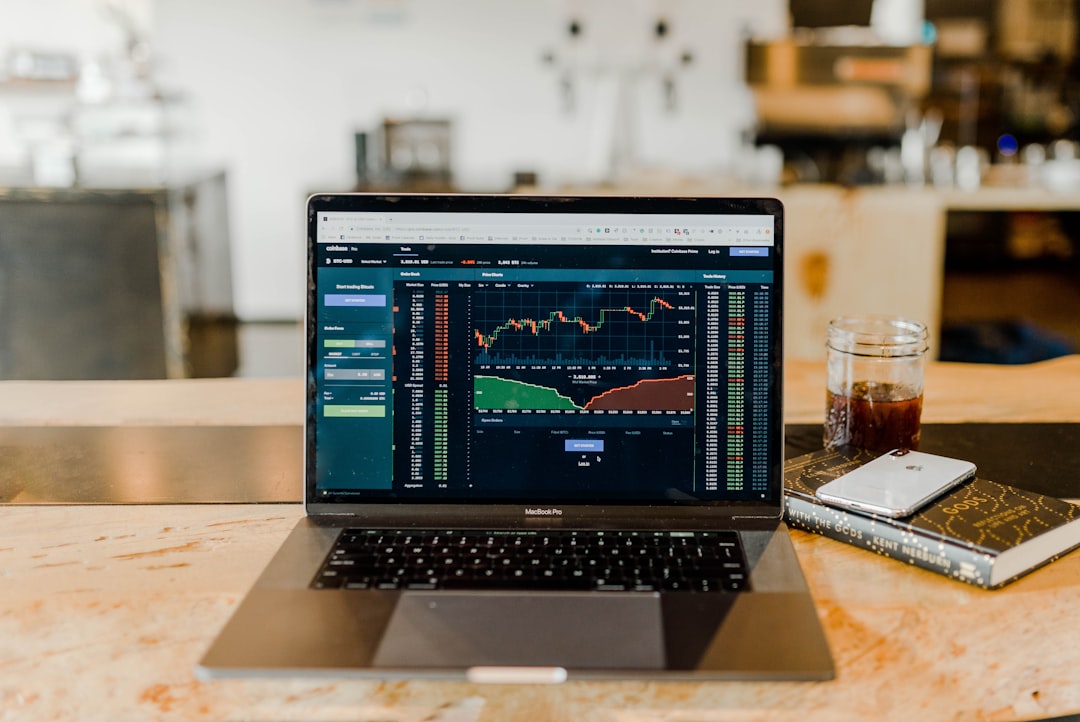
Image: A modern trading desk setup, essential for real-time market monitoring.
In 2026, over 50% of day traders use platforms with real-time data and analytics, and 90% of successful day traders rely on automated features for consistent entry, exit, and risk-limit rules. Embrace technology, but always maintain human oversight.
Practical Example: A Scalping Scenario 📚
Let’s walk through a hypothetical scalping trade to illustrate the rapid decision-making and execution involved.
Trader Jane’s Situation
- **Capital:** $10,000 (using leverage, but keeping position size small)
- **Target:** Highly liquid stock, “TechCorp” (ticker: TCORP), currently trading at $50.00
- **Strategy:** Momentum scalping, looking for a quick breakout above a resistance level.
Trading Process
1) **Identification:** Jane observes TCORP consolidating around $50.00 on a 1-minute chart. Level 2 data shows increasing buy orders accumulating just above $50.00, indicating potential upward momentum.
2) **Entry:** As TCORP ticks up to $50.01 and then $50.02, Jane quickly places a market order for 200 shares at $50.02, risking 1% of her capital, meaning a maximum loss of $100. Her stop-loss is set immediately at $49.97 (a $0.05 loss per share).
3) **Exit:** TCORP quickly moves to $50.07, and Jane sees the buying pressure slightly diminishing. Recognizing the short-term nature of the trade, she exits her position at $50.07, capturing a $0.05 profit per share.
Final Result
– **Shares Traded:** 200 shares
– **Profit per Share:** $0.05 ($50.07 – $50.02)
– **Gross Profit:** $10.00 (200 shares * $0.05)
– **Net Profit:** $10.00 – (Commissions/Fees) – (potential slippage)
This example, though simplified, highlights the speed and precision required. Jane’s success here wasn’t about a huge price move, but about quickly identifying a micro-trend, entering, and exiting before momentum shifted, all while managing her risk tightly.
Wrapping Up: Your Path to Scalping Success 📝
Scalping, as a day trading strategy, offers an exciting but demanding avenue for generating profits in the stock market. While the allure of quick gains is strong, remember the statistics: success is rare without extreme dedication, continuous learning, and rigorous discipline. The market landscape in 2026, with its evolving technology and accessibility, presents both opportunities and new challenges.
Embrace the power of advanced trading platforms and AI tools to enhance your analysis and execution. Most importantly, prioritize risk management above all else. Start with paper trading, hone your strategy, and never stop learning. Your journey in scalping will be challenging, but with the right mindset and tools, it can also be incredibly rewarding. Got questions or your own scalping tips? Share them in the comments below! 😊