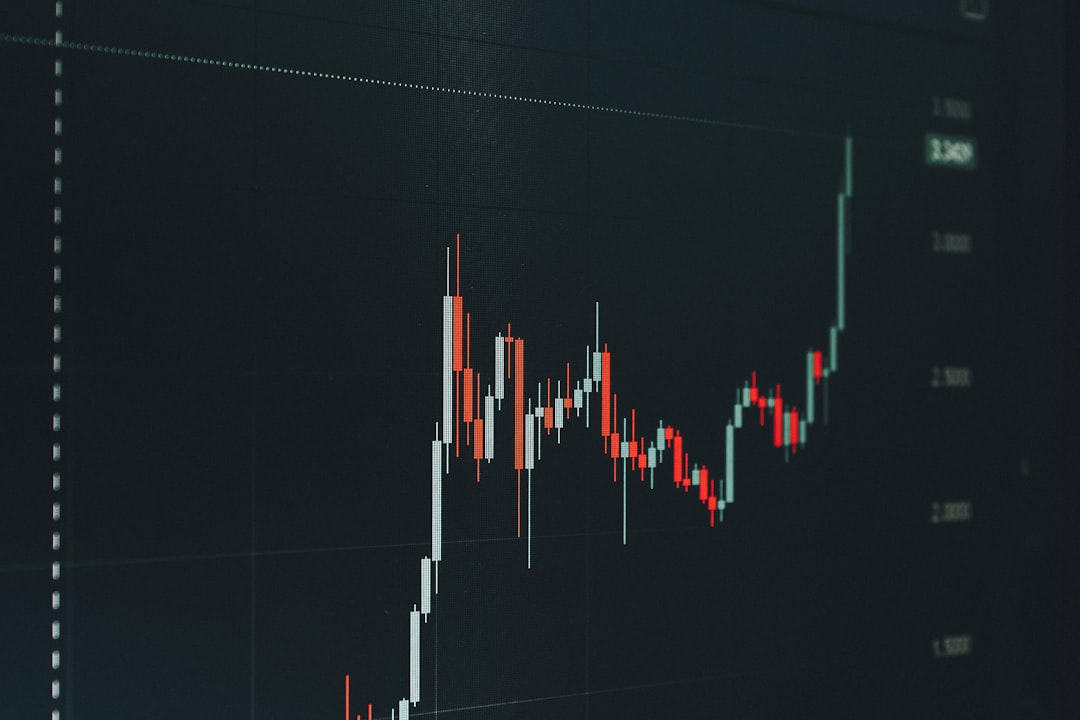
Have you ever felt caught between the high-octane world of day trading and the slow-and-steady pace of long-term investing? Many aspiring traders find themselves in this exact spot, searching for a strategy that offers consistent profit opportunities without demanding their entire day. If this sounds like you, then swing trading might just be the answer you’ve been looking for! It’s a method that’s gaining significant traction, especially in 2026, as traders seek a flexible yet powerful approach to market participation. Let’s dive in and uncover how you can leverage this technique to potentially grow your wealth. 😊
What Exactly is Swing Trading? 🤔
At its core, swing trading is a strategy designed to capture “swings” in a stock’s price over a period ranging from a few days to several weeks. Unlike day traders who close all positions before the market closes, swing traders hold positions overnight and sometimes over weekends, aiming to profit from these short to medium-term price movements.
It’s often seen as a middle ground between the fast-paced, high-stress environment of day trading and the more passive, long-term approach of investing. This makes it particularly appealing to those who have other commitments but still want to actively participate in the market.
In 2026, swing trading remains a dominant style for traders who maintain full-time employment, with many spending just 30-60 minutes a day on analysis. This flexibility is a major reason for its growing popularity!
The Core Principles and Why It Works (or Doesn’t) 📊
Swing trading thrives on market volatility, aiming to identify potential reversal points and ride the subsequent price movements. Successful swing traders focus on recognizing trends, pullbacks, breakouts, and momentum reversals.
Recent research continues to find evidence of momentum across markets and long periods, which is one of the underlying market behaviors swing strategies attempt to exploit. However, the performance of individual technical trading rules can vary significantly over time, emphasizing the need for adaptability.
Swing Trading vs. Other Strategies
| Strategy | Holding Period | Time Commitment | Key Focus |
|---|---|---|---|
| Day Trading | Intraday (minutes to hours) | High (full-time) | Rapid price changes |
| Swing Trading | Days to weeks | Moderate (part-time friendly) | Short-to-medium term trends |
| Long-Term Investing | Months to years | Low (passive) | Company fundamentals, wealth accumulation |
While swing trading can be profitable, it’s not guaranteed. A sustainable approach requires a measurable edge, realistic assumptions about trading costs, disciplined risk management, and the ability to adapt to changing market conditions. In 2026, algorithmic players, event-driven volatility, and fragmented momentum dominate, meaning the “buy and hold for 3-5 days” approach of the early 2020s is considered outdated.
Key Checkpoints: Remember These Essentials! 📌
You’ve made it this far, great job! Since this is a lot of information, let’s quickly recap the most important takeaways. Please keep these three points in mind:
-
✅
Swing Trading Offers Flexibility:
It’s a middle-ground strategy that allows you to participate in market movements without the constant screen time required by day trading, making it ideal for those with other jobs. -
✅
Risk Management is Paramount:
Protecting your capital is crucial. Always define your risk tolerance, set stop-loss orders, and aim for favorable risk-reward ratios (e.g., 1:2 or higher). -
✅
Technical Indicators are Your Friends:
Tools like RSI, MACD, and Moving Averages are essential for identifying trends, momentum, and potential entry/exit points in 2026’s markets.
Essential Tools and Indicators for Swing Traders 👩💼👨💻
To effectively identify profitable swing trades, technical analysis is your best friend. In 2026, combining 2-3 complementary indicators is often recommended for optimal results, as stacking too many indicators that measure the same thing can create noise instead of clarity.
Here are some of the most effective indicators for swing trading, frequently mentioned for use in 2026: Moving Averages (MA, especially 20/50 EMA), Relative Strength Index (RSI), MACD (Moving Average Convergence Divergence), Bollinger Bands, and On-Balance Volume (OBV).
While popular, some studies suggest that RSI on its own might be less effective for swing trading, and Williams %R has been identified as a highly effective, yet less commonly used, indicator for stable and solid results. Consider diversifying your indicator toolkit!
A Practical Example: Navigating a Swing Trade 📚
Let’s imagine a scenario where a swing trader identifies a potential opportunity using some of the indicators we’ve discussed. Keep in mind that this is a simplified example, and real-world trading involves more complexities.
Scenario: Trend Pullback Opportunity
- Stock: TechCo (fictional), a stock with strong recent momentum.
- Analysis: The daily chart shows a clear uptrend (price above 20 and 50 EMA). The stock has recently pulled back towards its 20 EMA, and the RSI is bouncing from oversold territory (around 40-45), indicating potential for a reversal.
- Risk-Reward: Trader aims for a 1:2 risk-reward ratio.
Trading Plan
1) Entry: Enter a long position when the stock shows a bullish reversal candle closing above the 20 EMA.
2) Stop-Loss: Place a stop-loss order just below the recent swing low, or below the 20 EMA, to limit potential losses.
3) Take-Profit: Set a target at the previous swing high, or a calculated Fibonacci extension level, aiming for a 2R profit (twice the risk).
Potential Outcome
– If successful: The stock bounces off the 20 EMA, continues its uptrend, and hits the take-profit target within a few days to a week, generating a 2R profit.
– If unsuccessful: The stock breaks below the stop-loss, limiting the loss to 1R as per the defined risk management.

This example highlights the importance of having a clear trading plan, utilizing technical indicators for entry and exit signals, and most importantly, implementing strict risk management. Remember, not every trade will be a winner, but consistent application of a sound strategy is key to long-term profitability.
Wrapping Up: Your Path to Smart Trading 📝
Swing trading offers a compelling opportunity for those looking to engage with the stock market more actively than a long-term investor, but with less intensity than a day trader. In 2026, the market environment, dominated by algorithmic players and event-driven volatility, emphasizes the need for structured approaches over simple stock picking.
By understanding the core principles, utilizing effective technical indicators, and rigorously applying risk management, you can develop a sustainable and potentially profitable swing trading strategy. It’s about developing a repeatable process where potential gains and losses are managed to achieve a positive expectancy over time. What are your thoughts on swing trading? Do you have any favorite indicators or risk management tips? Let me know in the comments below! 😊
Swing Trading Essentials: Quick Recap
Use 2-3 together for optimal analysis.
Frequently Asked Questions ❓