Have you ever felt the thrill and terror of the cryptocurrency market? One day your portfolio is soaring, the next it’s plummeting, leaving you wondering if you made the right moves. It’s a common dilemma, and frankly, it can be exhausting trying to time the market perfectly. But what if there was a simpler, less stressful way to invest in digital assets for long-term gains? That’s where Dollar-Cost Averaging (DCA) comes in! Let’s explore how this tried-and-true method can transform your crypto investment journey. 😊
What is Dollar-Cost Averaging (DCA) in Crypto? 🤔
At its core, Dollar-Cost Averaging (DCA) is an investment strategy where you invest a fixed amount of money into a particular asset at regular intervals, regardless of its current price. Instead of trying to guess the perfect moment to buy (which, let’s be honest, is nearly impossible), you commit to a consistent schedule. This means you buy more when prices are low and less when prices are high, ultimately averaging out your purchase price over time.
This approach helps to mitigate the impact of short-term market volatility and removes the emotional decision-making that often leads investors astray. You don’t need to constantly monitor charts or react to every price swing; you simply stick to your plan.
DCA is particularly well-suited for volatile markets like cryptocurrency, where prices can experience significant swings. It’s a strategy that prioritizes consistency over speculation.
Why DCA Matters in Today’s Crypto Market 📊
The cryptocurrency landscape in 2026 is one of evolving maturity, marked by increasing institutional adoption and a more defined regulatory environment, yet still characterized by significant volatility. A Bitwise report from September 2026 revealed that institutional crypto adoption is “stickier than markets assumed,” with major institutions holding, and some even increasing, their crypto allocations through a roughly 50% market drawdown between Q4 2025 and Q2 2026. This indicates a growing confidence in the long-term potential of digital assets, moving the debate from “if” crypto belongs in a portfolio to “how” to best integrate it.
Despite this maturation, crypto markets remain dynamic. While Bitcoin’s historical volatility (HV) in 2025 was around 42%, roughly half of what it was in 2021, and even lower than some “Magnificent 7” stocks like Tesla (63%) and Nvidia (50%) in the same year, it’s still capable of steep declines. For instance, Bitcoin dropped approximately 50% from its October 2025 all-time high to early 2026 lows. This inherent volatility, while potentially daunting, is precisely where DCA shines. It allows investors to capitalize on these price fluctuations without the stress of perfect timing.
Key Market Trends & DCA Relevance
| Trend | Description | DCA’s Role | Impact on Investors |
|---|---|---|---|
| Institutional Adoption | Increasing commitment from large financial institutions, moving beyond exploratory pilots. | Provides a structured entry point, aligning with long-term portfolio building. | Adds legitimacy and potential for sustained growth. |
| Regulatory Clarity | Evolving frameworks in the US (e.g., SEC proposals in 2026) and global adoption of MiCA-aligned regulations. | Reduces uncertainty, making long-term strategies like DCA more appealing. | Increases investor confidence and market stability. |
| Market Volatility | Despite some maturation, significant price swings are still a feature of crypto. | Smooths out average purchase price, turning volatility into an advantage. | Protects against buying solely at peak prices, reduces emotional stress. |
| Tokenization & DeFi | Real-world asset (RWA) tokenization is going mainstream; Ethereum remains the DeFi hub. | Allows for consistent exposure to innovative sectors with long-term potential. | Diversifies portfolio and taps into emerging financial infrastructure. |
While DCA reduces risk, it doesn’t eliminate it entirely. If the chosen cryptocurrency experiences a prolonged decline or fails, you can still incur losses. It’s crucial to research the assets you invest in.
Key Checkpoints: Remember These Essentials! 📌
You’ve made it this far! With a lengthy article, it’s easy to forget the most crucial points. Let’s recap the three key takeaways you absolutely need to remember.
-
✅
Embrace Consistency Over Timing
DCA’s power lies in its regularity. Commit to a fixed investment schedule and amount, regardless of market conditions, to average out your purchase price. -
✅
Minimize Emotional Decisions
One of the biggest pitfalls for investors is emotional trading. DCA helps you stick to a disciplined plan, preventing impulsive buys during FOMO or panic sells during downturns. -
✅
Focus on Long-Term Growth
DCA is a strategy for long-term accumulation. Historical data suggests that Bitcoin DCA strategies running 24 months or longer have been profitable 97% of the time.
Implementing DCA: Practical Steps and Considerations 👩💼👨💻
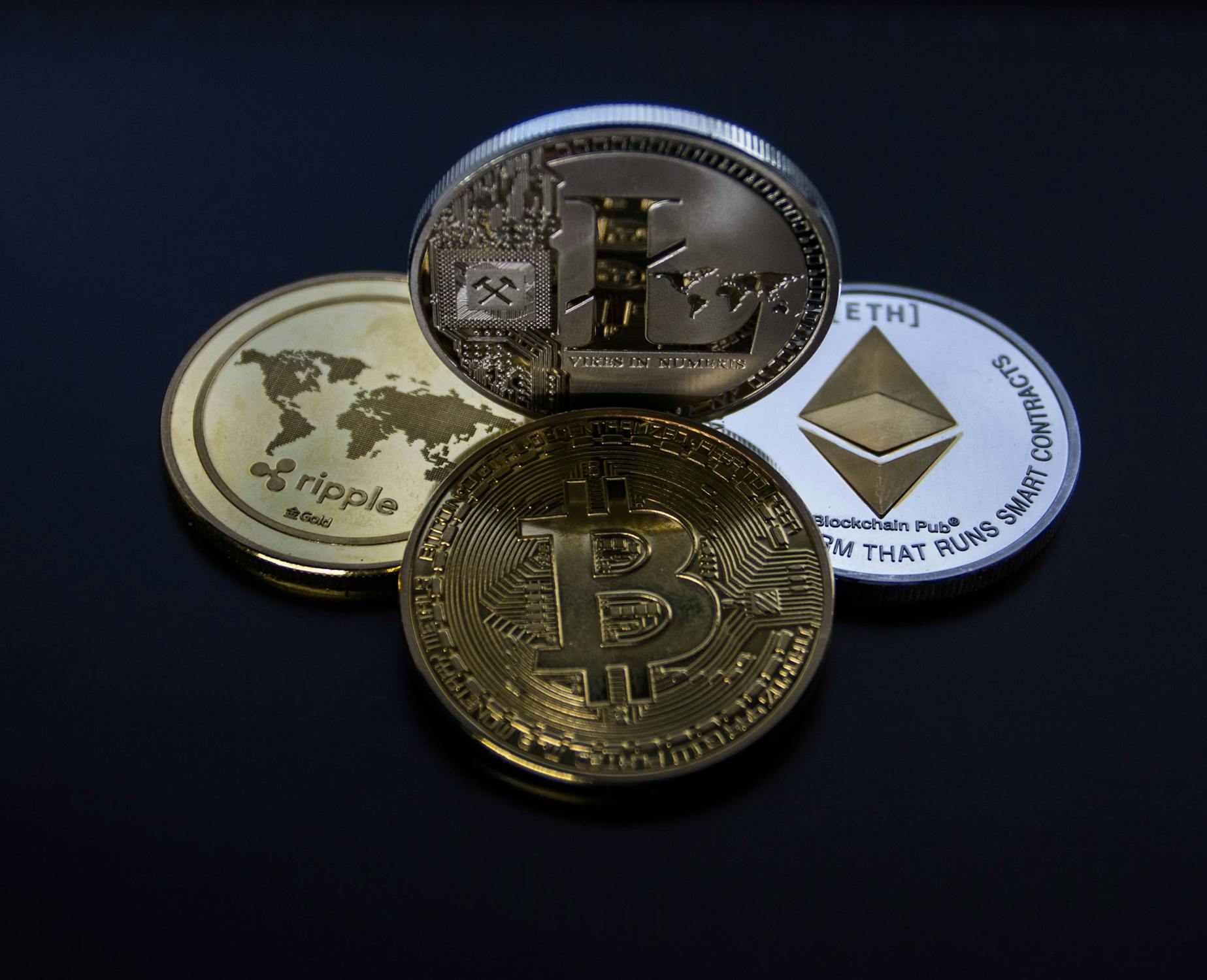
Ready to put DCA into action? It’s simpler than you might think. First, choose the cryptocurrency (or cryptocurrencies) you want to invest in. Bitcoin and Ethereum are often recommended for beginners due to their established nature and market dominance. Next, determine your investment amount and frequency. This could be $50 weekly, $200 monthly, or any amount that fits your budget and financial goals.
Most reputable cryptocurrency exchanges (like Coinbase, Binance, Kraken) offer recurring buy features that allow you to automate your DCA strategy. This is highly recommended as it removes the temptation to deviate from your plan during market swings. Remember, the most important aspect is consistency, even during bear markets. Lower prices during a downturn allow your fixed-dollar purchases to acquire more units of cryptocurrency, potentially lowering your average purchase price for future recovery.
Start with an allocation you can afford to lose, typically 1-5% of your total investable assets. Never invest money you cannot afford to lose entirely, as crypto prices can still experience significant declines.
Real-World Example: A DCA Scenario 📚
Let’s look at a hypothetical scenario to illustrate the power of DCA. Imagine an investor, Sarah, who decided to implement a DCA strategy for Bitcoin (BTC) starting in January 2021.
Sarah’s Investment Situation
- Investment Amount: $250 per week into Bitcoin
- Investment Period: January 2021 to January 2026 (5 years)
Calculation Process (Based on historical simulations)
1) Total Invested: $250/week * 52 weeks/year * 5 years = $65,000 (approx. $67,500 over a five-year period if accounting for slight variations)
2) Bitcoin Accumulated: Approximately 1.65 BTC
3) Average Purchase Price: Roughly $40,884 per BTC
Final Result (as of March 2026, with BTC near $71,000)
– Value of Holdings: 1.65 BTC * $71,000/BTC = $117,150 (approx. $120,518)
– Total Gain: $117,150 – $65,000 = $52,150 (approx. $53,018), representing a ~76% return.
Even though this period included buying near a previous all-time high and a significant market drawdown between late 2025 and early 2026, Sarah’s consistent DCA strategy allowed her to accumulate Bitcoin at a favorable average price and achieve substantial returns. This demonstrates how DCA can turn market volatility into an advantage for long-term investors.
Conclusion: Summarizing Key Takeaways 📝
In an ever-evolving and often unpredictable cryptocurrency market, Dollar-Cost Averaging stands out as a pragmatic and powerful strategy for long-term investors. It simplifies the investment process, reduces emotional trading, and leverages market volatility to your advantage. As institutional adoption grows and regulatory frameworks mature in 2026, DCA provides a steady hand in navigating this exciting asset class.
By consistently investing a fixed amount over time, you can build a resilient crypto portfolio without the stress of market timing. Remember to do your own research, choose reputable platforms, and only invest what you can afford to lose. If you have any questions or want to share your DCA experiences, please leave a comment below! 😊
DCA for Crypto: Quick Summary
Frequently Asked Questions ❓