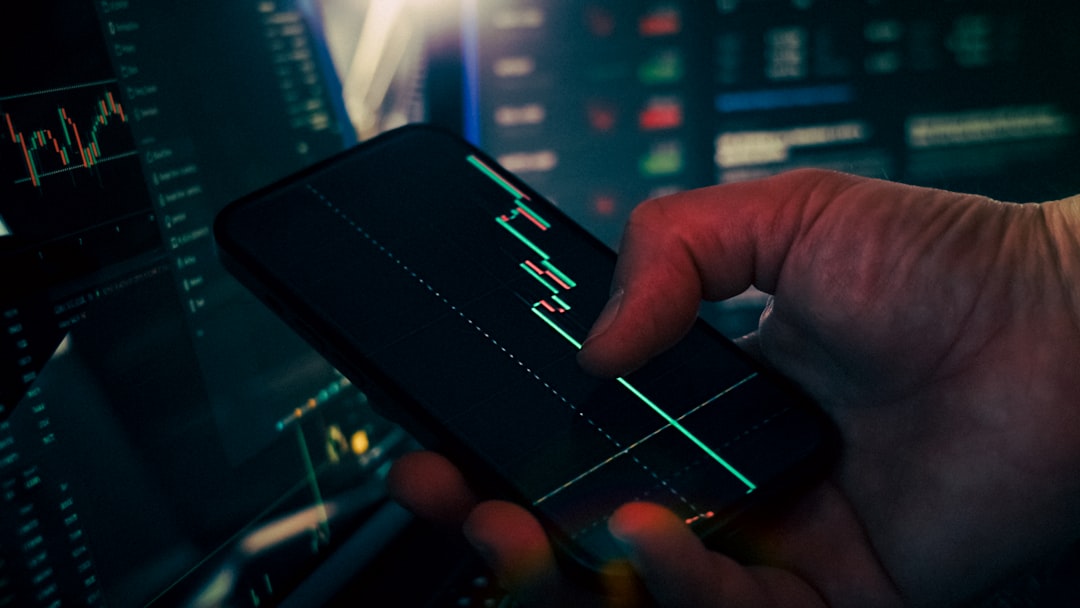
Have you ever felt the thrill of the market moving in your favor, even if just for a fleeting moment? What if you could capture those tiny, frequent movements consistently? That’s the essence of Forex scalping, a dynamic trading style that’s gaining traction among retail traders in 2026. It’s not about waiting for massive market shifts; it’s about precision, speed, and accumulating small profits over many trades. If you’re ready to explore a strategy that offers immediate feedback and frequent opportunities, you’re in the right place! 😊
What Exactly is Forex Scalping? 🤔
Forex scalping is a short-term trading strategy where traders aim to profit from minor price fluctuations in currency pairs. Instead of holding positions for hours or days, scalpers enter and exit trades within minutes, or even seconds, collecting small gains repeatedly throughout the trading day. This high-frequency approach can be incredibly appealing due to the immediate feedback on trade ideas and the sheer number of opportunities it presents.
Think of it like this: while a swing trader might wait for a currency pair to move 50-100 pips, a scalper identifies opportunities in moves as small as 5-20 pips. With enough volume and refined execution, these minor movements can accumulate into significant profits over time. It’s a method that thrives on market volatility and liquidity, making major currency pairs like EUR/USD particularly attractive.
In 2026, technological advancements, including faster platforms, tighter spreads, and improved execution speeds, have made scalping more accessible to a wider range of traders. However, it still demands significant discipline and a deep understanding of market behavior.
Key Characteristics and Latest Trends in 2026 📊
The Forex market in 2026 is characterized by increased algorithmic and AI trading, faster market volatility, and advanced retail trading tools. These factors significantly influence how scalping strategies are implemented and the tools traders use. Scalping fundamentally relies on speed and precision, often executed on 1-minute or 5-minute charts, where quick decisions are paramount.
One of the dominant trends in 2026 for high-probability retail scalping involves Smart Money Concepts (SMC) like liquidity sweeps and fair value gaps. Modern scalpers are also leveraging AI-assisted filters to identify “Volume Traps” and protect against false breakouts in volatile micro-ranges. This indicates a shift towards more sophisticated, technology-driven approaches.
Forex Scalping in the Age of Algorithms
| Aspect | 2026 Trend / Characteristic | Impact on Scalping |
|---|---|---|
| Algorithmic Trading Market Size | Estimated at USD 20.88 billion in 2026, projected to grow to USD 48.46 billion by 2034. | Increased competition, but also opportunities through advanced tools. |
| High-Frequency Trading (HFT) | Accounts for roughly 10-15% of total Forex trading volume, mostly institutional. Global HFT market estimated at USD 11.8 billion in 2026. | Requires retail scalpers to have low-latency setups and ECN brokers to compete. |
| Retail Investor Participation in Algo Trading | Projected to dominate with 38.5% share in 2026 within the algorithmic trading market. | Growing accessibility of automated tools and strategies for individual traders. |
| Key Indicators for Scalping | EMAs (9 & 21 or 20 & 50), RSI (7 or 9), Stochastic Oscillator, Bollinger Bands, VWAP. | Focus on fast-reacting, clear, and complementary indicators. |
While technology offers an edge, the costs of commissions and spreads can be a significant factor due to the high frequency of trades. Scalpers must choose brokers with low commissions, tight spreads, and fast execution speeds.
Key Checkpoints: Remember These Essentials! 📌
You’ve made it this far! With all the information, it’s easy to forget the core tenets. Let’s recap the three most important things you absolutely must remember about Forex scalping:
-
✅
Speed and Precision are Non-Negotiable
Scalping is all about capitalizing on tiny price moves in seconds or minutes. This demands quick decision-making, fast execution, and a clear, uncluttered chart. -
✅
Robust Risk Management is Your Shield
Due to high trade frequency, even small mistakes can compound rapidly. Always use stop-loss orders and risk a small percentage of your capital per trade to protect your account. -
✅
Technology and Broker Choice are Critical
In 2026, low-latency ECN brokers and advanced tools (like AI-assisted filters) are essential to maintain a competitive edge against institutional HFTs and minimize transaction costs.
Essential Tools and Risks in Scalping 👩💼👨💻
To succeed in Forex scalping, having the right tools and understanding the inherent risks is crucial. The best scalping indicators in 2026 are those that offer fast reaction, clarity, and complementary functions. Popular choices include Exponential Moving Averages (EMAs) for trend filtering, the Relative Strength Index (RSI) or Stochastic Oscillator for momentum and timing, and Bollinger Bands or VWAP for volatility and fair value.
However, it’s not just about the indicators; your trading setup and environment are equally vital. Direct-access execution, a reliable trading platform, and a low-latency internet connection are paramount. Many scalpers utilize a Virtual Private Server (VPS) located near major broker data centers to reduce execution latency to single-digit milliseconds.
Risk management is arguably the most critical aspect of scalping. Because you open numerous positions, minor mistakes can quickly compound. Always use stop-loss orders, risk small percentages of your capital per trade, and avoid “revenge trading” after losses.
Practical Example: A Liquidity Sweep Scalp 📚
Let’s walk through a hypothetical, yet realistic, scalping scenario based on a common strategy in 2026: a liquidity sweep reversal.
Trader’s Situation
- **Currency Pair:** USD/JPY
- **Timeframe:** 1-minute chart (M1)
- **Market Condition:** London session overlap, high liquidity.
- **Observation:** Price drops sharply below the London session low, indicating a “liquidity sweep” where retail stop-losses are triggered. Immediately after, a strong bullish engulfing candle forms.
Execution Process
1) **Entry:** The trader enters a long position at 145.20, confirming the bullish engulfing candle and the market snapping back to the internal value range.
2) **Stop-Loss:** A tight stop-loss is placed 5 pips below the entry at 145.15 to limit potential losses.
3) **Take-Profit:** A take-profit target is set 8 pips above the entry at 145.28, aiming for a favorable risk-to-reward ratio (e.g., 1:1.6).
Final Outcome
– **Result:** The price quickly moves in the anticipated direction, hitting the 8-pip profit target in just 4 minutes.
– **Learning:** This example highlights how understanding institutional market structure and leveraging fast execution can lead to quick, profitable trades, provided strict risk management is in place. Past performance is not indicative of future results.
This scenario demonstrates the potential of scalping when executed with precision and a clear understanding of market dynamics. It also underscores the importance of having a defined strategy and sticking to your rules, especially in such a fast-paced environment.

Wrapping Up: Key Takeaways 📝
Forex scalping, while challenging, offers an exciting path for traders seeking frequent opportunities and immediate results in the dynamic 2026 market. It’s a strategy that demands speed, discipline, and a robust understanding of both technical analysis and risk management. With the continued rise of algorithmic trading and advanced tools, retail traders have more resources than ever to refine their scalping techniques.
Remember, success in scalping isn’t about random rapid trades; it’s about structured execution and protecting your capital. Don’t be afraid to practice with a demo account and thoroughly test your strategies before diving into live trading. If you have any questions or want to share your scalping experiences, please leave a comment below! 😊
Forex Scalping in a Nutshell
Frequently Asked Questions ❓