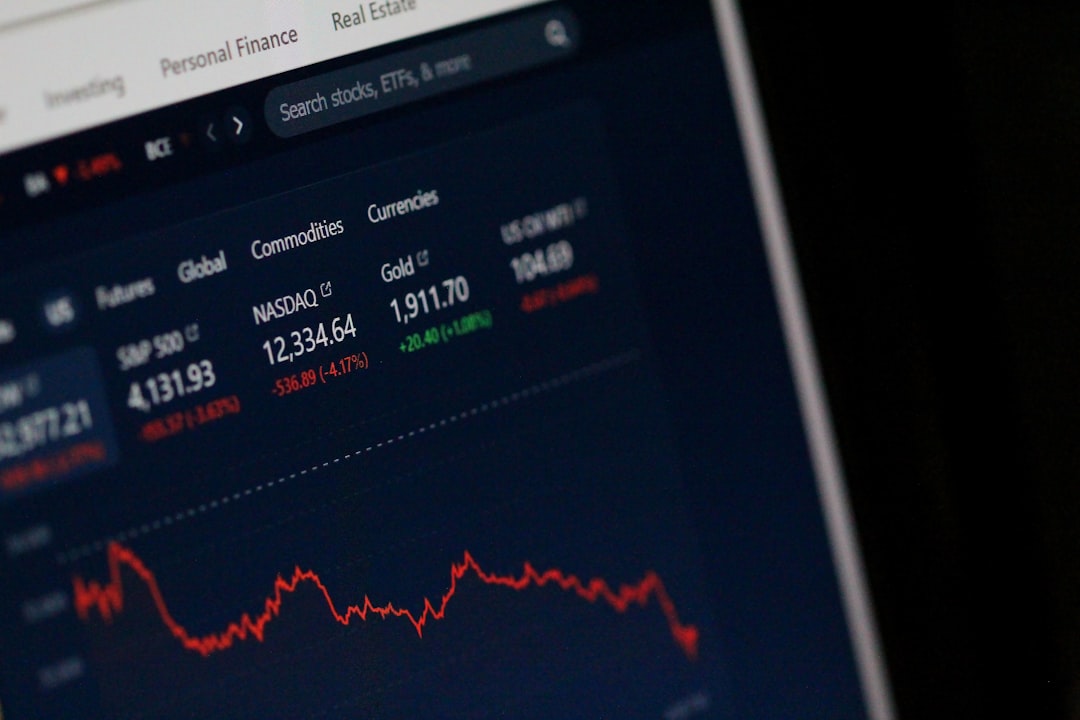
Have you ever felt like you’re constantly chasing the market, only to find yourself on the wrong side of a major move? It’s a common frustration in Forex trading, where volatility can be both a blessing and a curse. But what if there was a way to align yourself with the market’s prevailing direction, potentially capturing significant profits as prices move? That’s precisely where the Trend Following strategy shines. In this article, we’ll explore how this time-tested approach can be a game-changer for your trading in 2026, offering clarity and a structured path to potential success. Let’s dive in! 😊
Understanding the Core of Trend Following 🤔
Trend following is a trading strategy that attempts to capitalize on the long-term momentum of market prices. The core idea is simple: buy when prices are rising and sell when prices are falling. It doesn’t try to predict market tops or bottoms, but rather to identify the direction of the market and ride that wave for as long as it lasts. This strategy assumes that markets tend to move in sustained directions, or trends, over time, rather than moving randomly.
Unlike day trading or scalping, trend following typically involves holding positions for weeks, months, or even longer, aiming for larger price movements. This means less frequent trading and often lower transaction costs. It’s a patient approach that requires discipline to stick with a trade even during minor pullbacks, trusting that the overall trend will continue. The key is to let profits run and cut losses short, a mantra for many successful traders.
Trend following has been a staple in trading for centuries, with early examples found in commodity markets. Its enduring popularity stems from its logical foundation: markets are often driven by human psychology, which tends to overreact and sustain movements in one direction.
Key Indicators for Identifying and Riding Trends 📊
To effectively implement a trend following strategy, traders rely on a variety of technical indicators that help confirm the presence and strength of a trend. These tools provide objective signals, reducing the emotional bias that can often derail trading decisions. Here are some of the most commonly used indicators:
The Moving Average (MA) is perhaps the most fundamental trend indicator. By smoothing out price data, it helps to identify the direction of the trend. When the shorter-period MA crosses above the longer-period MA, it often signals an uptrend, and vice-versa for a downtrend. The Moving Average Convergence Divergence (MACD) is another powerful momentum indicator, showing the relationship between two moving averages of a security’s price.
Essential Trend Following Indicators
| Indicator | Description | Usage in Trend Following | Key Signal |
|---|---|---|---|
| Moving Average (MA) | Smoothes price data over a period to identify trend direction. | Identifies trend direction and potential support/resistance. | Crossovers (e.g., 50-day MA above 200-day MA). |
| MACD | Shows the relationship between two moving averages of prices. | Measures momentum and trend strength. | MACD line crossing above signal line (bullish), below (bearish). |
| Relative Strength Index (RSI) | Momentum oscillator measuring the speed and change of price movements. | Identifies overbought or oversold conditions within a trend. | Divergence from price action, movement towards 70 (overbought) or 30 (oversold). |
| Average Directional Index (ADX) | Measures the strength of a trend, not its direction. | Confirms the strength of an existing trend. | ADX above 25 indicates a strong trend. |
While indicators are powerful, no single indicator is foolproof. Always use a combination of indicators and consider the broader market context. Over-reliance on one signal can lead to false positives and significant losses.
Key Checkpoints: Remember These Essentials! 📌
Have you followed along well so far? It’s easy to forget things in a long article, so let’s recap the most important takeaways. Please keep these three points in mind:
-
✅
Embrace Patience and Discipline
Trend following is not about quick profits but sustained gains over time. It requires patience to wait for clear trends and discipline to stick to your strategy through minor fluctuations. -
✅
Utilize Multiple Confirming Indicators
Never rely on a single indicator. Combine Moving Averages, MACD, RSI, and ADX to confirm trend direction and strength, enhancing the reliability of your trading signals. -
✅
Prioritize Robust Risk Management
No strategy guarantees success, so always define your risk per trade and use stop-loss orders. Protecting your capital is paramount in the volatile Forex market.
Implementing the Strategy: Entry, Exit, and Risk Management 👩💼👨💻
Successfully applying a trend following strategy goes beyond just identifying a trend; it involves precise entry and exit points, coupled with rigorous risk management. Proper execution is crucial for long-term profitability.
For entry, many trend followers wait for a clear break of a significant resistance level (for an uptrend) or support level (for a downtrend), often confirmed by a moving average crossover or strong MACD signal. Others might enter on a pullback within an established trend, aiming for a better price. The key is to have a predefined set of rules that dictate when to enter a trade, based on your chosen indicators and analysis.
Exit strategies are equally important. Trend followers typically use a trailing stop-loss, which moves with the price as the trend progresses, locking in profits. Alternatively, they might exit when indicators signal a trend reversal, such as a moving average crossover in the opposite direction or a significant divergence on the RSI.
Always determine your risk-to-reward ratio before entering a trade. A common approach is to aim for a reward that is at least twice the potential risk. This helps ensure that even with a win rate below 50%, you can still be profitable.
Real-World Example: A Hypothetical Trend Following Trade 📚
Let’s walk through a concrete example to illustrate how a trend following strategy might play out in the real Forex market. Imagine it’s early 2026, and you’re analyzing the EUR/USD pair.
Scenario: EUR/USD Uptrend
- Initial Observation (January 2026): EUR/USD has been consolidating for several weeks around 1.0800.
- Indicator Setup: 50-day Simple Moving Average (SMA) and 200-day SMA, MACD, and ADX.

Execution Process
1) Entry Signal (Mid-February 2026): The EUR/USD price breaks above 1.0900, and the 50-day SMA crosses above the 200-day SMA, signaling a potential uptrend. MACD also shows a bullish crossover, and ADX rises above 25, confirming trend strength. You decide to enter a long position at 1.0920.
2) Risk Management: You place a stop-loss order at 1.0850, limiting your risk to 70 pips. Your initial target is based on a 1:2 risk-to-reward ratio, aiming for 140 pips profit.
3) Trend Development (March-April 2026): EUR/USD continues to climb steadily, reaching 1.1100. You adjust your stop-loss upwards to 1.1000, locking in 80 pips of profit and protecting against a reversal.
4) Exit Signal (Early May 2026): The price starts to show signs of weakness, with the 50-day SMA flattening and the MACD showing a bearish divergence. You decide to exit the trade manually at 1.1150, securing a total profit of 230 pips.
Final Result
– Entry Price: 1.0920
– Exit Price: 1.1150
– Gross Profit: 230 pips (1.1150 – 1.0920)
This example demonstrates how a trend following strategy, combined with proper indicator analysis and risk management, can lead to substantial gains over a few months. It highlights the importance of patience and adapting your stop-loss as the trend evolves.
Conclusion: Your Path to Consistent Forex Trading 📝
The Trend Following strategy, while not without its challenges during ranging markets, offers a robust framework for identifying and profiting from sustained price movements in the Forex market. By understanding its core principles, mastering key technical indicators, and implementing disciplined risk management, you can significantly enhance your trading approach in 2026 and beyond. Remember, consistency and patience are your greatest allies.
Don’t let market noise distract you from the bigger picture. Focus on the trend, manage your risk, and let your profits run. What are your thoughts on trend following, or do you have other strategies you find effective? Let us know in the comments below! 😊
Trend Following Essentials
Frequently Asked Questions ❓
Copyright © 2025 QHost365.com ®