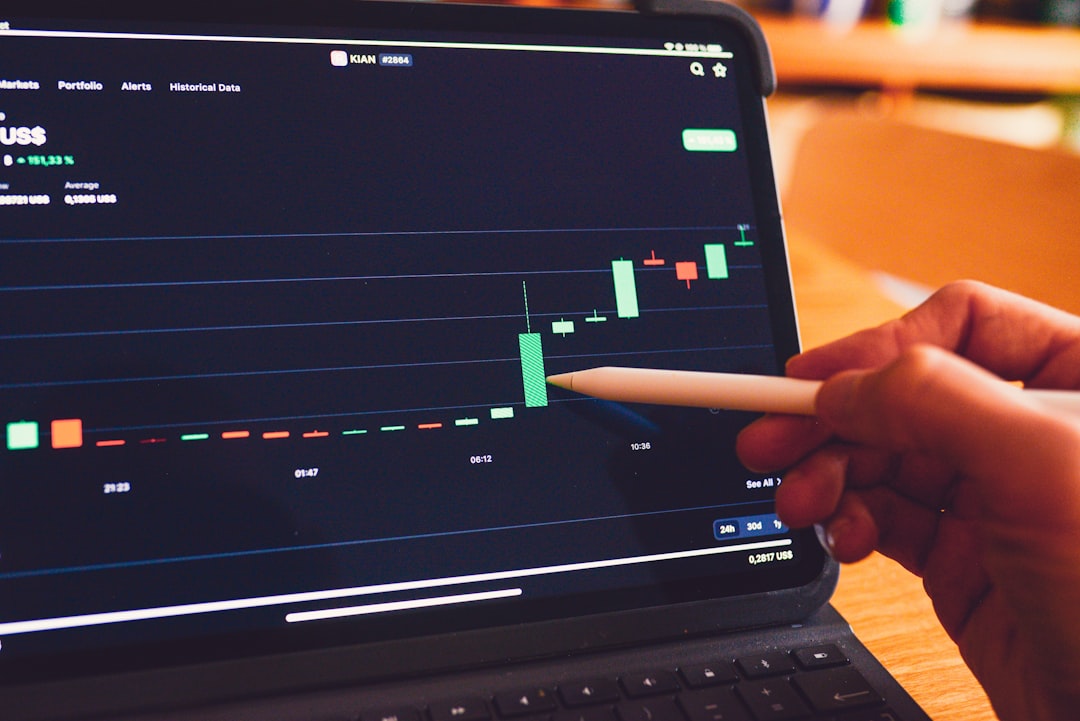
Have you ever felt like the stock market is a rollercoaster, constantly moving up and down, making it hard to find your footing? Many investors struggle to navigate these daily and weekly fluctuations, often missing out on potential gains. But what if I told you there’s a strategy designed specifically to thrive in this environment? Swing trading is all about capturing those medium-term price movements, and in today’s fast-paced market, it’s more relevant than ever. Let’s dive in and see how you can ride the waves to potential profit! 😊
What Exactly is Swing Trading? 🤔
Swing trading is a popular stock trading strategy that aims to capture short to medium-term gains in a stock or any financial instrument over a period of a few days to several weeks. Unlike day trading, which involves opening and closing positions within a single trading day, swing traders hold positions overnight, capitalizing on price “swings” or trends. It’s a sweet spot between the intense, high-frequency nature of day trading and the long-term, buy-and-hold approach of traditional investing.
The core idea is to identify stocks with momentum and potential for significant price movements. Traders use technical analysis to predict these swings, looking for opportunities to buy low and sell high, or short high and cover low. This approach allows traders to avoid the constant monitoring required by day trading while still being actively involved in the market.
Swing trading typically involves analyzing daily or hourly charts to spot trends, unlike day trading which often uses minute-by-minute charts. This allows for a more relaxed trading style, though still requiring diligent market observation.
Key Components of a Successful Swing Trading Strategy 📊
Effective swing trading relies heavily on a combination of technical analysis, strict risk management, and a keen understanding of market dynamics. Let’s break down the essential elements you’ll need.
Firstly, technical analysis is your best friend. This involves studying historical price charts and volume data to identify patterns and predict future price movements. Common indicators include Moving Averages (SMA, EMA), Relative Strength Index (RSI), Moving Average Convergence Divergence (MACD), and Bollinger Bands. These tools help pinpoint potential entry and exit points.
Essential Technical Indicators for Swing Traders
| Indicator | Description | Typical Use in Swing Trading |
|---|---|---|
| Moving Averages (MA) | Smoothes price data over time to identify trend direction. | Identifying trend reversals and support/resistance levels. |
| Relative Strength Index (RSI) | Measures the speed and change of price movements, indicating overbought or oversold conditions. | Spotting potential reversal points when a stock is overbought (>70) or oversold (<30). |
| MACD (Moving Average Convergence Divergence) | Shows the relationship between two moving averages of a security’s price. | Generating buy/sell signals when the MACD line crosses above/below the signal line. |
| Bollinger Bands | Price envelopes plotted at a standard deviation level above and below a simple moving average. | Identifying volatility and potential price breakouts or reversals as prices touch the bands. |
No single indicator is foolproof. Always use a combination of indicators and confirm signals across multiple timeframes. Relying on one signal alone can lead to costly mistakes.
Key Checkpoints: What to Remember! 📌
Have you been following along well? Since this article is quite detailed, let me quickly highlight the most important takeaways. Please keep these three things in mind.
-
✅
Focus on Technicals and Trends
Swing trading success hinges on identifying clear price trends and using technical indicators to confirm entry and exit points. -
✅
Prioritize Robust Risk Management
Always set stop-loss orders and define your risk-to-reward ratio before entering a trade to protect your capital. -
✅
Adapt to Market Dynamics
The market is constantly evolving. Stay informed about current trends like AI integration and increased volatility, and adjust your strategy accordingly.
Recent Trends and Market Outlook for Swing Traders 👩💼👨💻
The financial markets are constantly evolving, and swing trading is no exception. Staying abreast of current trends is crucial for maximizing your potential and mitigating risks. As of October 2026, we’re seeing several key dynamics impacting swing traders.
Firstly, market volatility continues to be a significant factor. Global economic shifts, geopolitical events, and rapid technological advancements (especially in AI and automation) contribute to frequent and sometimes unpredictable price swings. This heightened volatility, while presenting more opportunities for swing traders, also necessitates stricter risk management protocols.
Secondly, the rise of algorithmic trading and AI-powered tools is changing the game. While large institutions have long used algorithms, retail traders now have access to more sophisticated analytical platforms that can identify patterns, execute trades, and even manage risk with greater efficiency. This means faster market reactions and a need for individual traders to refine their strategies to stay competitive.
Lastly, sector rotation remains a powerful trend. As new technologies emerge and global priorities shift, capital frequently moves between different market sectors. Keeping an eye on these rotations – for example, the ongoing growth in renewable energy, AI infrastructure, or advanced biotech – can help swing traders identify the next big “swing” opportunities. Understanding macro-economic indicators and sector-specific news is becoming increasingly important for short to medium-term trading decisions.
The increasing integration of AI in market analysis means that while traditional technical indicators remain vital, traders should also consider how large-scale algorithmic movements might influence short-term price action. Adaptability is key!
Practical Example: A Hypothetical Swing Trade 📚
Let’s walk through a simplified hypothetical example to see how a swing trade might play out. Remember, this is for illustrative purposes only and does not guarantee similar results.
Trader’s Scenario
- **Trader:** Alex, an experienced swing trader.
- **Target Stock:** TechInnovate (TI), currently trading at $50.
- **Observation:** TI has been consolidating for a week, and Alex notices the RSI is oversold (below 30), and the MACD line is about to cross above its signal line, indicating potential upward momentum. Volume is also starting to pick up.
Trading Process
1) **Entry:** Alex decides to enter a long position, buying 100 shares of TI at $50 per share. He immediately sets a stop-loss order at $48 (2% risk) and a target profit of $55 (10% reward), aiming for a 1:5 risk-to-reward ratio.
2) **Monitoring:** Over the next few days, TI’s price rises steadily, confirming Alex’s technical analysis. The 50-day moving average starts trending upwards, further supporting the bullish sentiment.
3) **Exit:** On the fifth day, TI hits $54.50, just shy of Alex’s target. However, he notices the RSI is now overbought (above 70), and buying volume is starting to decline. Fearing a reversal, Alex decides to take profits and sells his 100 shares at $54.50.
Final Result
– **Total Investment:** $50 x 100 shares = $5,000
– **Total Sale:** $54.50 x 100 shares = $5,450
– **Gross Profit:** $5,450 – $5,000 = $450 (before commissions)
This example highlights the importance of using multiple indicators for confirmation and being flexible with your exit strategy. While Alex’s initial target was $55, he recognized a shift in momentum and secured profits, demonstrating smart risk management and adaptability.

Conclusion: Summarizing Key Takeaways 📝
Swing trading offers an exciting and potentially profitable way to engage with the stock market, sitting comfortably between the high intensity of day trading and the long-term patience of traditional investing. By focusing on technical analysis, implementing strict risk management, and staying informed about market trends like increased volatility and the influence of AI, you can position yourself to capitalize on those valuable price swings.
Remember, success in swing trading isn’t about predicting the future with 100% accuracy, but about understanding probabilities, managing your risk, and having a well-defined strategy. Continuous learning and adaptation are your greatest assets in this dynamic environment. If you have any questions or want to share your own swing trading experiences, please leave a comment below! 😊