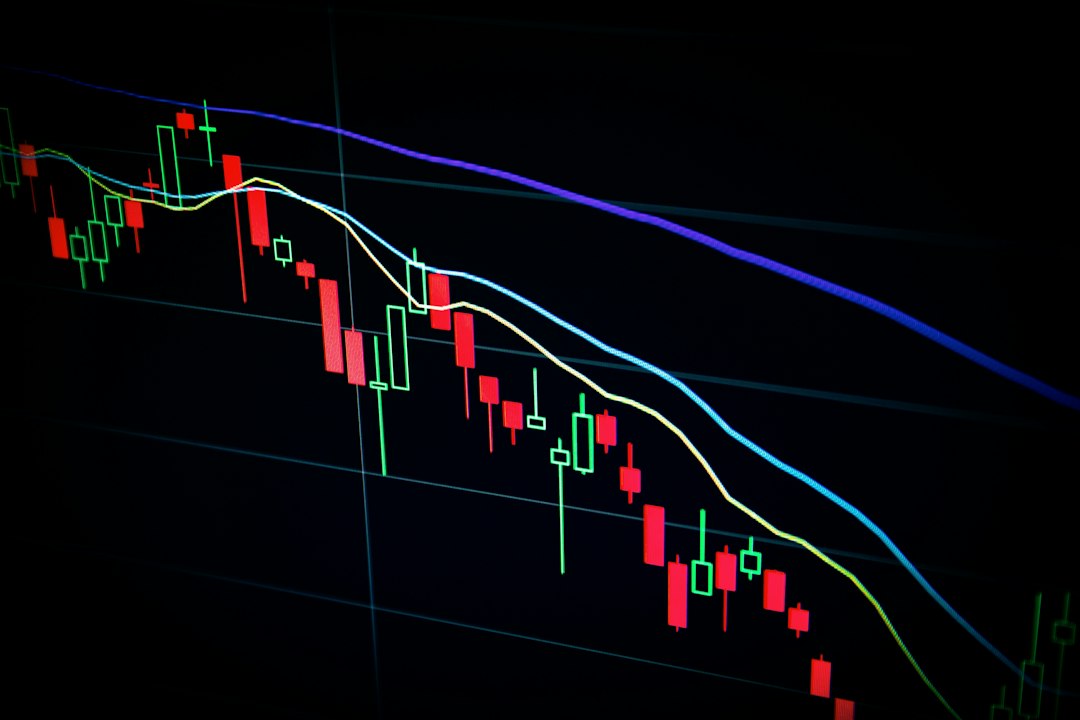
Have you ever felt caught between the rapid-fire decisions of day trading and the long-term commitment of traditional investing? Many traders find themselves in this exact spot, seeking a strategy that offers a balance of active participation and manageable time commitment. That’s where swing trading shines! It’s a fantastic approach for those looking to capitalize on market movements over days or weeks, without the constant screen time. Let’s dive into the world of swing trading and uncover how you can leverage its power in 2026. 😊
What Exactly is Swing Trading? 🤔
Swing trading is a speculative strategy designed to capture short- to intermediate-term price movements in financial instruments, typically holding positions from a few days to several weeks. Unlike day trading, where all positions are closed before the market closes, swing traders carry positions overnight and sometimes over weekends, aiming to profit from price “swings” or fluctuations within an established trend or range. This makes it an appealing option for individuals who can’t monitor the market constantly but still want to benefit from price movements.
In 2026, the appeal of swing trading is growing due to a combination of lifestyle flexibility and enhanced retail trading tools. Modern platforms now offer sophisticated features that were once exclusive to institutional desks, lowering the barrier to entry and making it easier for retail traders to manage risk and execute strategies effectively.
Swing trading typically requires 1-3 hours of daily analysis, making it realistic for traders with other commitments. This contrasts sharply with day trading, which often demands full-time attention.
Current Trends and Statistics in Swing Trading (2026) 📊
The landscape of swing trading in 2026 is marked by evolving market dynamics and increased sophistication. Algorithmic players, event-driven volatility, and fragmented momentum now dominate, making a structured approach more crucial than ever. The “buy and hold for 3-5 days” strategy of the early 2020s is considered less effective, with today’s edge coming from structured strategies rather than just stock picking.
Recent data highlights the relative profitability of swing trading compared to other styles. A July 2026 study analyzing over 500,000 trading accounts found that swing traders were net profitable 27.5% of the time, compared to 17.3% for day traders. This makes swing traders roughly 60% more likely to be profitable than day traders. While these numbers don’t represent a majority, they underscore the structural advantages of swing trading, such as lower transaction costs relative to profit targets and more time for positions to develop.
Swing Trading Profitability & Success Rates
| Metric | Swing Trading | Day Trading | Source/Year |
|---|---|---|---|
| Net Profitable Traders | 27.5% | 17.3% | TradeMedic Research, July 2026 |
| Average Annual Returns | +2.1% | -3.8% (after costs) | Cambridge University, Sept 2023 |
| Annual Profit Expectation | 10-30% (for 10% of traders) | Not consistently profitable for most retail traders | VectorVest, Oct 2024 |
| Win Rates (Experienced Traders) | 35-50% (reported) | 55-65% (scalping, professional) | HyroTrader, Dec 2025 |
While swing trading offers better odds, around 90% of swing traders still fail to make money. This often stems from treating it like gambling, rather than applying sound strategies, risk management, and the right mindset.
Key Checkpoints: What to Remember for Swing Trading Success! 📌
You’ve made it this far! With all this information, it’s easy to forget the most critical points. Let’s recap the three absolute essentials for successful swing trading.
-
✅
Risk Management is Non-Negotiable
Always adhere to the 1-2% rule: never risk more than 1-2% of your total trading capital on a single trade. Implement strict stop-loss orders to protect your capital. -
✅
Develop and Backtest Your Strategy
Don’t trade without a proven strategy. Backtest your chosen methods on historical data to confirm they have a genuine edge before risking real money. -
✅
Utilize Technical Indicators Wisely
Focus on 2-3 key indicators for trend, momentum, and confirmation (e.g., EMA, RSI, MACD, Bollinger Bands) to avoid analysis paralysis.
Effective Swing Trading Techniques & Indicators for 2026 👩💼👨💻
A successful swing trading strategy hinges on identifying trends, pullbacks, breakouts, and momentum reversals. While there’s no single “best” indicator, combining a few powerful tools can significantly enhance your decision-making. The daily and 4-hour charts are considered ideal timeframes for swing trading, offering a good balance between identifying trends and avoiding excessive market noise.
Here are some of the most effective technical indicators widely used in 2026 for swing trading:
- Moving Averages (MA/EMA): Essential for identifying market trends and acting as dynamic support/resistance levels. The 20-period and 50-period Exponential Moving Averages (EMA) are particularly popular. Look for price action above the 20 EMA for long opportunities and below for short opportunities.
- Relative Strength Index (RSI): A momentum oscillator that identifies overbought (above 70) and oversold (below 30) conditions, signaling potential reversals. In uptrends, buy when RSI pulls back to 40-50.
- MACD (Moving Average Convergence Divergence): Confirms trend direction and momentum. A bullish MACD cross above zero is often a strong buy signal.
- Bollinger Bands: Measures volatility and can indicate potential reversal points. A “Bollinger squeeze” often signals an imminent large price move.
- On-Balance Volume (OBV): Confirms price moves. Rising OBV with rising price confirms buying pressure.
- Williams %R: Identified in a May 2026 study as a highly effective indicator for swing trading, praised for its stability and solid risk-adjusted performance, despite being less commonly used.
To avoid contradictory signals and analysis paralysis, aim to use 2-3 indicators maximum: one for trend (e.g., EMAs), one for momentum (e.g., RSI or MACD), and one for confirmation (e.g., volume or Bollinger Bands).
Practical Example: The Trend Pullback Strategy 📚
Let’s walk through a common and effective swing trading strategy: the Trend Pullback. This strategy is particularly powerful in a trending market regime, where you aim to enter a long position when the price briefly dips within an established uptrend.
Scenario: Identifying a Bullish Pullback
- Market Condition: The S&P 500 (or a specific stock) is in a clear uptrend, with the 50-period Moving Average (MA) above the 200-period MA, indicating a trend regime. The Average Directional Index (ADX) is above 20, confirming trend strength.
- Setup: The price has pulled back to its 20-period Exponential Moving Average (EMA) on the daily chart. The RSI (14) is above 40, indicating bullish momentum is still present.
Execution Steps
1) Entry: Wait for a confirmation candle. This could be a bullish reversal candle forming near the EMA support, or a close back above the 20 EMA after touching it.
2) Stop-Loss: Place your stop-loss order below the most recent swing low, or below the 20 EMA if the price closes below it. A close below the 78.6% Fibonacci retracement level could also be an exit signal.
3) Target: Aim for the prior swing high as a first target. Consider a second target at 127% or 161.8% Fibonacci extension for higher risk-reward trades.
Expected Outcome (Hypothetical)
– Risk-Reward Ratio: Target a minimum of 1:2, meaning your potential profit should be at least twice the amount risked. This allows for profitability even with a win rate below 50%.
– Capital Preservation: By setting a clear stop-loss, you limit potential losses on any single trade to a predefined percentage of your capital (e.g., 1-2%).

This example illustrates how a structured approach, combining trend identification with specific entry and exit rules based on technical indicators, can form a robust swing trading strategy. Remember, consistent application and strict risk management are paramount.
Conclusion: Your Path to Confident Swing Trading 📝
Swing trading offers a compelling path for those seeking to actively participate in the stock market without the intensity of day trading. By understanding the current market trends, utilizing effective technical indicators, and rigorously applying risk management principles, you can significantly improve your chances of success in 2026 and beyond.
Remember, consistency and discipline are your greatest assets. Develop a strategy that suits your psychology and capital, backtest it thoroughly, and always prioritize capital preservation. The market is dynamic, but with a solid framework, you can navigate its swings with confidence. If you have any questions or want to share your swing trading experiences, please leave a comment below! 😊
Swing Trading Essentials: A Quick Recap
Frequently Asked Questions ❓