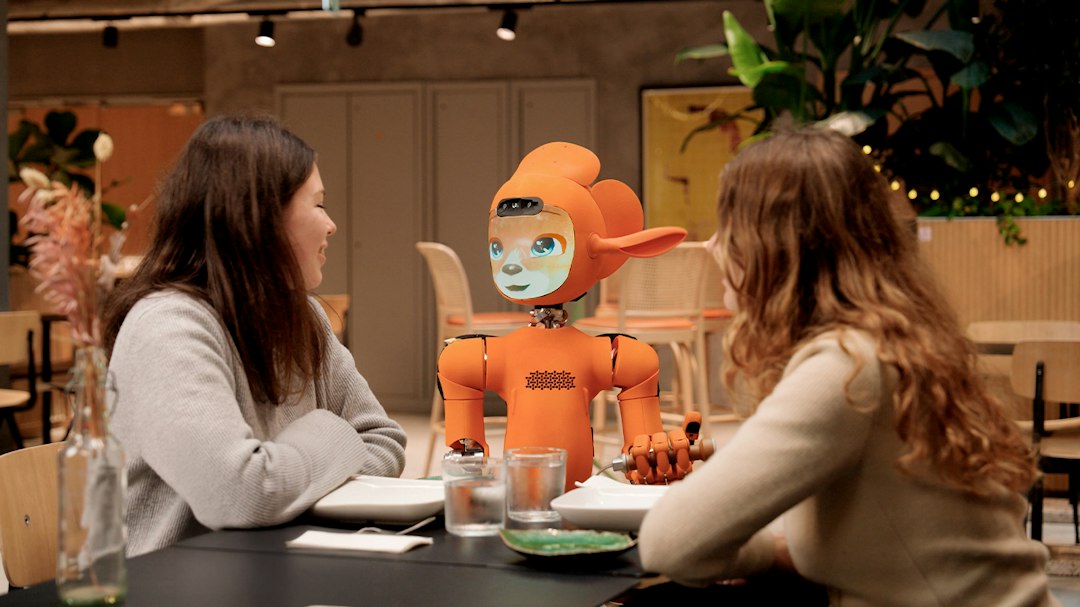
It feels like just yesterday we were marveling at AI’s ability to answer simple questions. Now, in October 2026, we’re witnessing a monumental shift: the era of hyper-personalized AI. This isn’t just about AI recommending your next show; it’s about intelligent systems anticipating your needs, understanding your context, and even acting on your behalf across a multitude of tasks. If you’ve ever wished for a digital assistant that truly ‘gets’ you, you’re in luck – the future is here, and it’s more personal than ever before! 😊
From Reactive to Predictive: The Evolution of AI Personalization 🤔
Gone are the days when AI merely reacted to your past behaviors. In 2026, AI personalization has become predictive, real-time, and system-level. Instead of just recommending products based on your last purchase, advanced AI systems now analyze patterns, timing, and intent signals to anticipate what you’ll need next, often before you even realize it yourself. This means more relevant content, more timely assistance, and a far more intuitive digital experience across all your devices and platforms.
This evolution reflects a broader transformation in digital environments. Personalization is no longer limited to content recommendations or segmented campaigns. It operates as an underlying system that continuously adapts user experiences across channels, devices, and touchpoints.
By 2026, AI systems are unifying interactions across websites, social media, email, and apps, ensuring consistent personalization across all touchpoints. Your website behavior can now influence email campaigns, social media ads, and in-app recommendations!
AI’s Pervasive Presence: Statistics and Trends in 2026 📊
The adoption of AI has accelerated from early experimentation to everyday use, creating behavioral changes in consumers at a quicker pace than institutions traditionally adopt new technology. The numbers for 2026 are truly eye-opening:
- **Global Adoption:** Approximately 2 billion people used AI in 2026, representing roughly 24% of the world’s population, an 11% increase from 2025. This figure is projected to reach 80-85% by 2030.
- **U.S. Usage:** Between half and two-thirds of American adults now use AI, depending on the question. For instance, 49% use AI chatbots, and 61.8% of 18- to 64-year-olds use generative AI.
- **Workplace Integration:** More than four in five (83%) employed Americans use AI-powered tools or applications for work, a 20% increase over last year. In fact, 52% of U.S. employees use AI in their job at least a few times a year, with 15% using it daily.
- **Productivity Boost:** A 2025 report by the Federal Reserve Bank of St. Louis found that employees using generative AI tools saved about 2.2 hours per week, equivalent to a 5% productivity boost. Corporate executives report meaningful productivity improvements, with larger effects expected in 2026.
- **Business Adoption:** 88% of organizations now use AI, a significant jump from 55% in 2023. 77% of companies are either using or exploring AI, and 83% claim AI is a top priority in their business plans.
These statistics clearly show that AI is no longer a niche technology; it’s a mainstream phenomenon rapidly integrating into every aspect of our lives. The biggest story of 2026 is not which company ranks first, the real story is adoption.
Key AI Platforms and Their Strengths (2026)
| Platform | Primary Use Case | Key Features |
|---|---|---|
| ChatGPT | General-purpose AI assistant | Writing, research, coding, file analysis, image generation, voice conversations, custom GPTs. |
| Vellum | Autonomous personal work | Open-source, continuous memory, takes actions across connected tools. |
| Claude | Long-form writing & document analysis | Strong for detailed text processing. |
| Gemini (Google) | Google Workspace integration | Seamlessly integrates with Google apps for writing, coding, workflow automation. |
| Microsoft Copilot | Microsoft 365 integration | Automates tasks across Teams, Dynamics, and Microsoft 365. |
While AI offers immense benefits, ethical considerations like algorithmic bias, data privacy, and the spread of misinformation (deepfakes) remain critical in 2026. Always be mindful of the data you share and the sources you trust.
Key Checkpoints: What You Absolutely Need to Remember! 📌
Have you followed along well so far? The article is quite long, so let me quickly highlight the most important takeaways. Please remember these three things:
-
✅
AI is Shifting from Reactive to Predictive:
AI is no longer just responding to your past actions; it’s now anticipating your future needs and delivering real-time, personalized experiences across all channels. -
✅
Massive Adoption and Productivity Gains:
Billions worldwide are using AI regularly, both personally and professionally, leading to significant productivity boosts in the workplace. -
✅
Ethical Considerations are Paramount:
As AI becomes more integrated, addressing bias, privacy, and accountability is crucial for building trust and ensuring responsible use.
Agentic AI: Your Autonomous Digital Partner 👩💼👨💻
One of the most exciting advancements in 2026 is the rise of Agentic AI. These intelligent systems can independently set their goals, make decisions, and execute multi-step tasks with minimal human intervention. This goes beyond simple chatbots; agentic AI acts as a true digital collaborator, capable of managing adaptive, dynamic workflows. Gartner predicts that 40% of enterprise applications will feature task-specific AI agents by 2026, a significant leap from less than 5% in 2025.
Agentic AI is moving from experimental use cases to mainstream deployment in large enterprises, especially with the availability of more “out-of-the-box” solutions. This means AI is no longer just assisting; it’s actively participating in operations.
Real-World Impact: Customer Service and Shopping Transformed 📚
The impact of hyper-personalized AI is perhaps most evident in customer service and shopping. By 2026, generative AI and personal assistant technologies are redefining how consumers interact with businesses. Instead of traditional human-to-business communication, many customers may simply ask their own AI assistant to handle tasks like customer support or even making purchases.
Case Study: AI-Mediated Shopping Experience 🛍️
- **Scenario:** A shopper wants to buy the “best office chair for long workdays under $400.”
- **Traditional Process:** Extensive online searches, comparing multiple product pages, reading reviews.
AI-Powered Process (2026)
1) The shopper types their request into their personal AI assistant.
2) The AI instantly delivers a shortlist of highly relevant chairs, having already filtered based on criteria like durability, comfort, and price.
Final Result
– **Time Saved:** The decision happens in seconds, significantly reducing the customer journey.
– **Brand Impact:** Brands not appearing in AI recommendations risk being invisible to a growing segment of consumers.
This shift means businesses need to expose new, standardized interaction formats, like structured data schemas and action APIs, to allow customer AIs to interact with brand systems directly. By 2026, 70% of shoppers are projected to use AI assistants for discovery and comparison, fundamentally rewriting the customer journey.

Wrapping Up: The Future is Personal 📝
The landscape of AI in 2026 is defined by its rapid adoption, increasing personalization, and the emergence of autonomous agents that truly augment human capabilities. From boosting productivity to transforming customer interactions, hyper-personalized AI is not just a trend; it’s becoming an integral part of our daily fabric.
Embracing this new era means understanding its potential, navigating its ethical challenges, and continuously adapting to leverage its power. What are your thoughts on personalized AI? Are you excited or concerned about your future digital companion? Let us know in the comments below! 😊
Hyper-Personalized AI: The 2026 Snapshot
These agents are becoming true digital collaborators, automating complex workflows.
Frequently Asked Questions ❓