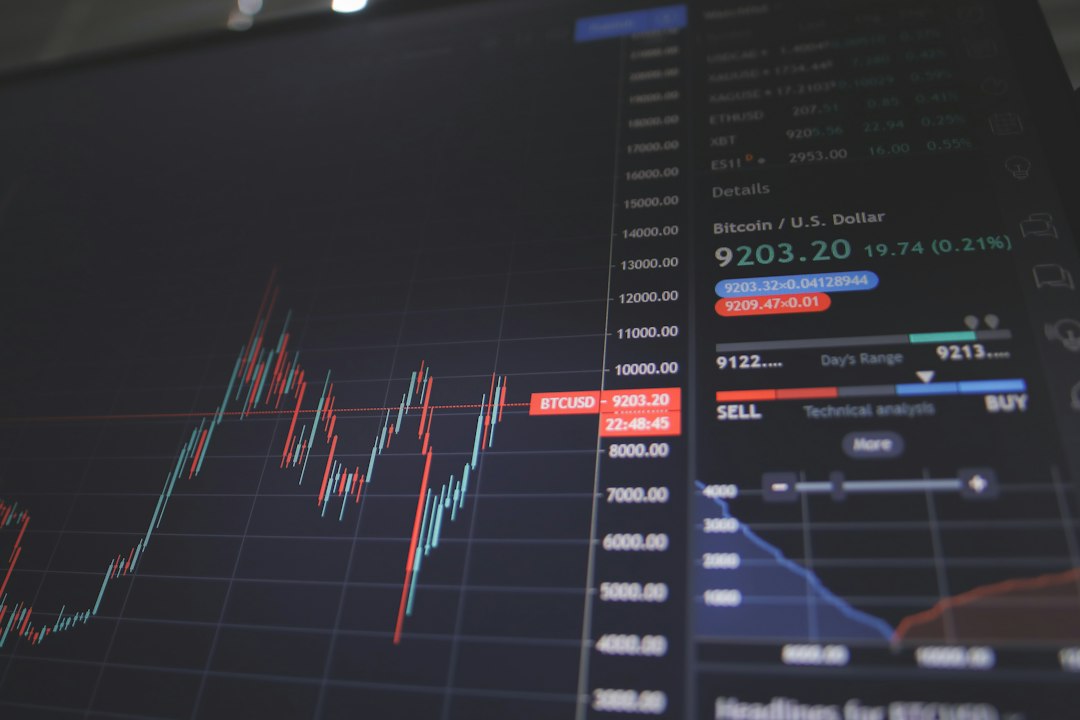
Have you ever felt caught between the rapid-fire decisions of day trading and the long-term patience of investing? Many of us have! The good news is, there’s a powerful middle ground that allows you to capitalize on market movements without constantly glued to your screen: swing trading. In 2026, with markets dominated by algorithmic players and event-driven volatility, understanding how to ride these “swings” is more critical than ever. Let’s dive in and uncover how you can potentially turn market fluctuations into profit! 😊
What Exactly is Swing Trading? 🤔
Swing trading is a popular strategy where traders aim to capture short-to-medium term price movements in financial instruments, typically holding positions for a few days to several weeks. Unlike day trading, which involves opening and closing positions within a single day, swing trading allows for less screen time and focuses on capitalizing on price “swings” within a broader trend. This approach is ideal for traders who cannot constantly monitor the market but still want to benefit from price movements.
The core principle revolves around identifying the natural rhythm of price movements. Markets rarely move in straight lines; instead, they oscillate between periods of upward momentum (upswings) and downward pressure (downswings). Swing traders attempt to enter positions at the beginning of these swings and exit near their completion, regardless of the overall market trend. This requires a clear understanding of price trends, momentum, and chart patterns.
Positions held for days to weeks, focuses on capturing “swings” in price, utilizes technical analysis, requires less screen time than day trading, and can be applied across various assets like stocks, forex, and crypto.
The Modern Edge: Trends and Tools in 2026 Swing Trading 📊
The financial markets in 2026 are highly dynamic, characterized by algorithmic players, event-driven volatility, and fragmented momentum. This environment makes individual stock selection increasingly important. We’ve seen surging long-term interest rates and sharp volatility in AI-related stocks in Q3 2026, often driven by leveraged momentum trading rather than fundamental weakness.
To navigate these conditions, swing traders are increasingly relying on a combination of powerful technical indicators. The most effective approach often involves combining 2-3 indicators for optimal results.
Top Swing Trading Indicators for 2026
| Indicator | Description | Usage in Swing Trading |
|---|---|---|
| Moving Averages (MA/EMA) | Smooths price data to identify trend direction. EMA (Exponential Moving Average) is more sensitive to recent prices. | 20 EMA is crucial for short-term trends; 50 EMA for deeper support. Look for price above/below MA for trend and crossovers for signals. |
| Relative Strength Index (RSI) | Momentum oscillator measuring the speed and change of price movements. | Identifies overbought (above 70) and oversold (below 30) conditions for reversals. In uptrends, buy when RSI pulls back to 40-50. |
| MACD (Moving Average Convergence Divergence) | Trend-following momentum indicator showing the relationship between two moving averages. | Confirms trend direction and momentum. Bullish MACD cross above zero is a strong buy signal. |
| Bollinger Bands | Measures volatility and can indicate potential reversal points. | Buy at the lower band in uptrends, sell at the upper band in downtrends. A “Bollinger squeeze” signals an imminent large move. |
| Fibonacci Retracement | Identifies potential support and resistance levels based on Fibonacci sequences. | Used for entry and target setting. Powerful when aligned with moving averages and previous support/resistance. |
While indicators are powerful, relying on just one, or letting emotions override your plan, can lead to significant losses. The “buy and hold for 3-5 days” approach of the 2020s is considered outdated; today’s edge comes from structure and systematic execution, not just stock picking.
Key Checkpoints: Remember These Essentials! 📌
You’ve made it this far! With a lot of information covered, let’s quickly recap the most crucial takeaways. These three points are vital for your swing trading success:
-
✅
Always Prioritize Risk Management
Never risk more than 1-2% of your capital on a single trade, and always set a stop-loss order to protect against unexpected moves. -
✅
Combine Multiple Indicators for Confirmation
Don’t rely on a single indicator. Use 2-3 technical indicators like Moving Averages, RSI, and MACD together to confirm signals and increase trade probability. -
✅
Develop a Clear Trading Plan and Stick to It
Define your entry, exit, and stop-loss points before you trade. Emotional decisions are the most common reason for failure.
Developing Your Swing Trading Plan 👩💼👨💻
A robust swing trading plan is your roadmap to success. It involves more than just picking stocks; it’s about a systematic approach to identifying opportunities, managing risk, and executing trades with discipline. The “system is the strategy,” especially in 2026’s machine-dominated markets.
**Here’s a practical workflow for beginners:**
- Check the Higher Timeframe Trend: Before anything else, determine if the daily or weekly chart is in an uptrend, downtrend, or range. Only take trades aligned with that direction.
- Build a Watchlist: Identify 5-10 assets showing clear setups near key support or resistance levels. Stocks, forex pairs, crypto, and indices all work. In 2026, sectors with strong institutional flows like AI stocks, semiconductor stocks, and clean energy stocks offer good opportunities.
- Wait for Confluence: Don’t force trades. Wait for your technical criteria to align: price at a key level, momentum indicator confirming, and volume supporting the move.
- Define the Trade Plan: Before entering, write down your entry price, stop-loss level, and profit target. No plan means no trade. Aim for a minimum 1:2 or 1:3 risk-reward ratio.
- Execute and Monitor: Enter the trade, set your stop and target orders, and check in once or twice per day. Avoid micromanaging.
Implement the 1%-2% rule (risk no more than 1-2% of total capital per trade). Always use stop-loss orders. Calculate position size based on the distance between entry and stop-loss. Plan for overnight gaps, as they can bypass stop-losses and cause unexpected losses.
Real-World Example: A Hypothetical Swing Trade 📚
Let’s consider a hypothetical swing trade using a “Breakout from Consolidation” strategy, which is one of the highest-probability setups.
Scenario: Tech Stock “Innovate Corp” (INV)
- Market Context (Oct 2026): The tech sector is showing renewed strength after Q3 volatility, with some AI-related stocks finding support.
- INV Situation: Innovate Corp (INV) has been trading in a tight range between $95 and $100 for the past 10 trading days, forming a clear consolidation pattern. Volume has been shrinking during this period.
- Technical Setup: We observe a daily candle breaking above $100 with a volume surge (1.8x average volume). The 20-day EMA is also trending upwards, confirming a bullish bias.
Trade Execution
1) Entry: We enter a long position at $100.50, slightly above the breakout candle’s close, confirming the upward momentum.
2) Stop-Loss: Placed just below the consolidation range, at $94.50, to protect against a failed breakout. This means a $6.00 risk per share.
3) Target: We project the height of the consolidation range ($5.00) above the breakout point, aiming for $105.00. Given our risk, we aim for a 1:2 risk-reward, so our target is $112.50 ($100.50 + $12.00 profit). This is a 1:2 risk-reward ratio.
Final Result (Hypothetical)
– Outcome: Over the next 5 trading days, INV continues its upward momentum, reaching $113.00. We exit our position at $112.50, securing a profit.
– Lessons: This example highlights the importance of identifying clear chart patterns, confirming with volume, and having a predefined risk-reward ratio. The disciplined execution of the plan was key to capturing the swing.
This hypothetical scenario demonstrates how combining technical analysis with strict risk management can lead to profitable swing trades. Remember, consistency and discipline in following your plan are far more important than any single trade outcome.

Wrapping Up: Your Path to Swing Trading Success 📝
Swing trading offers a compelling opportunity to generate profits from the stock market’s inherent volatility, especially in the dynamic environment of 2026. By understanding the core principles, utilizing the right technical indicators, and, most importantly, implementing robust risk management strategies, you can position yourself for success.
Remember, while the potential rewards are significant, so are the risks. The key is to approach swing trading with a disciplined mindset, a well-defined plan, and a commitment to continuous learning. Don’t be discouraged by initial setbacks; even experienced traders have losing trades. Focus on your process, not just the outcome, and your consistency will improve over time. If you have any questions or want to share your own swing trading experiences, please leave a comment below! 😊