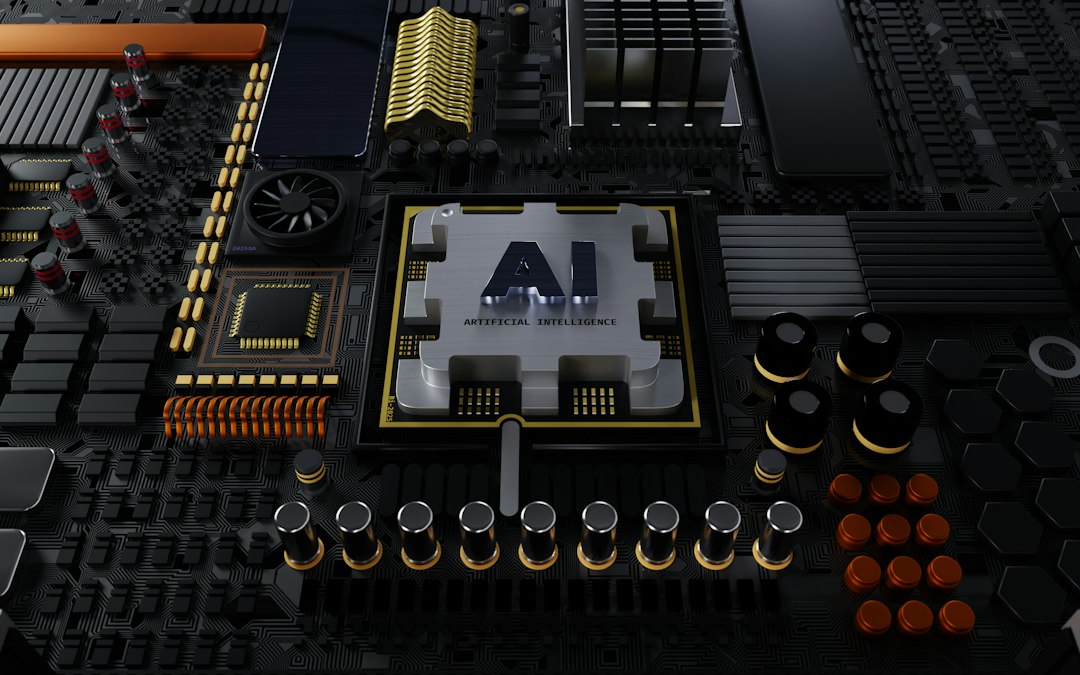
Remember when AI was just a futuristic concept in sci-fi movies? Well, that future is here, and it’s evolving faster than ever! Generative AI, in particular, has exploded onto the scene, moving from intriguing experiments to integral tools in our daily lives and professional spheres. From crafting compelling marketing copy to designing intricate 3D models, Generative AI is changing the game. But what exactly is it, and what are the latest developments you need to know about in late 2026? Let’s dive in! 😊
Understanding Generative AI: Beyond the Buzzword 🤔
At its core, Generative AI (GenAI) refers to artificial intelligence systems capable of producing new and original content, data, or ideas. Unlike traditional AI, which might classify or predict based on existing data, GenAI creates something entirely novel by learning patterns from vast datasets and mimicking those observations. Think of it as AI with a creative spark!
This groundbreaking technology applies machine learning, especially deep learning models like Generative Adversarial Networks (GANs) and Transformer models, to generate human-like text, realistic images, music, audio, videos, and even functional code. The accessibility of these tools through user-friendly interfaces has led to their rapid adoption across various sectors.
By 2026, Generative AI is no longer limited to simply generating content; it’s making decisions, executing tasks, and functioning as a collaborative partner alongside humans.
Latest Trends and Statistics in Generative AI 📊
The Generative AI landscape in late 2026 is buzzing with incredible growth and transformative trends. The market is expanding at an astonishing rate. The global generative AI market size was valued at USD 103.58 billion in 2025 and is projected to reach USD 161 billion in 2026, with some forecasts suggesting it could hit $1.3 trillion by 2032. This phenomenal growth is fueled by enterprise adoption, foundation model innovation, and expanding industry-specific applications.
Adoption rates are soaring across the board. A McKinsey survey from 2026 found that nearly nine out of ten organizations report regular AI use in at least one function, with 44% scaling it enterprise-wide. Specifically, over 78% of organizations now use generative AI in at least one business function, a significant jump from 55% just a year prior. Industries like information (39.7%), finance and insurance (33.9%), and healthcare (100% of CIOs plan to implement AI by 2026) are leading the charge.
Key Generative AI Market Statistics (2026)
| Metric | Value (2026) | Source | Notes |
|---|---|---|---|
| Global Market Size | $107.91 Billion – $225.70 Billion | SeoProfy, MarketsandMarkets, Fortune Business Insights | Varying estimates based on scope (software/services vs. total ecosystem). |
| Enterprise AI Adoption | 78% – 88% of organizations | Vention, McKinsey | Regular use in at least one business function. |
| Productivity Increase | Avg. 24.69% | Master of Code Global | Reported by businesses using GenAI. |
| AI-Generated Online Content | 90% (projected) | Europol | Expected by 2026. |
While the growth is undeniable, 80% of organizations remain worried about data leakage through generative AI solutions, highlighting the ongoing need for robust security and governance.
Key Checkpoints: What to Remember! 📌
You’ve come a long way! As we navigate this exciting field, it’s easy to get lost in the details. So, let’s quickly recap the most crucial takeaways. Remember these three points:
-
✅
Generative AI is a Creator, Not Just a Calculator.
Unlike traditional AI, GenAI generates novel content across various modalities, making it a powerful tool for innovation. -
✅
Rapid Adoption and Massive Market Growth.
The market is booming, with enterprises integrating GenAI into core operations and projecting substantial financial impact by 2030. -
✅
Ethical Considerations are Paramount.
From misinformation to data privacy and job displacement, responsible development and deployment are crucial for building trust.
Real-World Applications and Industry Impact 👩💼👨💻
Generative AI is no longer just a concept; it’s a practical powerhouse transforming workflows across nearly every industry. From enhancing creativity to automating complex tasks, its applications are vast and growing. The real revolution is happening as GenAI models take center stage in the business world, capable of thinking like humans, generating original content, and analyzing complex data.

Here’s a glimpse into how GenAI is making an impact in late 2026:
- Content Creation & Marketing: Advanced Large Language Models (LLMs) and text generators are drafting complex contracts, writing technical documentation, and managing multilingual email communications. Marketing departments are using GenAI for data analysis (45%), market research (40%), copywriting (27%), and image generation (22%).
- Software Development: AI-powered coding and development assistants are fundamentally solving resource bottlenecks by analyzing existing code, finding security vulnerabilities, writing test scenarios, and generating architectural code from scratch. Developers using tools like GitHub Copilot complete tasks 55% faster.
- Manufacturing & Design: Visual, video, and 3D model generation tools are reinventing design processes. Factory owners and product managers can generate 3D prototypes and usage videos of unmanufactured hardware from simple prompts, drastically reducing R&D costs and time-to-market.
- Healthcare: GenAI models are predicting potential drug candidates, generating molecular structures for new pharmaceuticals, and synthesizing patient data for training machine learning models while ensuring data privacy.
- Finance: GenAI assists with algorithmic trading, portfolio management, and market sentiment analysis. Fraud detection is an urgent deployment, with a 900% surge in deepfake-driven fraud since 2023 making legacy systems inadequate.
- Agentic AI: One of the biggest innovations of 2026 is “Agentic AI” (Autonomous AI Agents), which doesn’t just answer questions but takes action on your behalf. These agents run multi-step tasks with little human input, with 40% of enterprise applications projected to include task-specific AI agents by the end of 2026.
By 2026, multimodal AI models that seamlessly understand and generate content across text, image, audio, and video will be the norm, moving from specialized, single-purpose models to comprehensive systems.
The Ethical Landscape and Future Outlook 📚
As Generative AI continues its rapid ascent, it brings with it a complex array of ethical considerations and challenges that demand our attention. The discussion around AI ethics is no longer a side conversation; it’s foundational for innovation and public trust.
- Misinformation and Deepfakes: GenAI models can produce confident, authoritative-sounding content that is incorrect (hallucinations), and create convincing deepfakes that can be used for synthetic fraud. A landmark study found AI assistants misrepresent news content 45% of the time.
- Bias and Discrimination: Models trained on historical or incomplete data can reproduce or amplify existing societal biases, leading to biased, exclusionary, or misleading outputs.
- Data Privacy and Intellectual Property: There are significant concerns regarding data privacy, as LLMs can memorize personally identifiable information and leak sensitive corporate data. Additionally, the use of copyrighted content in training data raises unresolved legal questions about ownership of AI-generated work.
- Workforce Disruption: While GenAI enhances productivity and reshapes roles, it also raises concerns about job displacement, particularly for entry-level positions involving routine tasks. Unemployment among college graduates aged 23-27 rose from 3.25% in 2019 to 4.59% in 2025, partly due to AI. However, it also creates new roles requiring AI skills, with jobs requiring AI skills growing 69% by 2026.
- Environmental Cost: Training and running large AI models consume enormous amounts of electricity and water, making the carbon and resource footprint a significant ethical concern.
Addressing these issues requires a comprehensive approach, including defined strategies, good governance, and a commitment to responsible AI. Legislators are working on laws, including mandatory labeling of AI-generated content and criminalizing harmful deepfakes.
Practical Example: Enhancing Customer Support with Agentic AI 📚
Let’s look at a concrete example of how Generative AI, specifically Agentic AI, is being deployed in customer support in 2026.
Situation: A Large E-commerce Company’s Customer Service Department
- Challenge: High volume of routine inquiries (order status, returns, FAQs) leading to long wait times and agent burnout.
- Goal: Improve efficiency, reduce response times, and free up human agents for complex issues.
Implementation Process:
1) Deployment of Agentic AI Copilots: The company integrates specialized AI agents designed to act as “copilots” for human customer service representatives. These agents are trained on the company’s extensive knowledge base and past customer interactions.
2) Automated Initial Triage & Response Drafting: For common queries, the AI agent autonomously drafts initial responses, pulls relevant information from FAQs, or even initiates simple actions like tracking an order. Human agents review, edit, and approve these drafts.
3) Complex Issue Escalation: When a query is too nuanced or emotionally charged for the AI, it is seamlessly escalated to a human agent, often with a summary of the customer’s history and the AI’s attempted solutions. This allows human agents to focus on high-value, empathetic interactions.
Final Results (Reported in 2026):
– Efficiency Boost: Agents close tickets 15% faster while maintaining quality.
– Productivity Gains: Employees using GenAI tools save approximately 2.2 hours per week, equivalent to a 5% productivity boost.
– Reduced Burnout: Agents spend less time on repetitive replies, leading to improved job satisfaction.
This example highlights how GenAI is not necessarily replacing human jobs entirely, but rather augmenting human capabilities, improving efficiency, and allowing teams to focus on higher-value tasks. The key is finding the right balance between AI automation and human oversight.
Wrapping Up: Key Takeaways 📝
The Generative AI revolution is here, and it’s undeniable. We’re witnessing a transformative shift in how industries operate, how content is created, and even how we interact with technology. From its astounding market growth to its diverse applications in every sector imaginable, GenAI is reshaping our future.
However, with great power comes great responsibility. Navigating the ethical complexities of misinformation, bias, privacy, and workforce changes will be paramount to harnessing GenAI’s full potential for good. By staying informed, fostering responsible development, and embracing continuous learning, we can collectively steer this revolution towards a more innovative and equitable future. What are your thoughts on the future of Generative AI? Let me know in the comments below! 😊