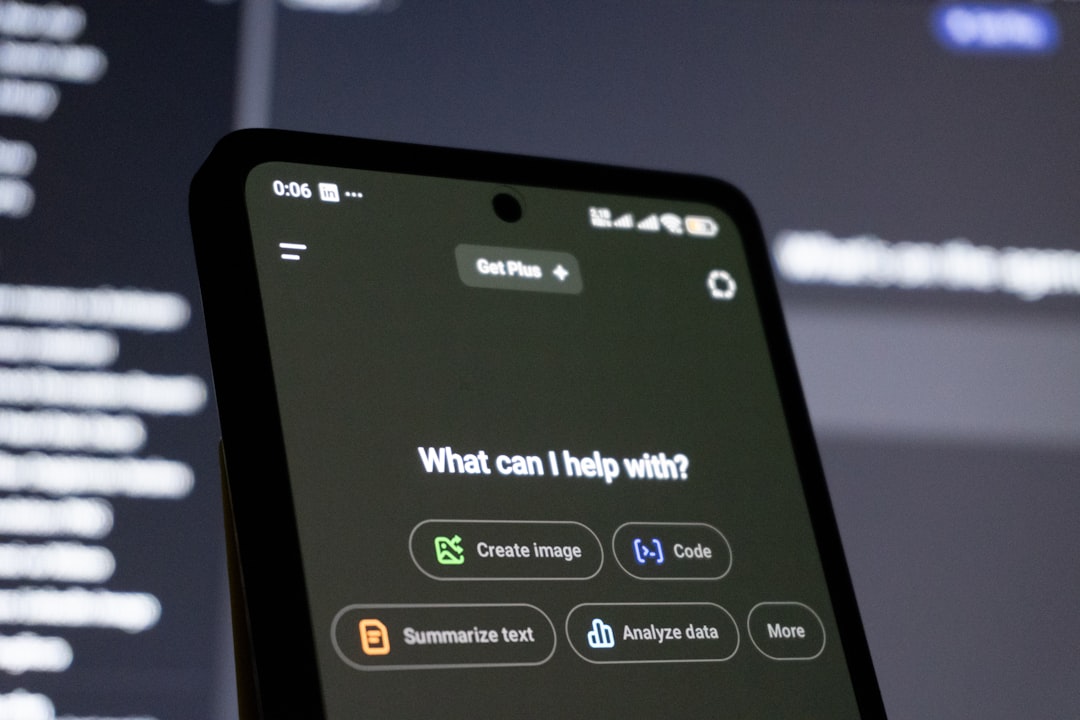
Remember when generative AI felt like a futuristic concept, something out of a sci-fi movie? Well, it’s 2026, and that future is undeniably here, evolving at a breathtaking pace! I mean, who would’ve thought just a few years ago that AI could draft entire articles, compose music, or even design product prototypes with such finesse? It’s truly mind-boggling, isn’t it? This isn’t just about cool tech demos anymore; generative AI is fundamentally reshaping industries and our daily lives. If you’re wondering how this incredible technology is moving beyond the initial hype and making a tangible impact, you’ve come to the right place! Let’s dive in and explore what’s truly happening. 😊
The Generative AI Revolution: What’s Happening Now? 🤔
The past year has seen generative AI mature significantly, moving from experimental tools to indispensable assets across various sectors. We’re witnessing a surge in enterprise adoption, with companies leveraging AI for everything from content creation and marketing to software development and customer service. It’s no longer a niche technology; it’s a mainstream business imperative.
One of the most exciting developments is the rise of multimodal AI, where models can seamlessly process and generate content across different data types – think text-to-image, image-to-video, or even text-to-3D models. This capability is unlocking entirely new creative possibilities and streamlining complex workflows.
The global generative AI market size is projected to continue its rapid expansion, potentially reaching hundreds of billions of dollars by the end of the decade, driven by increasing investment and diverse applications.
Key Trends Shaping Generative AI in 2026 📊
As we navigate 2026, several key trends are defining the trajectory of generative AI. These aren’t just fleeting fads; they represent fundamental shifts in how we interact with and utilize AI.
Firstly, hyper-personalization is becoming the norm. Generative AI can now tailor content, recommendations, and user experiences to individual preferences with unprecedented accuracy, making every interaction feel uniquely crafted. Secondly, the emergence of autonomous AI agents is a game-changer. These agents can perform complex tasks, manage workflows, and even learn from interactions, significantly boosting productivity in areas like customer support and data analysis.
Generative AI Trends & Impact
| Trend | Description | Key Benefit | Impact Area |
|---|---|---|---|
| Multimodal AI | Generating content across text, image, audio, video. | Enhanced creativity, integrated workflows. | Creative industries, marketing, education. |
| Hyper-Personalization | Tailoring content to individual user preferences. | Improved user engagement, higher conversion. | E-commerce, advertising, customer experience. |
| AI Agents | Autonomous AI performing complex tasks. | Increased efficiency, reduced manual labor. | Customer service, data analysis, software dev. |
| Ethical AI & Governance | Focus on responsible development, bias mitigation, regulation. | Trust, fairness, legal compliance. | All industries, public policy. |
While the capabilities are astounding, concerns around data privacy, intellectual property, and the potential for misuse of generative AI remain critical. Responsible development and robust governance are paramount.
Core Checkpoints: What You Need to Know! 📌
Made it this far? Awesome! With so much information, it’s easy to forget the essentials. Let’s quickly recap the three most crucial takeaways from our discussion. Keep these in mind!
-
✅
Generative AI is Mainstream.
It’s no longer just for tech giants; businesses of all sizes are integrating generative AI into their core operations for efficiency and innovation. -
✅
Key Trends are Multimodal & Autonomous.
Expect more AI that handles diverse data types and intelligent agents that can act independently to solve problems. -
✅
Ethics and Governance are Crucial.
As AI becomes more powerful, ensuring responsible development, addressing biases, and establishing clear regulations are more important than ever.
Practical Applications: Generative AI in Action 👩💼👨💻
So, how is generative AI actually being used today? The applications are incredibly diverse. In marketing, it’s generating personalized ad copy, social media content, and even entire campaign concepts. For software developers, AI is assisting with code generation, debugging, and automated testing, significantly accelerating development cycles. Even in creative fields like graphic design and music production, AI is acting as a powerful co-creator, helping artists overcome creative blocks and explore new styles.

Don’t think of generative AI as replacing human creativity, but rather augmenting it. It’s a powerful tool that can handle repetitive tasks, generate variations, and provide inspiration, freeing up humans for higher-level strategic and creative thinking.
Case Study: Revolutionizing Content Creation 📚
Let’s look at a concrete example of how generative AI is making a difference. Consider a mid-sized e-commerce company, “StyleHub,” struggling to keep up with the demand for fresh product descriptions and marketing copy for its thousands of items.
StyleHub’s Challenge
- Problem: Slow, manual creation of unique product descriptions for a rapidly expanding catalog.
- Goal: Increase content output by 5x while maintaining brand voice and SEO quality.
AI-Powered Solution
1) StyleHub implemented a specialized generative AI model, trained on their existing product data and brand guidelines.
2) The AI was fed product attributes (color, material, style, features) and generated multiple description variations.
3) Human editors then reviewed, refined, and selected the best options, focusing on creative flair and strategic messaging.
Final Results
– Content Output: Increased by 700% in the first quarter, from 50 to 350 descriptions per week.
– Time Savings: Reduced time spent on initial drafts by 80%, allowing human copywriters to focus on high-value, strategic content.
This case illustrates how generative AI isn’t just about automation; it’s about intelligent augmentation. By handling the heavy lifting of initial content generation, AI empowers human teams to be more productive, creative, and strategic. It’s a win-win!
Conclusion: Summarizing the Future 📝
Generative AI in 2026 is far from a fleeting trend. It’s a powerful, evolving force that’s already delivering tangible value across industries. From hyper-personalized experiences to autonomous agents and multimodal content creation, its impact is profound and only set to grow.
Embracing this technology, understanding its ethical implications, and focusing on how it can augment human capabilities will be key to thriving in this new era. What are your thoughts on the future of generative AI? I’d love to hear them! Feel free to share your questions or insights in the comments below! 😊
Generative AI: 2026 Snapshot
Frequently Asked Questions ❓