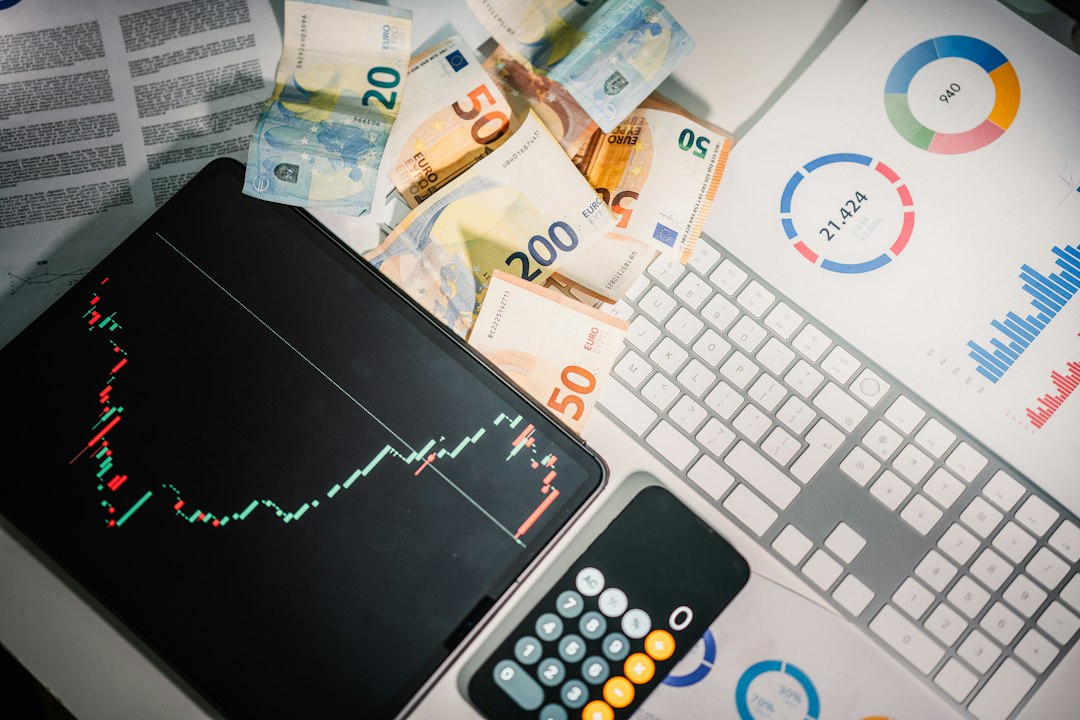
Have you ever watched the financial markets move with lightning speed and wondered if you could capture some of those rapid gains? I know I have! The world of Forex (FX) trading can seem daunting, but for many, day trading offers an exciting avenue to potentially profit from short-term currency fluctuations. It’s a fast-paced environment where quick decisions and solid strategies are key. If you’re looking to dive into one of the most dynamic trading methods, you’ve come to the right place. Let’s explore the ins and outs of FX day trading and how you can make it work for you! 😊
What is FX Day Trading? 🤔
FX day trading involves opening and closing currency positions within the same trading day. The goal is to capitalize on small price movements in highly liquid currency pairs, avoiding overnight holding risks. Unlike long-term investing, day traders don’t concern themselves with fundamental economic shifts over weeks or months, but rather with immediate market reactions and technical patterns.
This approach demands constant vigilance and a deep understanding of technical analysis. Traders typically use leverage to amplify potential gains, which also, of course, amplifies potential losses. The focus is on quick entries and exits, often holding trades for minutes or just a few hours.
In November 2026, algorithmic trading continues to dominate the FX market, influencing rapid price movements. Retail day traders are increasingly utilizing advanced charting tools and sometimes even semi-automated systems to keep up with the pace.
Key Strategies and Latest Trends 📊
One of the most effective day trading strategies centers around price action analysis. This involves studying raw price movements, often through candlestick charts, to identify trends, support and resistance levels, and reversal patterns. Traders using this method typically minimize their reliance on complex indicators, preferring to interpret the market’s “story” directly from the chart itself.
Another popular technique is scalping, which aims to make numerous small profits from tiny price changes throughout the day. While potentially profitable, scalping requires extremely fast execution and very tight risk management.
Popular Currency Pairs for Day Trading
| Category | Description | Typical Volatility | Key Trading Sessions |
|---|---|---|---|
| EUR/USD | Most traded pair, representing Eurozone and US economies. | Moderate to High | London & New York Overlap |
| GBP/USD | British Pound vs. US Dollar. Known for higher volatility. | High | London & New York Overlap |
| USD/JPY | US Dollar vs. Japanese Yen. Often reactive to global risk sentiment. | Moderate | Tokyo & New York Overlap |
| USD/CHF | US Dollar vs. Swiss Franc. Often seen as a safe-haven currency. | Low to Moderate | European & New York Sessions |
While mobile trading platforms have made FX more accessible, over-trading or impulsive decisions due to constant market access can lead to significant losses. Discipline is paramount.
Key Checkpoints: Remember These! 📌
Made it this far? Great! With so much to absorb, it’s easy to forget the essentials. Here are three crucial points to keep in mind:
-
✅
Strict Risk Management
Never risk more than a small percentage (e.g., 1-2%) of your capital on a single trade. This is the golden rule to survive in day trading. -
✅
Develop a Solid Trading Plan
Define your entry, exit, and stop-loss rules before you trade. Emotional decisions are the enemy of consistent profits. -
✅
Continuous Learning and Adaptation
The FX market is constantly evolving. Stay updated on economic news, refine your strategies, and learn from every trade.
Executing Your Day Trades 👩💼👨💻
Effective day trading hinges on clear entry and exit signals. For price action traders, these often come from candlestick patterns at key support and resistance levels. For instance, a “hammer” candlestick forming at a strong support level after a downtrend might signal a potential reversal and a buying opportunity. Conversely, a “shooting star” at resistance could indicate a selling opportunity. Always confirm signals with volume or other indicators if you use them.
Beyond entry, placing appropriate stop-loss orders is non-negotiable. A stop-loss limits your potential loss on a trade, protecting your capital. A take-profit order, on the other hand, ensures you lock in gains when your target is hit. It’s about letting your winners run and cutting your losers short, which, frankly, is easier said than done!
Market volatility has been a significant factor in 2026, driven by ongoing geopolitical tensions and central bank interventions. This creates more trading opportunities but also demands heightened awareness and adaptability from day traders.
Practical Example: A Simple Day Trade 📚
Let’s walk through a hypothetical day trade using a simplified price action approach on the EUR/USD pair.
Trader Jane’s Scenario
- **Currency Pair:** EUR/USD
- **Timeframe:** 15-minute chart
- **Market Observation:** EUR/USD has been in a short downtrend, but it’s now approaching a historically strong support level at 1.0850.
- **Signal:** As the price hits 1.0850, a strong bullish engulfing candlestick pattern forms, indicating buyers are stepping in.
Trading Process
1) **Entry:** Jane enters a “buy” trade (long position) at 1.0860, just above the bullish engulfing candle’s close, confirming the reversal.
2) **Stop-Loss:** She places her stop-loss order at 1.0830, below the support level and the low of the bullish engulfing candle, limiting her risk to 30 pips.
3) **Take-Profit:** Based on previous resistance levels and potential volatility, she sets her take-profit order at 1.0920, aiming for a 60-pip gain (a 1:2 risk-reward ratio).
Final Outcome
– **Result:** Within the next hour, the EUR/USD pair rises steadily, hitting Jane’s take-profit target at 1.0920. Her trade is automatically closed, securing a profit.
– **Lesson:** This example illustrates the importance of identifying key levels, waiting for clear price action signals, and strictly adhering to predefined risk-reward parameters.
While this is a simplified example, it highlights how a structured approach, combined with a keen eye for price action, can lead to profitable day trades. Remember, consistency over grand slams is the true path to success in this game.
Conclusion: Your Path to Forex Day Trading Success 📝
FX day trading is a challenging yet potentially rewarding endeavor. It requires discipline, continuous learning, and a robust strategy. By focusing on technical analysis, mastering risk management, and staying updated with market trends, you can carve out your own path to profitability.
The market is always evolving, and so should your approach. Don’t be afraid to backtest new ideas and refine your techniques. What are your biggest challenges in day trading? Or perhaps you have a favorite strategy you’d like to share? Let me know in the comments below! 😊