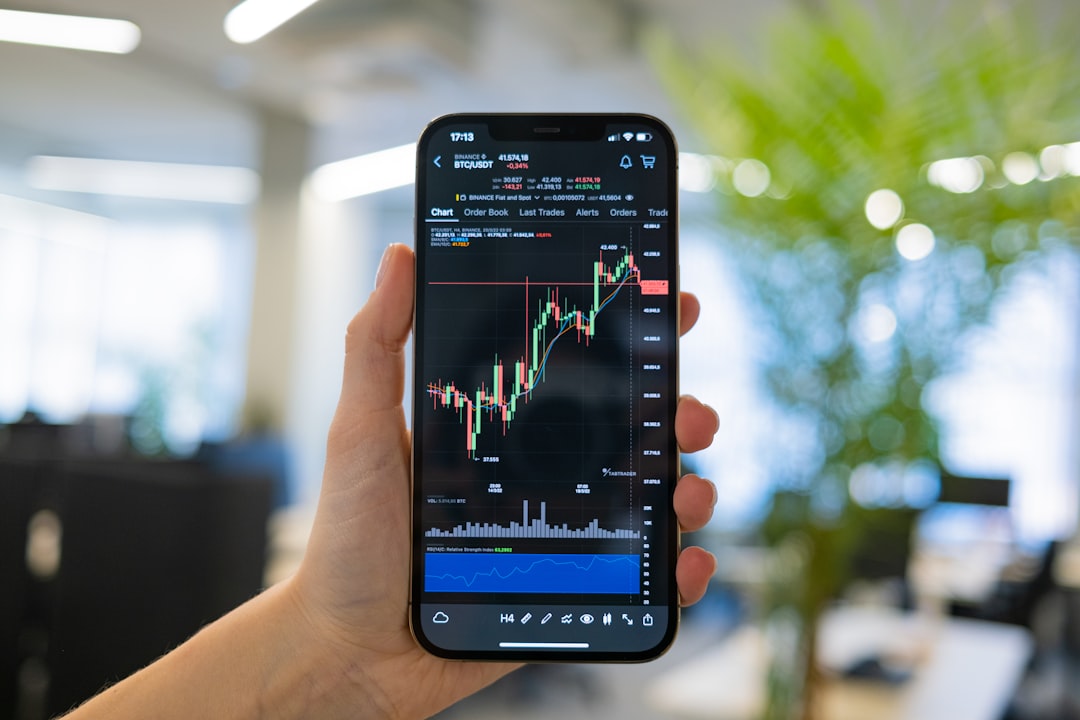
Have you ever felt overwhelmed by the sheer number of trading strategies out there, especially in the fast-paced world of Forex? It’s a common feeling, trust me! Many aspiring traders struggle to find a method that aligns with their personality, schedule, and risk tolerance. But what if I told you there’s a powerful approach that balances potential for significant gains with a more manageable time commitment than day trading? Today, we’re diving deep into FX swing trading, specifically leveraging the timeless principles of price action and support/resistance. This strategy has stood the test of time, and with the right understanding, it could be your key to consistent profitability. Let’s get started! 😊
Understanding the Core: What is FX Swing Trading? 🤔
At its heart, swing trading in Forex involves capturing short to medium-term gains in a currency pair over a period of a few days to several weeks. Unlike day traders who aim for profits within a single day, or long-term investors who hold positions for months or years, swing traders look to profit from “swings” in price, riding trends up or down. This approach often requires less screen time than day trading, making it appealing for those with other commitments. It’s about identifying potential turning points or continuation patterns and entering trades with the expectation of a significant move before exiting.
The Forex market, with its 24/5 nature and immense liquidity, offers ample opportunities for swing traders. Major currency pairs like EUR/USD, GBP/USD, and USD/JPY are often favored due to their tight spreads and predictable technical behavior. According to recent market analyses, the overall volume in the forex market continues to see robust growth, with daily turnover often exceeding $7 trillion in 2025-2026, driven by increased participation from retail traders and institutional investors alike.
Swing trading can be less stressful than day trading as it doesn’t demand constant monitoring of charts. It allows for a more analytical approach, focusing on larger price movements rather than minute-by-minute fluctuations.
The Power Duo: Price Action and Support/Resistance 📊
Now, let’s talk about the backbone of our chosen strategy: price action and support/resistance (S/R) levels. Price action trading is essentially reading the market through the raw price movements on a chart, without relying heavily on lagging indicators. It’s about understanding the psychology of buyers and sellers reflected in candlestick patterns and chart formations.
Support and resistance levels are specific price points on a chart that tend to act as barriers, preventing the price of an asset from moving further in a certain direction. Support is a price level where a downtrend is expected to pause due to a concentration of demand, while resistance is a price level where an uptrend is expected to pause due to a concentration of supply. These levels are not arbitrary; they often represent key psychological points where market participants have previously shown strong buying or selling interest. Identifying these levels accurately is crucial for timing your entries and exits in swing trading.
Optimal Timeframes for FX Swing Trading
| Timeframe | Description | Typical Holding Period | Best For |
|---|---|---|---|
| 4-Hour Chart | Offers a good balance, filtering out much of the market noise. | 2-5 days | Active swing traders |
| Daily Chart | Provides a clearer view of broader trends and stronger S/R levels. | 5-15 days | Conservative swing traders |
| Weekly Chart | Used for identifying long-term trends and major S/R zones. | Weeks to a few months | Positional traders, long-term outlook |
While powerful, S/R levels are not always perfectly respected. False breakouts can occur, and market sentiment can shift rapidly due to unexpected news events. Always confirm with other price action signals.
Key Checkpoints: Remember These Essentials! 📌
Made it this far? Great! This post is packed with information, so let’s quickly recap the absolute must-knows. Keep these three points firmly in mind as you embark on your swing trading journey.
-
✅
Price Action is Your Primary Guide
Focus on what the charts are telling you through raw price movements and candlestick patterns. This is the most direct signal of market sentiment. -
✅
Identify Strong Support & Resistance Zones
These levels are where big money tends to make moves, offering high-probability entry and exit points. Look for multiple touches. -
✅
Risk Management is Non-Negotiable
Always define your stop-loss and take-profit levels before entering a trade. Protect your capital above all else.
Essential Tools and Techniques for Swing Trading 👩💼👨💻
Beyond just identifying S/R, successful swing trading with price action involves a few more tools and techniques to refine your entries and manage your trades. Candlestick patterns are your best friends here. Patterns like pin bars, engulfing patterns, and dojis can signal reversals or continuations at key S/R levels. For instance, a bullish engulfing pattern at a strong support level can be a powerful buy signal. Conversely, a bearish pin bar at resistance suggests a potential sell-off.
While we emphasize price action, some traders use a few simple indicators to complement their analysis, not to replace it. Moving Averages (MA) can help confirm the overall trend, and the Relative Strength Index (RSI) can signal overbought or oversold conditions, hinting at potential reversals near S/R zones. However, remember that these are secondary tools; the primary focus remains on the raw price data.

A robust risk management plan is paramount. Never risk more than 1-2% of your trading capital on a single trade. Always set a stop-loss order to limit potential losses and a take-profit order to secure gains.
Real-World Example: A GBP/USD Swing Trade 📚
Let’s walk through a hypothetical scenario to see how this strategy plays out in practice. Imagine it’s early June 2026, and you’re analyzing the GBP/USD daily chart.
Trader Sarah’s Scenario
- Currency Pair: GBP/USD
- Timeframe: Daily Chart
- Observation: GBP/USD has been in a clear downtrend for the past month but is now approaching a significant historical support level at 1.2500, a level that has held firm on multiple occasions in late 2025 and early 2026.
- Price Action: As price reaches 1.2500, Sarah observes a strong bullish hammer candlestick pattern forming, followed by a bullish engulfing candle on the next day. This indicates buying pressure at support.
Trading Process
1) Entry: Sarah enters a buy trade at 1.2520, just above the bullish engulfing candle’s close, confirming the bounce off support.
2) Stop-Loss: She places her stop-loss below the support level and the low of the hammer candle, at 1.2470 (50 pips risk).
3) Take-Profit: Sarah identifies the next major resistance level at 1.2720, which acted as strong resistance in May 2026. She sets her take-profit there (200 pips potential gain).
4) Risk/Reward: Her risk-to-reward ratio is 1:4 (50 pips risk vs. 200 pips gain), a highly favorable setup.
Final Outcome
– Result: Over the next week, GBP/USD steadily climbs, reaching 1.2720 and hitting Sarah’s take-profit target. She secures a substantial profit.
– Lesson: By patiently waiting for clear price action signals at a strong support level and managing her risk, Sarah executed a successful swing trade.
This example highlights the importance of patience, clear technical analysis, and disciplined risk management. It’s not about catching every single pip, but about identifying high-probability setups and letting your winners run while cutting your losers short.
Wrapping Up: Key Takeaways for Your Trading Journey 📝
Phew! We’ve covered a lot, haven’t we? FX swing trading, especially when anchored by the robust principles of price action and support/resistance, offers a compelling path to profitability in the dynamic Forex market. It’s a strategy that rewards patience, keen observation, and disciplined execution. Remember, the market is a reflection of human psychology, and price action helps you read that story directly from the charts.
Don’t rush the process. Start by practicing on a demo account, meticulously identifying S/R levels, and observing how price reacts. Build your confidence, refine your eye for candlestick patterns, and always, always prioritize risk management. Your trading journey is a marathon, not a sprint. Keep learning, stay disciplined, and the rewarding world of FX swing trading could very well be yours! Got questions? Drop them in the comments below – I’d love to hear from you! 😊