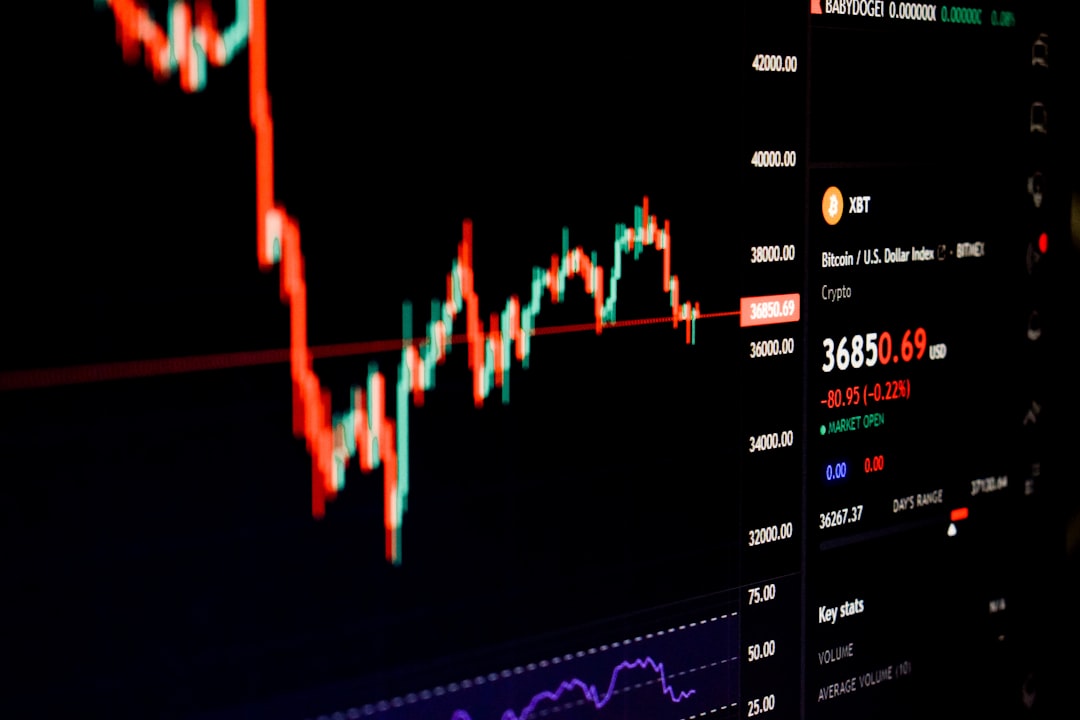
Have you ever felt overwhelmed by complex indicators and conflicting signals in the Forex market? You’re not alone! Many traders, myself included, have been there. But what if I told you there’s a powerful, intuitive approach that focuses on the purest form of market data – price itself? Welcome to the world of Price Action Trading. In this blog post, we’ll dive deep into this profitable FX trading technique, explore its nuances, and equip you with the knowledge to apply it effectively in today’s fast-evolving market. Let’s get started! 😊
What Exactly is Price Action Trading? 🤔
Price Action Trading is a methodology that involves making trading decisions based on the raw movement of price on a chart, without relying on lagging indicators. It’s about understanding the “story” the market is telling through candlestick patterns, support and resistance levels, and overall market structure. By analyzing pure price movements, traders aim to anticipate future market trends and pinpoint high-probability trades.
Many view Price Action as a subset of technical analysis, a valuable tool to understand market behavior. It emphasizes that all relevant information about a currency pair is already reflected in its price. This approach helps traders react to real-time market movements and make informed decisions based on price behavior.
The beauty of Price Action Trading lies in its universality. It works across all markets (stocks, crypto, forex) and all timeframes (daily, hourly, 5-minute charts), making it a versatile skill for any trader.
Key Components of Price Action and Candlestick Patterns 📊
At the heart of Price Action Trading are candlestick patterns and market structure. These visual cues provide insights into buyer and seller sentiment, potential reversals, and trend continuations. Understanding these patterns is crucial for making informed trading decisions.
Some of the most common and reliable price action patterns include Pin Bars, Engulfing Patterns, Double Tops/Bottoms, and Head and Shoulders patterns. These patterns, when formed at key support and resistance zones, can be powerful reversal signals.
Common Price Action Candlestick Patterns
| Pattern | Description | Signal | Reliability (Approx.) |
|---|---|---|---|
| Pin Bar | Long wick, small body, signals reversal. | Reversal | High |
| Engulfing Pattern | Large candle body “engulfs” previous candle. | Strong Reversal | High |
| Double Top/Bottom | Two peaks/troughs at similar levels, indicating reversal. | Reversal | High (Double Bottom 78.55%, Double Top 75.01%) |
| Head and Shoulders | Three peaks, middle one highest, signals bearish reversal. | Strong Reversal | Very High (83.04%) |
While these patterns are powerful, context is key. Candlestick patterns are most reliable when they form at significant support and resistance zones. Always consider the broader market structure and volume for confirmation.
Key Checkpoints: What You Must Remember! 📌
Have you followed along well so far? The article is quite long, so I’ll quickly recap the most important takeaways. Please remember these three points above all else.
-
✅
Price Action is Pure:
It’s about reading raw price movements, not lagging indicators. This gives you a real-time understanding of market sentiment. -
✅
Patterns at Key Levels are Gold:
Candlestick patterns like Pin Bars and Engulfing patterns are most reliable when they form at established support and resistance zones. -
✅
Risk Management is Non-Negotiable:
Always define your risk per trade (e.g., 1-3% of capital) and set clear stop-loss and take-profit levels before entering any position.
Implementing Price Action in Your Trading Strategy 👩💼👨💻
Successfully integrating Price Action into your trading strategy involves more than just recognizing patterns; it requires a disciplined approach to entries, exits, and crucially, risk management. Effective risk management is paramount for long-term success in Forex trading.
For instance, when trading a bullish price action setup, you might enter a long position and set a stop-loss order just below a key support level. This limits your losses to a predefined amount if the trade moves against you. Position sizing is also critical; calculate your position size so that if your stop-loss is hit, you only lose a small percentage (e.g., 1-3%) of your trading capital.
The Forex market saw a 28% growth from April 2022 to April 2025, increasing from $7.5 trillion to $9.6 trillion daily turnover, largely driven by market volatility. This highlights the need for robust strategies like Price Action and stringent risk management.
Practical Example: Trading a Bullish Engulfing Pattern 📚
Let’s walk through a hypothetical scenario to see how Price Action Trading can be applied. Imagine you’re analyzing the EUR/USD daily chart.
Trader’s Situation
- Market: EUR/USD, Daily Chart
- Observation: Price has been in a clear downtrend and is now approaching a significant historical support level.
- Pattern Spotted: A strong Bullish Engulfing candlestick pattern forms right at the support level. The green candle’s body completely covers the previous red candle’s body.
Trading Process
1) **Confirmation:** The Bullish Engulfing pattern at a strong support level provides a high-probability reversal signal. Volume also shows an increase during the engulfing candle, adding confirmation.
2) **Entry:** You decide to enter a long position (buy) at the opening of the next candle, immediately after the Bullish Engulfing pattern closes.
3) **Stop-Loss:** You place your stop-loss order just below the low of the Bullish Engulfing candle, which is also below the established support level. This limits your potential loss.
4) **Take-Profit:** Based on previous resistance levels and a favorable risk-reward ratio (e.g., 1:2 or 1:3), you set your take-profit target at the next significant resistance level.
Potential Outcome
– **Risk Controlled:** Your capital is protected by the stop-loss order, ensuring you don’t suffer excessive losses if the market unexpectedly reverses.
– **Profit Potential:** If the market reverses as anticipated, the trade could reach your take-profit target, yielding a substantial gain relative to your risk.
This example illustrates how combining a clear Price Action pattern with robust risk management at a key market level can create a high-probability trading opportunity. It’s about being patient and waiting for the market to present itself.

Wrapping Up: Key Takeaways for Your Trading Journey 📝
As we navigate the dynamic Forex landscape of 2026, with forecasts of continued USD depreciation and potential shifts in central bank policies, mastering Price Action Trading can be an invaluable asset. The market is expected to remain highly active, with divergent growth paths and shifting policies keeping currency pairs moving.
Remember, Price Action isn’t just about patterns; it’s a comprehensive method that evolves with different market dynamics. By focusing on the pure price, understanding key candlestick formations, and rigorously applying risk management, you can develop a more disciplined and potentially profitable trading approach. What are your thoughts on Price Action Trading? Share your experiences or ask any questions in the comments below! 😊
Price Action Trading: Quick Guide
Frequently Asked Questions ❓