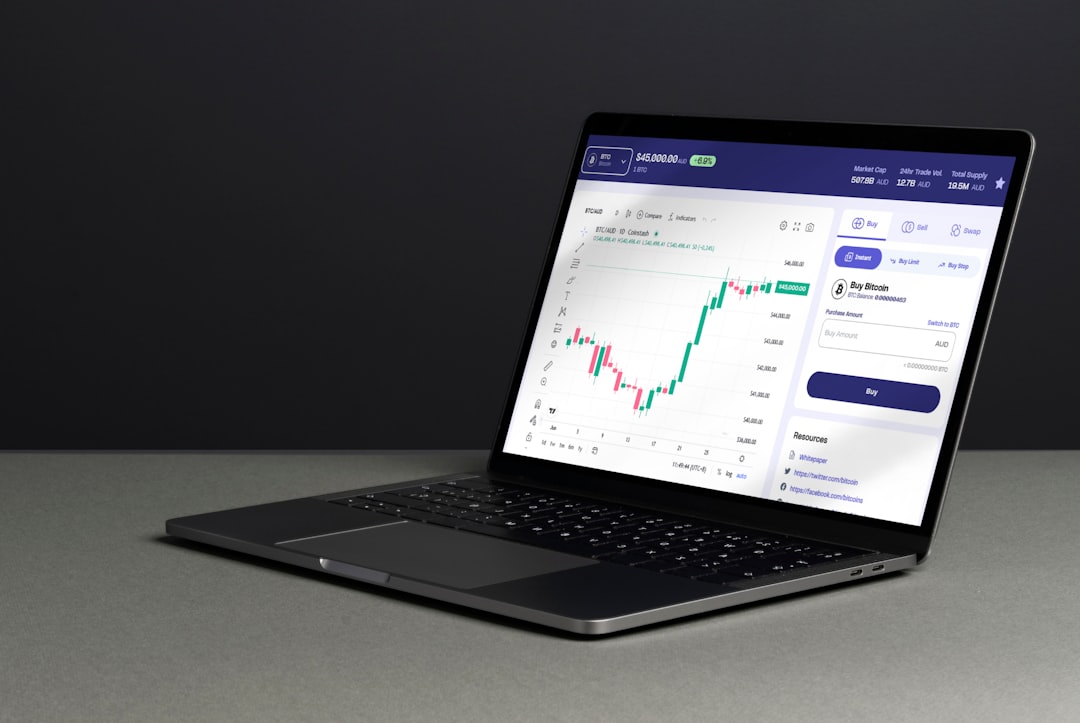
Have you ever felt overwhelmed by a chart cluttered with indicators, each screaming a different signal? I know I have! In the fast-paced world of forex trading, simplicity can often be your greatest ally. That’s where Price Action Trading comes in – a powerful methodology that cuts through the noise, focusing solely on what the market is truly telling you: its price. With the forex market’s daily turnover estimated at a staggering $9.6 trillion in April 2025 and forecasts pointing to even greater growth, understanding how to interpret price movements directly is more crucial than ever. Let’s dive into how mastering price action can give you a significant edge in 2026! 😊
What Exactly is Price Action Trading? 🤔
Price Action Trading is an approach where traders make decisions based on the raw movement of an asset’s price, as displayed on a chart. Instead of relying on lagging indicators that are derived from past price data, price action traders analyze patterns, trends, and key levels directly from candlestick charts. This method allows for real-time decision-making and provides deep insights into market psychology, reflecting the collective behavior of buyers and sellers.
In essence, it’s about reading the “story” the market is telling through its price bars. This strategy remains highly reliable in 2026 because it focuses on fundamental market behavior, making it adaptable across all timeframes and particularly effective in volatile markets.
Some price action strategies are reported to achieve success rates of 60-75%, though actual results depend heavily on the trader’s skill, discipline, and prevailing market conditions. This highlights the importance of practice and continuous learning.
Key Components of Price Action: Decoding the Charts 📊
To effectively trade price action, you need to understand its core building blocks. These elements provide the visual cues and psychological insights necessary to anticipate potential market moves.
Candlestick Patterns: The Language of the Market
Candlestick patterns are fundamental to price action. Each candle tells a story about the open, high, low, and close prices within a specific timeframe, revealing the battle between buyers and sellers. Mastering these patterns is crucial for market timing and strategy.
| Pattern Type | Description | Market Implication |
|---|---|---|
| Bullish Engulfing | A small bearish candle is completely engulfed by a larger bullish candle. | Strong bullish reversal signal. |
| Bearish Engulfing | A small bullish candle is completely engulfed by a larger bearish candle. | Strong bearish reversal signal. |
| Hammer / Hanging Man | Small body with a long lower shadow. Hammer (bullish) at downtrend bottom, Hanging Man (bearish) at uptrend top. | Potential reversal. |
| Doji | Open and close prices are nearly identical, forming a cross shape. | Market indecision, often preceding a reversal. |
While individual candlestick patterns can be powerful, their effectiveness is amplified when combined with other price action tools. Recent studies suggest that the effectiveness of candlestick patterns has seen a notable uptick, particularly in more volatile market conditions.
Support and Resistance: The Market’s Invisible Walls
Support and resistance (S/R) levels are price zones where buying or selling pressure is expected to emerge, preventing the price from moving further in a particular direction. These levels are crucial for identifying potential entry and exit points. Old support levels often become new resistance after a break, and vice versa.

Trendlines and Market Structure: Following the Flow
Trendlines connect a series of highs or lows, indicating the direction and strength of a trend. Understanding market structure – whether it’s making higher highs and higher lows (uptrend) or lower highs and lower lows (downtrend) – helps you align your trades with the prevailing market direction. This is a core concept for many successful traders.
While price action simplifies trading, it requires skillful interpretation and robust risk management. False breakouts are common, so always confirm patterns and use stop-loss orders based on key S/R levels to limit potential losses.
Key Checkpoints: Remember These Essentials! 📌
Made it this far? Great! The forex market in 2026 is dynamic, influenced by geopolitical risks, central bank policies, and technological advancements like AI-driven liquidity. Here are the three most crucial takeaways to keep in mind for your price action journey:
-
✅
Focus on Raw Price:
Price action trading prioritizes direct market behavior over lagging indicators, offering real-time insights into supply and demand. -
✅
Master Candlesticks & S/R:
Candlestick patterns and support/resistance levels are your primary tools for identifying high-probability trade setups. -
✅
Integrate with Market Context:
While price is king, understanding broader economic trends and central bank policies can significantly enhance your price action analysis.
Integrating Price Action with Market Trends: The Bigger Picture 👩💼👨💻
While price action focuses on the chart, ignoring the broader market context would be a mistake. The forex market in 2026 is expected to see structural shifts driven by geopolitical risks, fragile policy credibility, and a fragmented macro landscape. Central bank policies, such as the Federal Reserve’s easing and the ECB’s potential tightening, will continue to create divergent monetary paths, leading to potential volatility and new trading opportunities.
For instance, if you identify a strong bullish price action pattern on EUR/USD near a key support level, and the European Central Bank (ECB) has just signaled a hawkish stance, that confluence of technical and fundamental factors can significantly increase the probability of a successful trade. Conversely, a bearish pattern might be amplified by news of the Federal Reserve cutting rates.
The US dollar’s dominance faces episodic challenges in 2026, while the yen remains a key tail-risk instrument amid potential policy normalization. Europe’s relative stability could attract incremental flows. Keep an eye on these major currency dynamics.
Practical Example: A Price Action Trade Setup 📚
Let’s walk through a hypothetical scenario to see how price action principles can be applied in real-time. Imagine it’s early February 2026, and you’re looking at the daily chart of EUR/USD.
Trader’s Situation
- Currency Pair: EUR/USD
- Timeframe: Daily Chart
- Market Context: Recent news suggests the ECB is maintaining a hawkish stance, while the Fed is signaling potential rate cuts.
Analysis Process
1) Identify Support: You notice a strong historical support level at 1.0800 that has held multiple times in late 2025.
2) Candlestick Confirmation: As price approaches 1.0800, a large bullish engulfing candlestick forms, completely covering the previous day’s bearish candle. This is a strong reversal signal.
3) Risk Management: You decide to enter a long position (buy) at the close of the bullish engulfing candle, placing your stop-loss order just below the 1.0800 support level to protect against unexpected downside.
4) Target Setting: You identify the next major resistance level at 1.1000 as your profit target, aiming for a favorable risk-reward ratio.
Final Result
– Entry: Buy EUR/USD at 1.0820 (close of bullish engulfing candle)
– Stop-Loss: 1.0780 (below support)
– Take-Profit: 1.1000 (at next resistance)
In this scenario, the combination of a strong support level, a clear bullish price action pattern, and supportive fundamental news provides a high-probability trade setup. The trade plays out as anticipated, hitting your take-profit target for a solid gain.
This example illustrates how price action, when combined with sound risk management and an awareness of macroeconomic factors, can lead to well-informed trading decisions. It’s not about predicting the future with 100% accuracy, but about increasing your probabilities.
Wrapping Up: Your Path to Price Action Mastery 📝
The forex market in 2026 promises to be as dynamic and opportunity-rich as ever, with daily trading volumes exceeding $9.6 trillion. Price Action Trading offers a robust and intuitive method to navigate this complex landscape, empowering you to make decisions based on the purest form of market data: price itself. By focusing on candlestick patterns, support and resistance levels, and understanding the broader market context, you can develop a disciplined and effective trading strategy.
Remember, consistency, discipline, and continuous learning are your greatest assets. Start practicing on a demo account, refine your understanding of price action, and gradually build your confidence. The journey to becoming a profitable trader is a marathon, not a sprint. If you have any questions or want to share your own price action insights, drop a comment below! Happy trading! 😊
Price Action Trading at a Glance
Frequently Asked Questions ❓