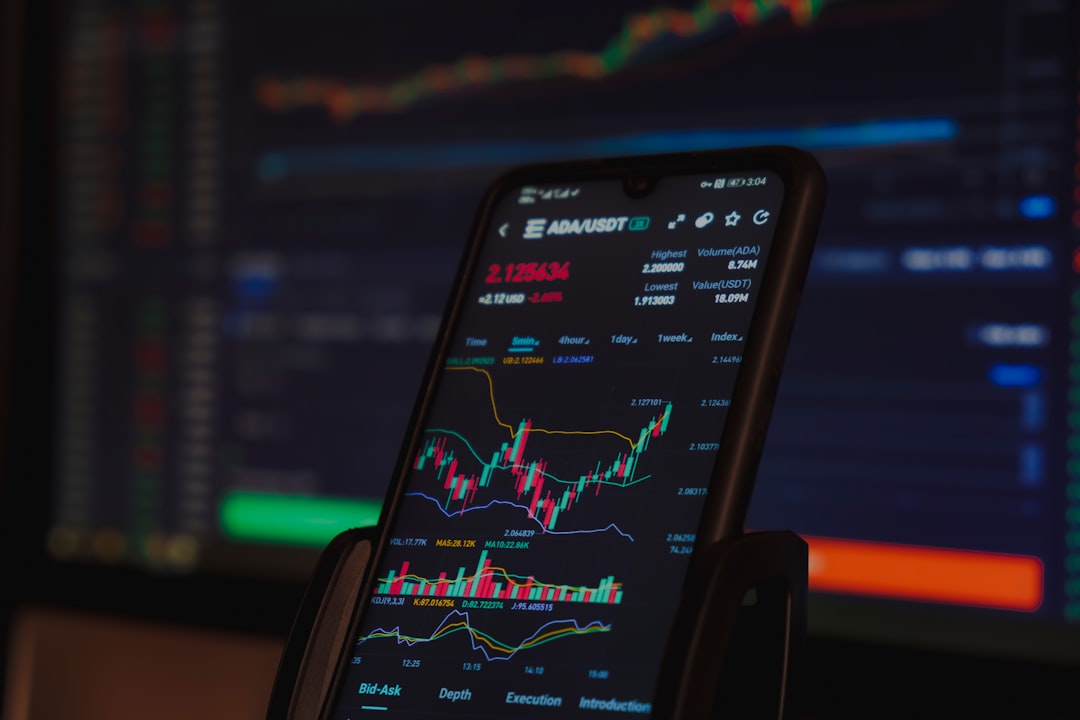
Have you ever felt overwhelmed by the sheer volume of information and complex indicators in Forex trading? It’s a common feeling, especially in today’s fast-paced financial world. But what if I told you there’s a powerful, yet surprisingly simple, method that cuts through the noise and focuses on the purest form of market data: price itself? Welcome to the world of Price Action trading! In this blog post, we’re diving deep into one of the most effective strategies for generating profits in the Forex market, especially as we navigate the exciting and sometimes unpredictable landscape of 2025. Let’s get started! 😊
What Exactly is Price Action Trading? 🤔
Price Action trading is a disciplined approach where traders make decisions based solely on the raw movement of an asset’s price over time, without relying heavily on lagging technical indicators. It’s like reading the market’s story directly from its footprints on the chart. Instead of complex formulas, Price Action traders focus on candlestick patterns, support and resistance levels, and chart formations to predict future price movements.
This method simplifies trading by concentrating on what the market is actually doing, making it easier for traders to react quickly and make informed decisions. Its versatility means it can be applied to any financial market, including stocks, commodities, and, of course, Forex, making it a powerful tool for all types of traders.
Price Action trading is often favored for its clarity and the ability to provide more reliable and consistent signals, as it’s based on real-time price movements rather than delayed indicators.
The Core Pillars of Price Action: Patterns and Levels 📊
At the heart of Price Action trading lies the interpretation of various patterns and key price levels. These elements provide crucial insights into market sentiment and potential turning points. Understanding them is key to spotting high-probability trade setups.
Key Candlestick Patterns
Candlestick patterns are fundamental to Price Action, offering visual cues about price opens, highs, lows, and closes, which can signal shifts in sentiment. Some of the most important include:
- Pin Bar: A candlestick with a long wick and a small body, indicating a strong rejection of a price level.
- Engulfing Pattern (Bullish/Bearish): A two-candlestick pattern where the second candle completely “engulfs” the first, signaling a strong reversal.
- Doji: A candle with an open and close that are virtually equal, suggesting indecision in the market.
Support and Resistance Levels
These are critical areas on a chart where the price has historically struggled to move past (resistance) or found buying interest (support). Identifying these levels helps traders pinpoint potential entry and exit points and manage risk effectively.
Common Chart Patterns and Their Reliability
| Pattern Type | Description | Signal | Reliability (Approx.) |
|---|---|---|---|
| Head and Shoulders | Three peaks, with the middle (head) being the highest, signaling a bearish reversal. | Bearish Reversal | 83-85% |
| Inverse Head and Shoulders | Three troughs, with the middle (head) being the lowest, signaling a bullish reversal. | Bullish Reversal | 83-85% |
| Double Top/Bottom | Two nearly equal highs/lows, indicating a reversal. | Reversal | 75-78% |
| Flags (Bullish/Bearish) | A small, rectangular consolidation after a sharp price move, signaling continuation. | Continuation | 67-68% |
| Triangles (Ascending/Descending/Symmetrical) | Price consolidates into a triangle shape, often signaling continuation. | Continuation | 72-73% |
While these patterns offer strong probabilities, no trading strategy is foolproof. Always confirm patterns with other technical tools and implement strict risk management. Past performance is not indicative of future results.
Key Checkpoints: What to Remember! 📌
You’ve come this far, so let’s quickly recap the most crucial points. Don’t forget these three key takeaways!
-
✅
Price Action is Pure:
It focuses on raw price movements, cutting through indicator clutter for clearer decision-making. -
✅
Master Key Patterns:
Candlesticks, support/resistance, and chart patterns like Head and Shoulders are your visual guides. -
✅
Risk Management is Non-Negotiable:
Always use stop-loss orders and proper position sizing to protect your capital.
FX Market Trends & Statistics in 2025 👩💼👨💻
The Forex market is constantly evolving, and 2025 is no exception. Understanding the broader landscape can help Price Action traders contextualize their decisions. Here’s a snapshot of the latest trends and statistics:
- Market Size & Growth: The average daily global Forex trading volume reached an impressive $9.6 trillion in April 2025, marking a significant 28% increase from $7.5 trillion in 2022. The total value of the Forex industry is now $3.5 quadrillion.
- Dominant Currencies: The US Dollar remains highly dominant, involved in about 88.5% of trades. However, emerging market currencies, particularly the Chinese Yuan (USD/CNY), are gaining traction, with USD/CNY rising to 8.1% of global turnover in 2025.
- Increased Volatility: Geopolitical factors, central bank monetary policies, and upcoming elections (like the US presidential elections) are expected to drive increased volatility in FX markets throughout 2025.
- Technological Advancements: Algorithmic trading now accounts for approximately 92% of Forex transactions, highlighting the widespread adoption of automation. There’s also a significant push towards cloud adoption in FX trading infrastructure for improved processing power and scalability.
- Retail Participation: While institutional players dominate, retail traders still account for a notable 2.5% of the total foreign exchange market worldwide. Mobile Forex trading continues its dominance, accounting for roughly 65% of retail trades in 2025.
The increasing volatility and the rise of automation mean that while opportunities abound, a clear, disciplined strategy like Price Action is more crucial than ever to adapt to rapidly changing market conditions.
Implementing Price Action: Practical Steps for Success 📚
Now that you understand the fundamentals and the current market landscape, let’s talk about how to effectively implement Price Action trading in your daily routine.
1. Chart Analysis is Your Foundation
- Focus on Candlesticks: Learn to identify key candlestick patterns that signal reversals or continuations. These are your primary language for reading the market.
- Draw Support & Resistance: Accurately identify horizontal support and resistance levels, as well as dynamic trend lines. These provide context for your patterns.
- Multiple Timeframes: Analyze charts across different timeframes (e.g., daily, 4-hour, 1-hour) to get a comprehensive view of the trend and pinpoint entries.
2. Master Risk Management
This cannot be stressed enough. Even the best Price Action signals can fail. Always:
- Set Stop-Loss Orders: Place stop-loss orders at logical points based on support/resistance levels to limit potential losses.
- Manage Position Sizing: Only risk a small percentage of your trading capital (e.g., 1-2%) on any single trade.
3. Cultivate Discipline and Patience
Price Action trading requires patience to wait for clear, high-probability setups. Avoid impulsive decisions and stick to your trading plan.

This image illustrates a typical Forex chart, showing candlestick patterns and trend lines, which are central to Price Action analysis.
Real-World Example: A Bullish Engulfing Setup 📚
Let’s walk through a hypothetical scenario to see Price Action in action.
Trader Sarah’s Situation
- Currency Pair: EUR/USD
- Timeframe: Daily Chart
- Observation: EUR/USD has been in a downtrend for several weeks but is now approaching a significant historical support level at 1.0800.
Analysis Process
1) Identify Support: Sarah confirms the 1.0800 level as strong support, having seen price bounce off it multiple times in the past.
2) Spot Candlestick Pattern: As price hits 1.0800, a small bearish candle is followed by a large bullish candle that completely engulfs the previous one – a clear Bullish Engulfing pattern.
3) Confirm with Volume: Sarah notices an increase in trading volume accompanying the bullish engulfing candle, adding conviction to the reversal signal.
Final Result
– Entry: Sarah enters a long position just above the high of the bullish engulfing candle.
– Stop-Loss: She places her stop-loss order just below the 1.0800 support level, managing her risk.
– Outcome: The market reverses, and EUR/USD begins an uptrend, allowing Sarah to profit from the move, exiting at a predetermined resistance level.
This example highlights how combining support/resistance with a strong candlestick pattern can provide a high-probability trading opportunity using Price Action.
Wrapping Up: Your Path to Forex Success 📝
The Forex market in 2025 is dynamic, filled with both challenges and immense opportunities. By embracing Price Action trading, you’re choosing a strategy that is both timeless and highly adaptable to current market conditions. It empowers you to make decisions based on the purest form of market data, giving you a distinct edge.
Remember, consistent profitability in Forex comes from continuous learning, disciplined execution, and robust risk management. Don’t be afraid to backtest, refine your skills, and always stay patient for the right setups. What are your favorite Price Action patterns? Share your thoughts in the comments below! 😊
Price Action Trading: Quick Summary
Frequently Asked Questions ❓
Copyright © 2025 QHost365.com ®