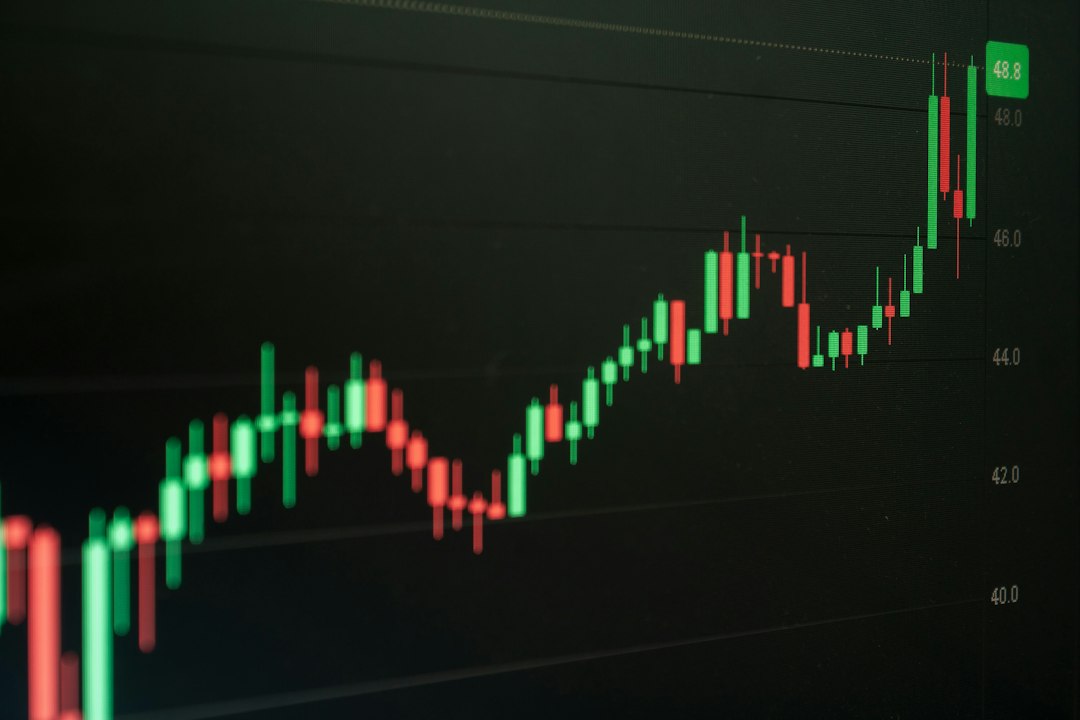
Have you ever felt caught between the rapid-fire decisions of day trading and the long-term patience of investing? Many traders find themselves in this exact spot, yearning for a strategy that offers flexibility without demanding constant screen time. That’s where swing trading comes in! It’s a fantastic middle ground, allowing you to capitalize on significant price “swings” over several days or weeks. In today’s evolving market, understanding this approach can be a game-changer for your portfolio. Let’s dive in and unlock the potential of swing trading together! 😊
What Exactly is Swing Trading? 🤔
Swing trading is a technical strategy where traders hold positions for several days to a few weeks, aiming to profit from anticipated price movements, or “swings,” within a larger trend. Unlike day traders who open and close positions within the same trading day, swing traders capture multi-day price movements, avoiding the intense scrutiny required for intraday fluctuations. This approach balances opportunity with practicality, making it a popular choice for those with full-time jobs or who prefer a less frenetic pace of trading.
The objective is to identify a “wave” in price action and ride it to a logical conclusion. This often involves entering at the end of a corrective phase (a pullback) and exiting as the primary trend matures. Swing trading relies heavily on technical analysis to identify these opportunities, using various indicators and chart patterns to make data-driven decisions.
According to an analysis of over 500,000 trading accounts, swing traders were net profitable 27.5% of the time, making them roughly 60% more likely to be profitable than day traders (17.3%) in 2026. This highlights a structural advantage due to lower trading fees and less behavioral error caused by rapid trading.
Key Concepts and Tools for Swing Traders 📊
Successful swing trading hinges on understanding and effectively utilizing technical analysis tools. These tools help traders identify trends, potential entry and exit points, and manage risk. Here are some fundamental concepts and indicators crucial for any aspiring swing trader:
One of the most fundamental strategies involves identifying a stock in an uptrend, waiting for a pullback to a meaningful support level or a moving average (like the 21 EMA), and then entering on a bullish confirmation candle. Another high-probability setup is a breakout from a consolidation range, especially when accompanied by a volume surge.
Common Technical Indicators for Swing Trading (2026)
| Indicator | Description | Primary Use in Swing Trading | 2026 Relevance |
|---|---|---|---|
| Moving Averages (MA) | Smooths out price data to show trend direction. SMAs for overall bias, EMAs for faster reaction to recent prices. | Identifying trends, dynamic support/resistance levels. | Still foundational; 20-period and 50-period EMAs are popular. |
| Relative Strength Index (RSI) | Momentum oscillator (0-100) measuring speed and change of price movements. | Identifying overbought/oversold conditions, confirming trend strength during pullbacks. | Effective when combined with price levels; 14-period RSI is standard. |
| Moving Average Convergence Divergence (MACD) | Shows the relationship between two moving averages of a security’s price. | Trend identification, momentum, potential reversals (crossovers). | Widely used; histogram flips are key signals. |
| Williams %R | A momentum indicator that measures overbought and oversold levels. | Identifies potential reversal points from extreme conditions. | Considered the “best indicator for swing trading” in terms of risk-adjusted returns by some studies in 2026. |
While indicators are powerful, over-reliance or using too many without a clear strategy can lead to confusion and poor decisions. The market is driven by emotions, but indicators help remove emotional bias by providing data-driven signals. The key is to combine them effectively and understand their behavior in real charts.
Key Checkpoints: Remember These Essentials! 📌
You’ve come this far! With a lot of information to digest, let’s recap the most crucial points. Keep these three takeaways at the forefront of your swing trading journey.
-
✅
Swing Trading is a Middle Ground:
It’s a strategy that offers more flexibility than day trading and quicker returns than long-term investing, making it ideal for those who can’t monitor markets constantly. -
✅
Technical Analysis is Your Compass:
Mastering indicators like Moving Averages, RSI, and Williams %R is crucial for identifying trends and optimal entry/exit points. -
✅
Risk Management is Non-Negotiable:
Always define your risk, set stop-losses, and never trade without a clear plan to protect your capital.
Current Trends and Market Insights for Swing Trading (2026) 👩💼👨💻
The financial markets in 2026 are characterized by faster, more defined cycles, influenced by factors like the AI infrastructure boom and shifts towards green energy. This environment presents both opportunities and challenges for swing traders. Individual stock selection is increasingly important, especially with undervaluation concentrated in a few mega-cap stocks like Nvidia, Alphabet, and Microsoft, driven by AI infrastructure spending.
Key market trends to consider for swing trading in late 2026 include:
- Sector Rotation: Smart money is actively rotating into sectors that have a “heartbeat” in 2026, such as Energy and tangible asset sectors like Materials and Industrials, which have shown significant year-to-date gains. While high-beta technology remains volatile, rising bond yields make it more treacherous. Defensive sectors like Utilities and Healthcare also offer reliable safety swings during market headwinds. AI stocks, semiconductor stocks, and clean energy stocks are also highlighted for strong institutional flows.
- Algorithmic Dominance: Swing trading in 2026 is increasingly dominated by algorithmic players, event-driven volatility, and fragmented momentum. This means the “buy and hold for 3-5 days” approach of earlier years is evolving; today’s edge comes from understanding market structure rather than just stock picking.
- Technological Advancements: Tools once exclusive to institutional desks are now readily available on retail platforms, making swing trading more accessible. AI-assisted tooling is also improving, helping traders with idea generation, automated risk templates, and post-trade review systems.
- Market Volatility: Central bank guidance and elevated interest rates continue to create uncertainty across equities, currencies, bonds, and commodities, leading to regional divergence that drives volatility and sector rotation. This environment, while risky, can create frequent swing opportunities.
Always align your trades with the long-term trend by checking longer-term charts (daily or weekly). Trading with the trend, rather than against it, significantly increases your odds of success. Also, monitor sector strength to ensure your chosen stock isn’t moving against its broader industry trend.
Practical Example: Identifying a Swing Trade Opportunity 📚
Let’s walk through a hypothetical scenario to illustrate how a swing trade might be identified and executed in the current market environment, focusing on a stock in the semiconductor sector, which has shown strong institutional flows in 2026.
Case Study: Advanced Micro Devices (AMD) – Pullback to EMA
- Stock: Advanced Micro Devices (AMD)
- Market Condition (October 2026): Semiconductor sector in a strong uptrend, but AMD experiences a temporary pullback.
- Indicators Used: 20-day Exponential Moving Average (EMA), Volume, Candlestick Patterns.
Identification and Execution Process
1) Identify the Trend: Observe AMD’s daily chart. It has been in a clear uptrend, consistently making higher highs and higher lows, outperforming the broader market and its sector ETF (SMH).
2) Wait for Pullback to Key Level: AMD pulls back towards its 20-day EMA, which has historically acted as a dynamic support level during its uptrend. Volume during this pullback is lower than average, suggesting profit-taking rather than a reversal of the trend.
3) Confirm Entry: As AMD touches the 20-day EMA, a bullish engulfing candlestick pattern forms, accompanied by an increase in volume, signaling that buyers are stepping in.
4) Entry, Stop-Loss, and Target:
- Entry: Buy on the close of the bullish engulfing candle.
- Stop-Loss: Place just below the swing low that formed during the pullback, or slightly below the 20-day EMA.
- Target: Aim for the prior swing high or a 2:1 reward-to-risk ratio from the entry point. Fibonacci extension levels (e.g., 100% or 161.8%) can also be used to identify potential profit targets.
Potential Outcome
– Result: If AMD resumes its uptrend as expected, the trade could yield a profit as it moves towards the target. If it breaks below the stop-loss, the loss is contained to a predefined amount, protecting capital. This structured approach helps manage the inherent risks of holding positions overnight.

This example illustrates the importance of combining trend identification with specific entry and exit signals, along with disciplined risk management. The market never moves in a straight line, and swing trading aims to profit from these natural ebbs and flows, especially in dynamic sectors like semiconductors in 2026.
Conclusion: Your Path to Profitable Swing Trading 📝
Swing trading offers a compelling opportunity for traders to capitalize on market movements over a manageable timeframe. In 2026, with evolving market dynamics, technological advancements, and shifting sector leadership, understanding and applying sound swing trading principles is more crucial than ever. Remember, success in swing trading isn’t about predicting the future with 100% accuracy; it’s about having a disciplined strategy, managing risk effectively, and continuously adapting to market conditions. While experienced swing traders often report win rates between 75% and 84%, a more realistic and achievable goal for consistent annual returns is 10-30%.
By focusing on robust technical analysis, understanding current market trends, and adhering to strict risk management, you can significantly improve your chances of profitability. The market is a journey of continuous learning, so keep refining your approach and stay curious. If you have any questions or want to share your swing trading experiences, please leave a comment below! 😊
Swing Trading Essentials: A Quick Recap
Frequently Asked Questions ❓