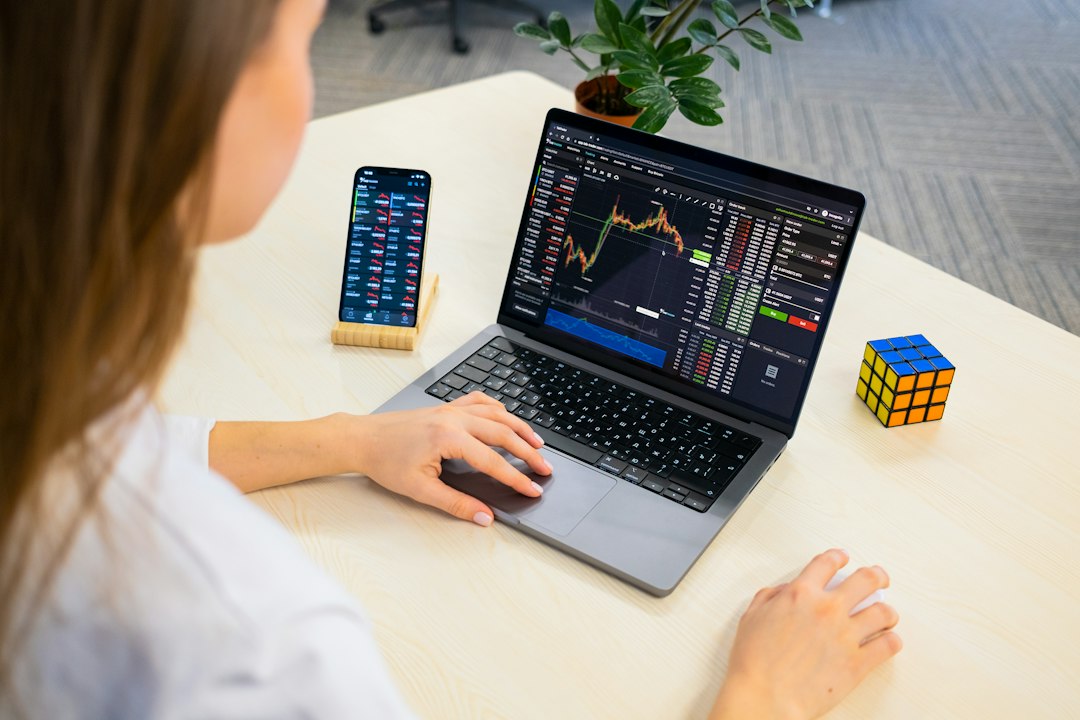
Have you ever felt overwhelmed by the sheer number of FX trading strategies out there? It’s a common challenge for many traders, myself included, when I first started. The Forex market, with its 24/5 accessibility and immense liquidity, offers incredible opportunities, but also demands a clear, disciplined approach. Choosing the right strategy can feel like searching for a needle in a haystack, but what if I told you one of the most time-tested and potentially profitable methods focuses on a simple, yet powerful concept: the trend? Today, we’re diving deep into Trend Following, a strategy that aims to ride market momentum for sustained gains. Let’s uncover how you can leverage this technique to your advantage! 😊
What Exactly is Trend Following in FX? 🤔
At its core, trend following is a trading strategy that attempts to make profits by analyzing an asset’s momentum in a particular direction. The fundamental belief is that “the trend is your friend” until it bends. Traders using this approach identify the direction of the market (up, down, or sideways) and enter trades in alignment with that direction, holding positions until the trend shows signs of reversal. This isn’t about predicting tops or bottoms; it’s about capturing the largest portion of a trend’s movement.
This strategy is particularly appealing in the FX market due to its tendency for prolonged trends, often driven by macroeconomic factors like interest rate differentials, inflation, and geopolitical events. For instance, a currency pair might trend strongly for weeks or even months as central banks signal shifts in monetary policy. Recent data suggests that despite increasing market volatility, identifying and adhering to strong trends remains a cornerstone for many successful institutional and retail traders.
Trend following is not a get-rich-quick scheme. It requires patience, discipline, and the acceptance of drawdowns during sideways markets or false breakouts. The goal is to capture large, infrequent profits rather than small, frequent ones.
Key Indicators and Tools for Spotting Trends 📊
To effectively follow trends, traders rely on various technical indicators that help confirm the direction and strength of a trend. These tools aren’t magic bullets, but rather guides to help you make informed decisions. Here are some of the most commonly used indicators:
One of the most straightforward and widely used tools is the Moving Average (MA). When shorter-period MAs cross above longer-period MAs, it often signals an uptrend, and vice-versa for a downtrend. Another powerful indicator is the Moving Average Convergence Divergence (MACD), which shows the relationship between two moving averages of a security’s price. The Average Directional Index (ADX) is excellent for measuring trend strength, helping you avoid weak, choppy markets. Recent trends show a growing interest in combining these traditional indicators with volume analysis, especially in futures and options markets that often influence spot FX.

Popular Trend Following Indicators
| Indicator | Description | Key Use | Considerations |
|---|---|---|---|
| Moving Average (MA) | Smoothes price data over a specific period. | Identifies trend direction and potential support/resistance. | Lagging indicator; prone to whipsaws in choppy markets. |
| MACD | Shows the relationship between two moving averages. | Generates buy/sell signals through crossovers. | Can be slow to react to rapid price changes. |
| ADX | Measures the strength of a trend. | Confirms if a trend is strong enough to trade. | Does not indicate trend direction, only strength. |
| Ichimoku Cloud | A comprehensive indicator showing support/resistance, momentum, and trend direction. | Provides a holistic view of market conditions. | Can appear complex to beginners due to multiple lines. |
Over-reliance on a single indicator can lead to poor decisions. Always use a combination of indicators for confirmation and consider the broader market context. No indicator is foolproof.
Key Checkpoints: What You Must Remember! 📌
Have you followed along well so far? As this article is quite extensive, let me recap the most crucial points. Please keep these three things in mind above all else.
-
✅
Embrace the Trend, Not Predictions
Trend following is about reacting to established market movements, not forecasting future prices. Let the market tell you what to do. -
✅
Utilize Multiple Confirmation Tools
Combine indicators like Moving Averages, MACD, and ADX to validate trend direction and strength, reducing false signals. -
✅
Risk Management is Paramount
Always define your stop-loss and position size before entering a trade. Protecting your capital is more important than chasing profits.
Risk Management and Trading Psychology 👩💼👨💻
Even the best trend-following strategy is useless without sound risk management and a solid psychological foundation. The reality of FX trading is that you won’t win every trade, and that’s okay. What matters is that your winning trades are larger than your losing trades. Position sizing and stop-loss orders are your best friends. Never risk more than 1-2% of your total trading capital on any single trade. This prevents any one bad trade from wiping out your account.
Emotional discipline is also crucial. Trend following often involves holding trades for extended periods, which can test your patience. You might see significant paper profits evaporate during pullbacks, only to rebound later. It’s essential to stick to your plan, avoid impulsive decisions, and not let fear or greed dictate your actions. Market sentiment can shift rapidly, and being emotionally detached allows for clearer decision-making.
Develop a clear trading plan that outlines your entry criteria, exit criteria (stop-loss and take-profit), and position sizing rules. Stick to it rigorously, and review your performance regularly to identify areas for improvement.
Practical Example: Riding the EUR/USD Trend 📚
Let’s consider a hypothetical scenario for a trend-following trade on the EUR/USD pair in late 2026. Imagine you’ve observed the EUR/USD breaking above its 50-day and 200-day moving averages, with the MACD showing a clear bullish crossover and the ADX rising above 25, indicating a strengthening uptrend.
Trader’s Scenario
- **Entry Signal:** EUR/USD closes above 1.0850, with all trend indicators confirming an uptrend.
- **Capital:** $10,000 trading account.
- **Risk per Trade:** 1% ($100).
- **Stop-Loss:** Set at 1.0800 (50 pips below entry).
- **Initial Target:** No fixed target, aiming to trail the trend.
Calculation Process
1) **Determine Position Size:** Risk of $100 / 50 pips = $2 per pip. For EUR/USD, a standard lot (100,000 units) is $10 per pip. So, $2 per pip means 0.2 standard lots or 2 mini-lots (20,000 units).
2) **Trade Execution:** Enter a buy order for 20,000 units of EUR/USD at 1.0850 with a stop-loss at 1.0800.
3) **Trend Trailing:** As EUR/USD moves up, you continuously adjust your stop-loss higher, perhaps using a trailing stop based on a moving average or previous swing low.
Final Outcome (Hypothetical)
– **Scenario 1 (Successful Trend):** EUR/USD trends up to 1.1050 over several weeks. Your trailing stop is hit at 1.1000, securing a 150-pip profit (1.1000 – 1.0850). Profit: 150 pips * $2/pip = $300.
– **Scenario 2 (Failed Trend):** EUR/USD reverses shortly after entry, hitting your initial stop-loss at 1.0800. Loss: 50 pips * $2/pip = $100 (1% of capital).
This example illustrates the core principle: small, controlled losses are acceptable for the potential of larger, less frequent gains. The key is to let your winners run and cut your losers short, which is the mantra of successful trend followers.
Conclusion: Summarizing the Core Essentials 📝
Trend following is a powerful and proven strategy for navigating the FX markets. It’s not about being right all the time, but about being profitable when you are right. By understanding market dynamics, utilizing appropriate technical indicators, and rigorously applying risk management principles, you can position yourself to capitalize on the sustained movements that the Forex market frequently offers.
Remember, consistency and discipline are your greatest assets in trading. Keep learning, keep practicing, and always trade within your means. If you have any questions or want to share your own trend-following experiences, please leave a comment below! Happy trading! 😊