Have you ever felt overwhelmed by the sheer volume of information and strategies in the Forex market? It’s a common feeling, believe me. With currencies constantly fluctuating, finding a reliable method to consistently generate profits can seem like searching for a needle in a haystack. But what if I told you there’s a time-tested approach that, when applied correctly, can simplify your trading decisions and put you on the path to profitability? Today, we’re diving deep into one of the most popular and effective FX trading techniques: the Moving Average Crossover strategy. Let’s explore how you can harness its power! 😊
Understanding Trend Following: The Foundation of Success 🤔
Before we get into the specifics of moving averages, it’s crucial to grasp the core concept of trend following. In essence, trend following is a trading strategy that attempts to capture gains through the analysis of an asset’s momentum in a particular direction. The idea is simple: “the trend is your friend.” Traders using this approach aim to enter trades when a trend is established and ride it until signs of reversal appear. This strategy is particularly well-suited for the Forex market, which often exhibits prolonged trends due to macroeconomic factors and global events.
Why is trend following so effective? Because markets, including Forex, tend to move in cycles. Once a strong directional bias is established, it often persists for a significant period. Identifying these trends early and aligning your trades with them can significantly increase your probability of success. It’s about letting the market do the heavy lifting for you.
Trend following strategies have historically shown resilience across various market conditions. While they might underperform in choppy, sideways markets, they can generate substantial profits during strong bull or bear runs.
The Power of Moving Averages: Your Trend Detectors 📊
Moving Averages (MAs) are fundamental technical indicators that smooth out price data over a specified period, creating a single flowing line. This smoothing helps to filter out “noise” from random price fluctuations and makes it easier to identify the direction of the trend. There are several types of moving averages, but the most common for trend following are the Simple Moving Average (SMA) and the Exponential Moving Average (EMA).
The Moving Average Crossover strategy specifically involves using two or more moving averages of different lengths. When a shorter-period MA crosses above a longer-period MA, it’s often interpreted as a bullish signal, indicating an uptrend. Conversely, when the shorter MA crosses below the longer MA, it’s a bearish signal, suggesting a downtrend. This simple yet powerful interaction forms the backbone of our strategy.
Common Moving Average Types for FX Trading
| Type | Description | Characteristics | Best Use Case |
|---|---|---|---|
| Simple Moving Average (SMA) | Calculates the average price over a specific number of periods. | Smoother, less reactive to recent price changes. | Identifying long-term trends. |
| Exponential Moving Average (EMA) | Gives more weight to recent prices, making it more responsive. | More reactive, quicker to signal trend changes. | Short to medium-term trend identification and entry/exit signals. |
| Weighted Moving Average (WMA) | Similar to EMA, but uses a linear weighting system. | Also more responsive than SMA, less common than EMA. | Specific niche strategies requiring precise weighting. |
For our strategy, we will primarily focus on EMAs due to their responsiveness, which can help in catching trend changes a bit earlier than SMAs. Common periods used are the 10-period, 20-period, 50-period, and 200-period EMAs, depending on your trading timeframe.

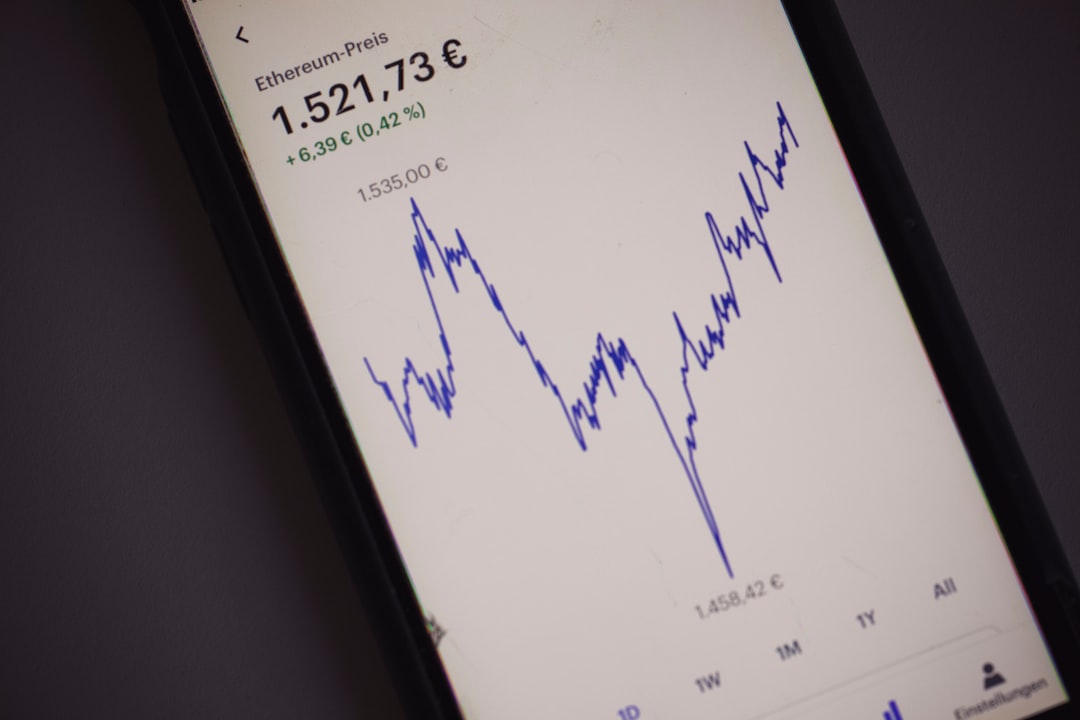
Image: A typical Forex chart displaying moving averages, illustrating price smoothing and potential crossover points.
No indicator is perfect. Moving averages can produce false signals in choppy or ranging markets, leading to “whipsaws” where you enter and exit trades quickly without significant profit. Always combine MA crossovers with other forms of analysis.
Key Checkpoints: What You Absolutely Must Remember! 📌
Have you followed along well so far? Since this article is quite long, I’ll highlight the most important takeaways. Please keep these three points in mind above all else.
-
✅
Trend Following is Key
The Forex market often exhibits sustained trends. Aligning your trades with these trends significantly increases your chances of success. -
✅
Moving Averages as Your Guides
EMAs are generally preferred for their responsiveness in identifying trend changes, especially when using crossover signals. -
✅
Risk Management is Non-Negotiable
Always define your stop-loss and take-profit levels before entering a trade. Never risk more than 1-2% of your capital per trade.
Implementing the Strategy: Entry and Exit Points 👩💼👨💻
Now for the practical application! A common and effective Moving Average Crossover strategy uses two EMAs: a shorter-period EMA (e.g., 10 or 20) and a longer-period EMA (e.g., 50). The choice of periods can be adjusted based on your preferred trading timeframe (e.g., 4-hour, daily, weekly charts).
- Entry Signal (Buy): When the shorter EMA crosses above the longer EMA. Confirm with price action (e.g., a bullish candle closing above the crossover point).
- Entry Signal (Sell): When the shorter EMA crosses below the longer EMA. Confirm with price action (e.g., a bearish candle closing below the crossover point).
- Exit Signal (Take Profit): You can set a fixed take-profit target based on historical volatility or use a trailing stop. Alternatively, exit when the MAs cross back in the opposite direction.
- Exit Signal (Stop Loss): Place your stop-loss order below a recent swing low for a buy trade, or above a recent swing high for a sell trade. This is crucial for risk management.
Always wait for the candle to close after a crossover before entering a trade. This helps to confirm the signal and avoid false breakouts. Also, consider adding a third, even longer EMA (e.g., 200-period) to confirm the overall market bias. If price is above the 200 EMA, look for buy signals; if below, look for sell signals.
Real-World Example: Trading EUR/USD 📚
Let’s walk through a hypothetical scenario using the 20-period EMA and 50-period EMA on a 4-hour EUR/USD chart, as of early 2026. Imagine the market has been in a consolidation phase, and we’re looking for a new trend to emerge.
Trader’s Situation
- Currency Pair: EUR/USD
- Timeframe: 4-hour chart
- Indicators: 20 EMA (fast), 50 EMA (slow)
- Current Date: April 1, 2026
Trading Process
1) Observation: On March 28, 2026, the EUR/USD price begins to rise after a period of sideways movement. The 20 EMA starts to curve upwards, approaching the 50 EMA.
2) Entry Signal: On April 1, 2026, at 08:00 UTC, the 20 EMA clearly crosses above the 50 EMA, and a strong bullish 4-hour candle closes above both EMAs. This is our buy signal. We enter a long position at 1.0850.
3) Stop Loss: We identify a recent swing low at 1.0820 and place our stop-loss order there, risking 30 pips.
4) Take Profit: Based on the average daily range of EUR/USD (which has been around 70-80 pips recently), we set a take-profit target of 70 pips, aiming for 1.0920.
Potential Outcome
– Result: Over the next 12 hours, EUR/USD continues its upward momentum, hitting our take-profit target at 1.0920. The trade yields a profit of 70 pips.
– Risk/Reward: With a 30-pip stop loss and a 70-pip take profit, this trade offered a favorable risk-to-reward ratio of approximately 1:2.33.
This example illustrates how the Moving Average Crossover strategy, combined with proper risk management, can lead to profitable trades. Remember, consistency is key, and not every trade will be a winner. The goal is to have a strategy that provides a positive edge over many trades.
Wrapping Up: Your Path to FX Profitability 📝
The Moving Average Crossover strategy is a powerful tool in any Forex trader’s arsenal. It’s straightforward, visually clear, and highly adaptable to different timeframes and currency pairs. By focusing on trend identification and disciplined execution, you can significantly improve your trading results.
Remember to always backtest your chosen MA periods and practice on a demo account before risking real capital. The Forex market is dynamic, and continuous learning and adaptation are essential for long-term success. What are your favorite MA periods to use? Let me know in the comments below! 😊