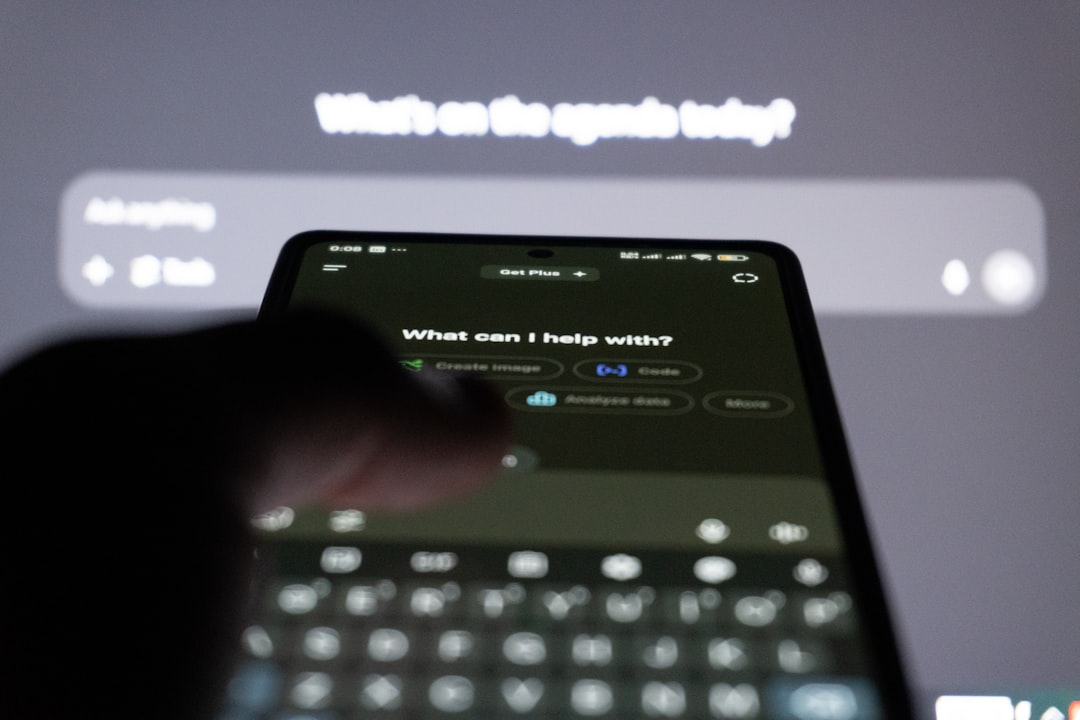
Remember when AI felt like something out of a sci-fi movie? Well, it’s 2026, and that future is very much our present! From the moment we wake up to the time we hit the hay, artificial intelligence is quietly, yet profoundly, reshaping how we live, work, and interact with the world around us. It’s not just about chatbots anymore; it’s about a seamless integration that’s making our lives easier, more efficient, and undeniably smarter. Ready to dive into the exciting (and sometimes a little daunting) world of AI in your daily life? Let’s go! 😊
The AI Revolution: Beyond the Hype 🤔
For years, we’ve heard about the potential of AI, but 2026 truly marks a pivotal shift where AI has moved from conceptual discussions to practical, widespread deployments. End-users now expect tangible improvements that simplify daily tasks, cut unnecessary costs, and help them make decisions faster. It’s no longer just a theoretical concept; it’s a tool that 61% of U.S. adults are already using, with Gen Z leading the charge at 76% adoption.
We’re seeing AI embedded into everything from our smartphones to our home appliances, often working so subtly that we barely notice its presence. This “invisible AI” is becoming a defining characteristic of the current technological landscape, making our interactions with technology more intuitive and less about flashy gadgets.
By the end of 2025, roughly one in six people globally were using generative AI tools. This rapid adoption highlights how quickly AI is becoming a part of our everyday digital interactions.
Key AI Trends Shaping 2026 📊
As we navigate 2026, several key AI trends are not just emerging but maturing, fundamentally altering our daily experiences. These advancements are making AI more personal, more integrated, and more powerful than ever before.
Personalized AI Assistants That Truly Understand You
Forget the basic voice commands of old. In 2026, AI assistants are evolving to truly “get” you. They can anticipate your needs even before you ask, managing your schedules, suggesting healthier habits, and even recommending learning based on your objectives. These assistants are becoming more conversational and human-like, understanding context, emotions, and nuances in our speech, making interactions more natural and engaging.
AI in Smart Homes & IoT: The Invisible Intelligence
Our homes are getting smarter, not with flashy gadgets, but with invisible intelligence working quietly in the background. AI-driven systems are making homes easier, healthier, and more efficient. Think automation that anticipates your desires rather than waiting for commands. Advanced presence sensors can detect micro-movements, ensuring lights don’t turn off when you’re simply sitting still, and even count how many people are in a room to optimize climate and lighting. Smart home devices are now present in 72.97% of households, indicating a widespread embrace of this technology.
Generative AI’s Maturation and Edge AI’s Rise
Generative AI, which captured public attention in recent years, is moving beyond novelty to practical applications in content creation, design, and even scientific discovery. Simultaneously, Edge AI is gaining significant traction. This means AI processing is happening directly on devices like smartphones, factory sensors, and autonomous vehicles, rather than solely relying on distant cloud servers. This shift reduces latency, enhances privacy, and cuts costs, with the Edge AI hardware market projected to reach $30.74 billion by 2026.

AI Integration Across Sectors
| Sector | AI Impact in 2026 | Key Benefits |
|---|---|---|
| Healthcare | Enhancing diagnostics, personalized treatment plans, drug discovery. | Improved patient outcomes, reduced costs, accelerated research. |
| Finance | Fraud detection, algorithmic trading, personalized financial advice. | Enhanced security, optimized investments, better customer relationships. |
| Retail | Personalized shopping experiences, inventory management, customer service. | Increased sales, improved customer satisfaction, operational efficiency. |
| Manufacturing | Automated assembly lines, predictive maintenance, quality control. | Higher productivity, reduced downtime, enhanced safety. |
While AI offers immense benefits, concerns around data privacy, algorithmic bias, and job displacement remain critical. For instance, 63% of people are worried AI will replace their job in the next decade. Ethical AI development and robust governance frameworks are more important than ever.
Key Checkpoints: What You Need to Remember! 📌
Have you been following along? With so much information, it’s easy to forget the most crucial points. Let’s quickly recap the three things you absolutely need to remember about AI in 2026.
-
✅
AI is Everywhere and Evolving Rapidly
AI is no longer a niche technology; it’s deeply integrated into our daily lives, from personalized assistants to smart home devices, with adoption rates steadily climbing across all demographics and industries. -
✅
Practical Applications are Driving Growth
The focus has shifted from theoretical potential to real-world impact, with generative AI maturing and edge AI gaining prominence for its efficiency and privacy benefits. -
✅
Ethical Considerations and Human-AI Collaboration are Key
As AI becomes more powerful, addressing ethical challenges like bias, privacy, and job evolution, and fostering human-AI collaboration, are crucial for responsible innovation and societal trust.
The Human-AI Collaboration: A New Era 👩💼👨💻
The narrative around AI and jobs is evolving. While concerns about automation replacing roles are valid (27% of jobs are at high risk of automation), the prevailing trend in 2026 is increasingly about AI augmenting human capabilities. AI is becoming a digital coworker, handling routine tasks and data analysis, freeing up humans for strategic thought, creativity, and complex decision-making. This collaboration is expected to lead to a net gain of 58 million jobs globally by 2025, with AI creating 133 million new jobs while displacing 75 million.
Companies that succeed in 2026 are rebuilding their operations so that AI handles everything it can, allowing humans to focus on oversight, creativity, and complex judgment. This automation-first design unlocks greater efficiency and competitiveness.
Ethical AI is no longer a side conversation; it’s the foundation for innovation and public trust. Organizations that thrive in 2026 are embedding ethics and governance into every AI decision, prioritizing transparency, accountability, and fairness.
Real-World Example: AI in Personalized Healthcare 📚
Let’s look at how AI is making a tangible difference in personalized healthcare, a sector seeing rapid AI-driven advancements.
Scenario: Sarah’s Proactive Health Management
- **Situation:** Sarah, a 45-year-old, uses a wearable device linked to an AI health system.
- **Goal:** Proactively manage her health and detect potential issues early.
AI-Powered Process
1) **Continuous Monitoring:** Sarah’s wearable continuously tracks vital signs, sleep patterns, and activity levels.
2) **Data Analysis:** The AI health system analyzes this vast amount of data, identifying subtle anomalies or trends that might indicate a health risk.
3) **Predictive Alerts:** Based on its analysis, the AI system alerts Sarah to potential future health risks and suggests well-being options, such as adjusting her diet or increasing specific types of exercise.
4) **Personalized Recommendations:** It might also suggest a virtual consultation with a specialist if a more serious pattern is detected, streamlining her access to care.
Final Result
– **Early Detection:** Sarah receives timely, personalized health insights, allowing her to take preventative measures or seek medical advice before issues escalate.
– **Empowered Health:** She feels more in control of her health, making informed decisions based on AI-driven data and recommendations.
This example illustrates how AI is moving beyond simple data processing to become a proactive partner in our well-being, offering personalized and preventative care that was once unimaginable. It’s truly a game-changer!
Conclusion: Summarizing the Future 📝
As we’ve explored, 2026 is a landmark year for Artificial Intelligence, marking its deep integration into the fabric of our daily lives. From the hyper-personalized recommendations of our AI assistants to the subtle, intelligent automation within our smart homes, AI is no longer just a tool but a pervasive partner. We’re witnessing a shift from AI as a novelty to AI as a necessity, enhancing productivity, improving health, and reshaping industries.
The journey with AI is still unfolding, and while it brings incredible opportunities, it also demands our careful attention to ethical considerations and responsible development. The future isn’t about replacing humans; it’s about amplifying what we can achieve together. What are your thoughts on AI’s growing presence? Do you have any questions about how it might impact your life or work? Share your comments below – I’d love to hear from you! 😊