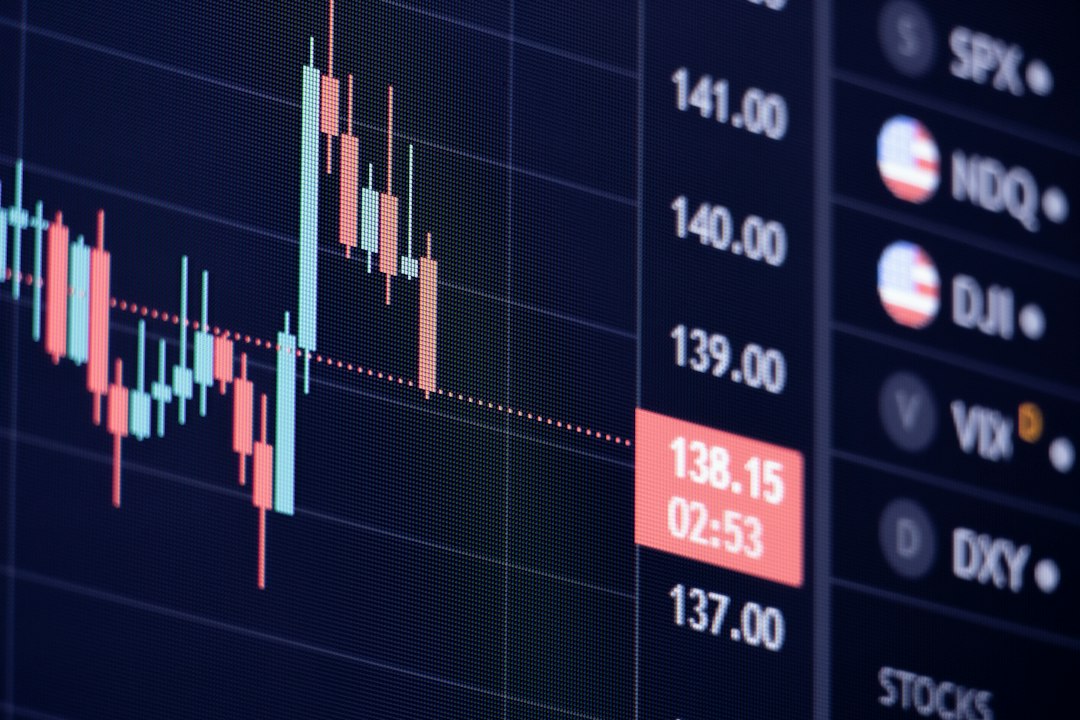
Have you ever watched a stock surge or plummet, wishing you could’ve capitalized on that rapid movement? The allure of quick profits in the stock market is powerful, and for many, day trading represents the ultimate quest for financial independence. But let’s be honest, it’s not for the faint of heart. It’s a high-stakes game that demands sharp focus, swift decisions, and an iron will. Today, we’re going to pull back the curtain on one of the most dynamic and potentially lucrative day trading strategies: Momentum Trading. Ready to see if you have what it takes? 😊
What Exactly is Momentum Trading? 🤔
Momentum trading is all about riding the wave. It’s a strategy where traders capitalize on the sustained upward or downward movement of a stock’s price. Imagine a snowball rolling downhill – it gains momentum as it goes. In the stock market, this means identifying stocks that are moving strongly in one direction, often accompanied by high trading volume, and jumping in to profit from that continued movement. The goal is to enter a trade as the momentum builds and exit before it reverses.
This isn’t about long-term investing; it’s about quick, intraday gains. Momentum traders are constantly scanning for stocks experiencing sudden price spikes or drops, often triggered by breaking news, earnings reports, or significant technical breakouts. They aim to get in and out within minutes or hours, never holding positions overnight to avoid unexpected market shifts. The key is to act fast and be disciplined in taking profits and cutting losses.
Successful momentum trading relies heavily on real-time data, advanced charting tools, and a deep understanding of technical analysis. It’s not just about chasing hot stocks; it’s about identifying genuine, sustainable price action supported by strong volume.
2026 Market Pulse: Trends & Statistics in Momentum Trading 📊
The landscape of day trading is always evolving, and 2026 is no exception. While the allure of day trading is strong, the statistics paint a sober picture. Roughly only 10-15% of retail day traders show a net profit over any given year, with that number shrinking to 1-3% over three years or more. A staggering 72% of day traders experienced financial losses in 2020. However, for those who master it, the rewards can be substantial.
A significant development in 2026 is the elimination of the $25,000 pattern day trader (PDT) minimum by FINRA, effective June 4, 2026. This has been replaced by a risk-based intraday margin framework, potentially making it easier for new traders to enter the market. This change could lead to increased retail participation, particularly among younger demographics (18-34 age bracket), who already make up a significant portion of online traders.
Current market conditions as of October 22, 2026, show increased volatility. Tech stocks are experiencing a downturn due to weak earnings, oil prices are surging, and investors are flocking to safe-haven assets. This creates both challenges and opportunities for momentum traders, as rapid price movements are more common in such environments. While a brief rally was seen with SpaceX’s strong quarterly profit report, overall market sentiment remains cautious.
Market Conditions & Momentum Trading Suitability
| Market Condition | Description | Momentum Trading Suitability | Key Characteristics |
|---|---|---|---|
| Strong Trending Market | Clear, sustained upward or downward movement. | High (Ideal) | High volume, clear support/resistance breaks. |
| Volatile Market | Rapid, unpredictable price swings. | Moderate to High (Requires Skill) | News-driven, sudden shifts, wider spreads. |
| Ranging/Sideways Market | Price moves within defined support and resistance. | Low (Not Ideal) | Lack of clear direction, choppy price action. |
| Quiet Market | Low volume, minimal price movement. | Very Low (Avoid) | Limited profit opportunities, high transaction costs. |
Despite the removal of the PDT rule, day trading remains inherently risky. Up to 95% of day traders lose money, and 85% fail in their first year, often due to poor risk management. Never risk more capital than you can afford to lose.
Key Checkpoints: This is What You MUST Remember! 📌
Made it this far? Great! With so much information, it’s easy to forget the essentials. Let’s recap the most crucial points. Remember these three things above all else.
-
✅
Momentum Trading: Ride the Wave, But Be Agile!
Focus on stocks with strong, sudden price movements backed by high volume. Enter and exit quickly, avoiding overnight holds. -
✅
Risk Management is Your Shield.
Never risk more than 1-2% of your account per trade and set strict daily loss limits (e.g., 3-5%). This is non-negotiable for survival. -
✅
Education and Discipline are Paramount.
The vast majority of day traders lose money. Success comes from continuous learning, rigorous backtesting, and emotional control, not luck.
Mastering Momentum: Key Strategies & Tools 👩💼👨💻
To effectively trade momentum, you need a robust strategy for identifying opportunities and executing trades. Momentum trading often involves looking for stocks that are experiencing significant price movements with accompanying high volume. This could be due to:
- **News Catalysts:** Unexpected company announcements, economic data, or industry news can send a stock soaring or plummeting.
- **Earnings Reports:** Strong or weak earnings can create massive intraday volatility.
- **Technical Breakouts:** When a stock breaks above a key resistance level or below a key support level on high volume, it often signals a continuation of that move.
- **Moving Average Crosses:** Crossovers of short-term and long-term moving averages can indicate a shift in momentum.
Tools are your best friends in this fast-paced environment. You’ll need:
- **Real-time Data Feed:** Essential for making split-second decisions.
- **Advanced Charting Software:** To identify patterns, support, and resistance levels.
- **Direct Market Access (DMA) Broker:** For faster order execution.
- **Stop-Loss Orders:** Crucial for limiting potential losses on every trade. While 88% of traders use them, their effectiveness is debated, so combine with mental stops and strict adherence.
Maintain a detailed trading journal. Record every trade, including your entry/exit points, reasons for the trade, emotions, and overall outcome. This helps you learn from your successes and failures and refine your strategy over time. Backtesting your strategies is also vital.
Momentum Trading in Action: A Hypothetical Scenario 📚
Let’s walk through a simplified example to illustrate momentum trading. Keep in mind, this is a hypothetical scenario and not financial advice.

Scenario: “Tech Innovators Inc.” (TI)
- **Pre-Market News:** Tech Innovators Inc. (TI) announces a breakthrough in AI chip technology, exceeding analyst expectations.
- **Market Open:** TI opens significantly higher than its previous close, with heavy pre-market trading volume.
Trading Process
1) **Identification:** A momentum trader spots TI on their scanner, noting the high volume and strong upward gap at market open.
2) **Entry:** After observing the initial few minutes of trading for consolidation and a clear continuation pattern, the trader enters a long position at $105 per share, with a strict stop-loss set at $103.
3) **Ride the Momentum:** As the news spreads and more buyers jump in, TI’s price continues to climb steadily, reaching $110, then $112, and eventually $115 within an hour.
4) **Exit:** The trader notices buying volume starting to diminish and the price showing signs of resistance at $115. They decide to exit their position at $114.50 to lock in profits.
Hypothetical Outcome
– **Entry Price:** $105
– **Exit Price:** $114.50
– **Gross Profit per Share:** $9.50 (before commissions/fees)
This example highlights the potential for rapid gains. However, it’s crucial to remember that momentum can reverse just as quickly. A disciplined approach to entries, exits, and risk management is paramount. Without it, a promising trade can turn into a significant loss in the blink of an eye.
Wrapping Up: Your Path to Day Trading Success 📝
Momentum trading offers an exhilarating path to potential profits in the stock market, especially with the dynamic shifts we’re seeing in 2026. From the removal of the PDT rule opening doors to new traders, to the current volatility driven by tech earnings and global events, the opportunities for those who understand momentum are real. But let’s be crystal clear: this isn’t a get-rich-quick scheme. It demands dedication, continuous learning, and, most importantly, unwavering discipline in risk management.
Remember the statistics: most day traders face losses. The few who succeed do so because they treat trading as a serious business, not a gamble. They have a plan, they stick to it, and they manage their risk meticulously. So, if you’re considering diving into momentum trading, educate yourself, start small, and always prioritize protecting your capital. The market will always be there, but your capital might not be if you’re not careful. Got any questions or your own momentum trading tips? Share them in the comments below – we’d love to hear from you! 😊
Momentum Trading: Quick Summary
Copyright © 2025 QHost365.com ®