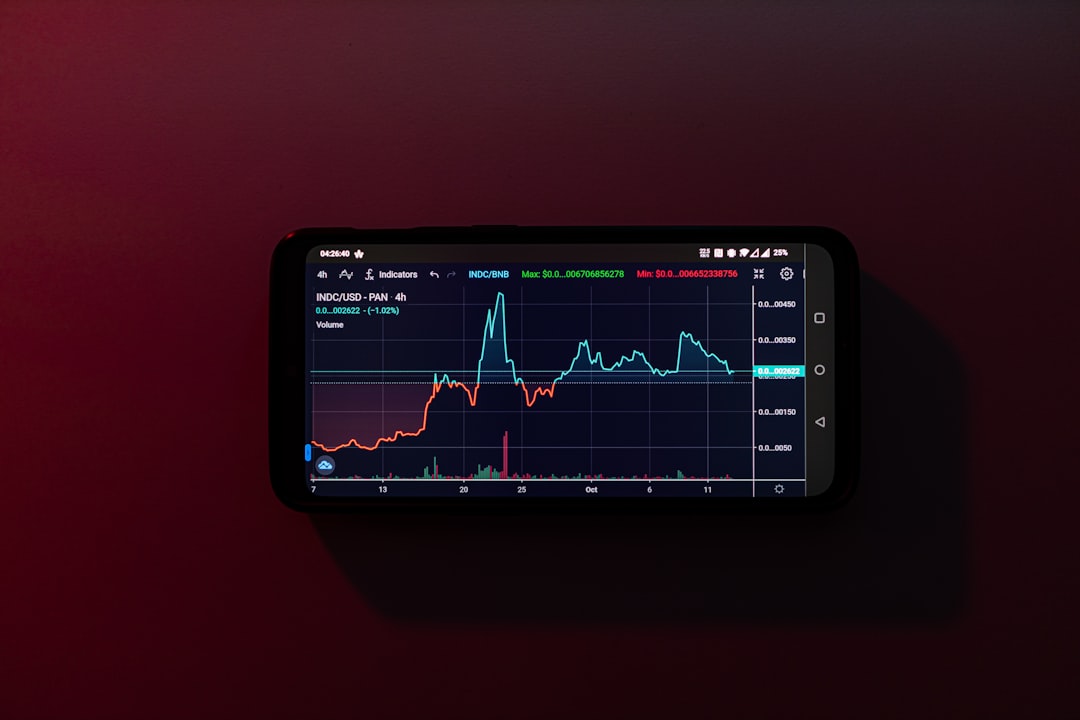
Have you ever felt overwhelmed by the lightning-fast pace of day trading, or perhaps found long-term investing a bit too slow for your taste? If so, you’re not alone! Many traders find themselves seeking a sweet spot in the financial markets, a method that offers both exciting opportunities and a manageable lifestyle. That’s precisely where FX swing trading shines! It’s about capturing those juicy price “swings” over several days or weeks, giving you enough time to analyze and execute without the constant screen-time pressure. Ready to explore a potentially profitable path in the Forex world? Let’s dive in! 😊
What Exactly is FX Swing Trading? 🤔
Forex swing trading is a popular approach that aims to capture medium-term price movements in the foreign exchange market. Unlike day trading, which involves opening and closing positions within a single day, swing trading focuses on holding trades for several days or even weeks to take advantage of market “swings” or trends. This strategy appeals to traders who prefer a balanced approach—less time-intensive than day trading but more active than long-term investing. The goal is to buy near the low of an uptrend and sell near the high of a downtrend, capturing the most profitable portion of the move.
In essence, you’re looking for those natural ebbs and flows in currency prices, aiming to identify turning points and enter trades at the beginning of a new swing. This requires patience, as trades may take several days to develop, but it also allows traders to avoid the stress of constant monitoring associated with shorter-term strategies. Think of it as riding the waves of the market, rather than trying to surf every tiny ripple!
While swing trading reduces screen time compared to day trading, it still demands discipline and analytical skill. Profitability in swing trading often hinges on consistency rather than rapid, high returns.
Essential Indicators for Profitable FX Swing Trading 📊
Technical analysis is the foundation of most forex swing trading strategies. Traders use charts, indicators, and price patterns to identify potential entry and exit points. In 2026, several indicators remain crucial for swing traders to gauge market action, trend direction, momentum, volatility, and volume. Here are some of the top picks:
- Moving Averages (MA): These smooth out price action and help identify the overall trend. Exponential Moving Averages (EMAs) react faster to recent price changes, making them ideal for swing trading. For example, if the price is consistently trading above an upward-sloping 50-period EMA, it can confirm an uptrend.
- Relative Strength Index (RSI): A momentum oscillator that helps identify overbought or oversold conditions, signaling potential reversals. An RSI reading above 70 suggests overbought conditions, while below 30 indicates oversold. However, in strong trends, RSI can remain overbought or oversold for extended periods, so it’s best not to use it alone for reversal trades.
- Moving Average Convergence Divergence (MACD): This indicator reveals changes in the strength, direction, momentum, and duration of a trend. It consists of two lines and a histogram, providing signals when they cross.
- Stochastic Oscillator: Similar to RSI, the Stochastic Oscillator is a momentum indicator that compares a closing price to its price range over a period, helping identify overbought and oversold conditions and potential reversal points. Readings above 80 are overbought, and below 20 are oversold.
- Fibonacci Retracement: These levels (like 50% and 61.8%) give specific price points where swing traders often cluster entries, especially after strong momentum and orderly pullbacks.
Combining two or three of these indicators can significantly improve your strategy’s effectiveness. Don’t rely on just one indicator; use them to confirm each other!
Top Forex Pairs for Swing Trading in 2026
| Currency Pair | Characteristics | Best For | 2026 Outlook |
|---|---|---|---|
| EUR/USD | Highest liquidity, tight spreads, driven by ECB/Fed policies. | Beginners, central bank news followers. | Expected gains due to USD weakness and German fiscal support; potential bullish consolidation. |
| USD/JPY | Second most traded, tends to move directionally, cleaner price action. | Beginners, trend traders. | Interesting movements due to BOJ tightening and Fed easing. |
| GBP/USD | More aggressive moves, sensitive to BoE decisions and UK data. Highest volatility among majors. | Intermediate traders comfortable with higher volatility. | Expected rate cuts by BoE in H1 2026. |
| AUD/USD | Closely tracks commodity prices and China’s economic health. | Trend traders with an eye on commodity markets. | RBA signaling potential rate hikes while Fed eases, shifting yield advantage to AUD; major bullish breakout observed in late 2025. |
Higher volatility pairs offer more opportunities but also increase risk. Always adjust your position sizing and risk management accordingly.
Key Checkpoints: Remember These Essentials! 📌
You’ve made it this far! With all this information, it’s easy to forget the absolute essentials. So, let’s recap the most crucial points you need to remember for successful FX swing trading.
-
✅
Trade with the Trend:
Aligning your swing trades with the long-term trend on higher timeframes (Daily or 4-hour charts) significantly increases your probability of success. -
✅
Master Risk Management:
Risking no more than 1-2% of your account per trade and using tight stop-loss placements are non-negotiable for long-term survival and profitability. -
✅
Confirm with Multiple Indicators:
Instead of relying on a single indicator, use a combination of trend, momentum, and volatility indicators (e.g., MAs, RSI, MACD, Fibonacci) to confirm trade setups and entry/exit points.
Developing Your FX Swing Trading Strategy 👩💼👨💻
A structured approach is key to successful swing trading. Most forex swing traders follow a process that involves identifying trends, waiting for pullbacks, confirming setups, managing risk, and planning exits. Here’s how you can build your own:
- Identify the Overall Market Trend: Determine the path of least resistance on higher timeframes (Daily or 4-hour charts). Look for sequences of higher highs and higher lows (uptrend) or lower highs and lower lows (downtrend). Using a 50-period EMA can help confirm the trend.
- Wait for a Pullback or Retracement: Avoid chasing the price. Instead, wait for the market to retrace against the primary trend, offering a better entry point.
- Confirm the Trade Setup: Don’t enter just because the price touched a support level. Wait for a sign that the pullback is over, such as a reversal candle or a confluence of indicators.
- Manage Risk with Stop-Loss Placement: This is arguably the most critical step. Place stop-losses below the most recent swing low for long positions and above the most recent swing high for short positions. Give your trade enough “breathing room” to survive minor volatility, perhaps 10-15 pips beyond psychological levels.
- Plan Your Exit (Taking Profit): Unlike day trading, you hold positions for more than just a small profit. Target previous swing highs/lows, major resistance/support levels, or Fibonacci extension levels. A minimum reward-to-risk ratio of 2:1 is generally recommended.
Always define your stop and target BEFORE entering a trade. This discipline is paramount for long-term survival in swing trading.
Real-World Example: Capturing a EUR/USD Swing 📚
Let’s consider a hypothetical scenario for a swing trade on the EUR/USD pair, keeping in mind the market outlook for 2026.

Scenario: Bullish Retracement on EUR/USD (June 2026)
- Overall Trend: EUR/USD is in a major uptrend phase, trading above its 200-day moving average, with bullish consolidation. The US dollar has shown weakness in late 2025 and early 2026, creating a tailwind for EUR/USD appreciation.
- Recent Action: After reaching a medium-term resistance, EUR/USD pulls back towards a key support level, which also aligns with the 50% Fibonacci retracement of the previous swing up. The 50-period EMA is also acting as dynamic support.
Execution Process
1) Entry Confirmation: As EUR/USD approaches the confluence of the support level, 50% Fibonacci, and 50-period EMA, a strong bullish engulfing candle forms on the 4-hour chart, signaling the end of the pullback. You enter a long position at 1.1550.
2) Stop-Loss Placement: You place your stop-loss order at 1.1500, just below the recent swing low and the confluence zone, representing a 50-pip risk. This adheres to the 1-2% risk rule for your account.
3) Profit Target: Based on the previous swing high and a 161.8% Fibonacci extension, your target is set at 1.1750, aiming for a 200-pip profit. This gives a favorable risk-reward ratio of 4:1.
Final Outcome
– After holding for 3 days, the EUR/USD rallies, hitting your profit target at 1.1750. You secure a 200-pip gain.
– This trade exemplifies how identifying a strong trend, waiting for a clear pullback, confirming with multiple indicators, and employing disciplined risk management can lead to profitable swing trades.
This example illustrates the practical application of swing trading principles. Remember, successful trading isn’t about predicting the future, but about interpreting market behavior and making structured, disciplined decisions.
Conclusion: Your Path to Consistent FX Swing Trading 📝
Forex swing trading offers a practical and flexible approach for traders looking to profit from medium-term market movements without the intense pressure of day trading. By combining thorough technical analysis, sound risk management, and unwavering emotional discipline, you can navigate the dynamic Forex market with greater confidence. Remember, while no strategy guarantees success, mastering the principles of trend identification, precise timing, and robust risk control can significantly enhance your profitability.
The market never sleeps, and neither do the opportunities. With the right knowledge and a disciplined approach, you can truly make the most of those market swings in 2026 and beyond. What are your favorite swing trading indicators, or what challenges have you faced? Share your thoughts in the comments below! We’d love to hear from you. 😊