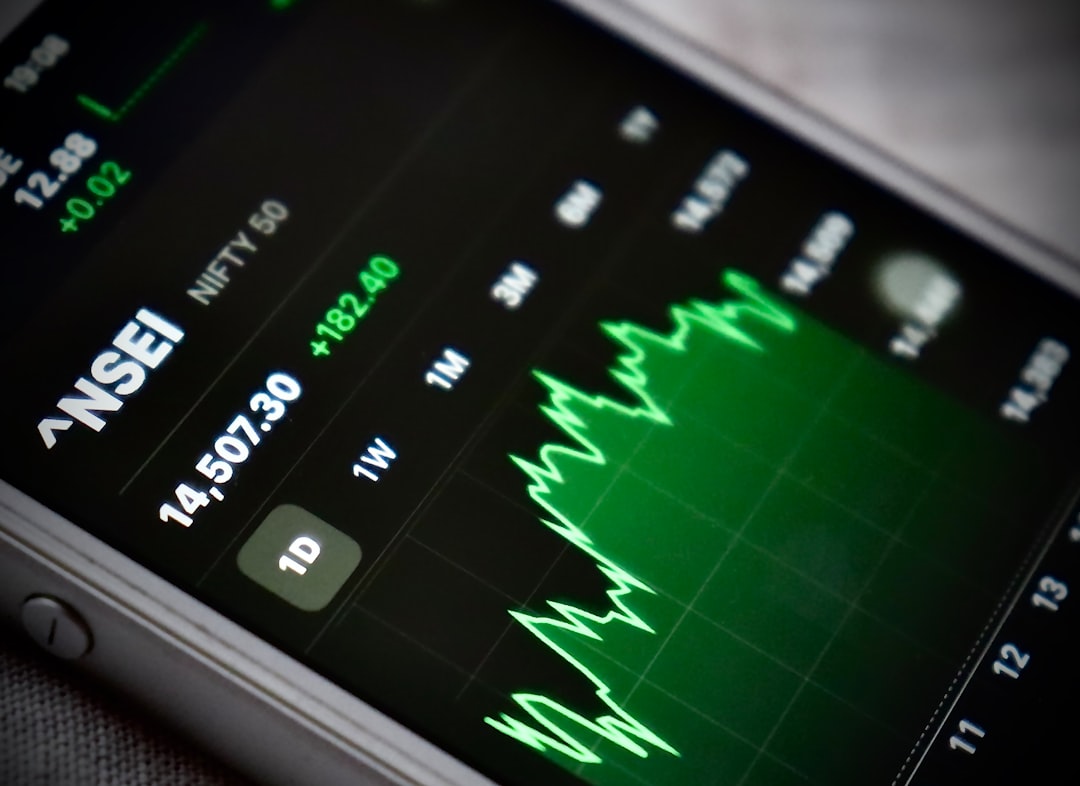
Have you ever felt caught between the rapid-fire decisions of day trading and the long-term commitment of traditional investing? Many traders, myself included, find themselves seeking a middle ground—a strategy that offers more frequent opportunities than “buy and hold” but less intense screen time than intraday trading. That’s where swing trading comes in! It’s a fantastic approach for capturing price “swings” over several days or weeks, making it ideal for those who want to actively participate in the market without it consuming their entire day. Let’s dive into how you can leverage this powerful technique to potentially boost your portfolio in 2026 and beyond. 😊
What Exactly is Swing Trading? 🤔
Swing trading is a popular short-to-medium-term strategy that aims to profit from price movements, or “swings,” within a larger trend. Unlike day traders who open and close positions within the same day, swing traders typically hold positions for a few days to several weeks. This allows them to capture more substantial price movements than day trading, without the constant monitoring required for intraday strategies.
It’s essentially a balance between the quick profits sought by day traders and the long-term growth pursued by investors. Swing traders focus on identifying multi-day chart patterns and using technical analysis to time their entries and exits, making decisions based on daily and 4-hour charts, earnings cycles, and broader market news.
Swing trading offers a more flexible time commitment compared to day trading, making it appealing for those who have other jobs or commitments but still want to actively trade. Many swing traders spend 30 to 60 minutes a day on analysis, then set their entries, stops, and targets.
Key Principles and Essential Indicators for 2026 📊
Successful swing trading hinges on identifying trends, pullbacks, and breakouts. This involves a keen eye for technical analysis and the strategic use of various indicators. In 2026, a combination of traditional and modern tools is crucial for making informed decisions.
Some of the most effective indicators for swing trading in 2026 include Moving Averages (MA), Relative Strength Index (RSI), MACD (Moving Average Convergence Divergence), Bollinger Bands, and On-Balance Volume (OBV). Using 2-3 of these together can lead to optimal results.
Top Swing Trading Indicators and Their Use
| Indicator | Description | Key Application in Swing Trading | 2026 Relevance |
|---|---|---|---|
| Moving Averages (MA) | Smooths price data to identify trend direction. Common periods: 9, 21, 50, 200-day. | Identifies trend direction, dynamic support/resistance, and crossover signals. | Fundamental for confirming trends in volatile markets. |
| Relative Strength Index (RSI) | Momentum oscillator (0-100) indicating overbought (>70) or oversold (<30) conditions. | Signals potential reversals and confirms momentum. Buy in uptrends when RSI pulls back to 40-50. | Crucial for identifying entry points during pullbacks in trending stocks. |
| MACD | Trend-following momentum indicator showing the relationship between two moving averages. | Confirms trend direction and momentum, generates buy/sell signals. | Valuable for confirming signals when combined with other indicators. |
| Bollinger Bands | Measures market volatility and identifies overbought/oversold levels relative to a moving average. | Identifies volatility extremes; a “squeeze” signals an imminent large move. | Helpful for mean reversion strategies and identifying potential breakouts. |
While indicators are powerful, relying on a single one can be misleading. Always use a combination of 2-3 indicators to confirm signals and reduce false entries.
Key Checkpoints: What to Remember for Successful Swing Trading! 📌
You’ve made it this far! With all the information, it’s easy to forget the essentials. Here are three critical takeaways to keep in mind as you embark on your swing trading journey.
-
✅
Risk Management is Paramount
Never risk more than 1-2% of your total account on any single trade. Use stop-loss orders diligently to protect your capital from significant losses, especially against overnight gap risks. -
✅
Combine Technical Indicators for Confirmation
Don’t rely on just one signal. Use 2-3 technical indicators like Moving Averages, RSI, and MACD in conjunction to confirm trends, momentum, and potential entry/exit points, reducing false signals. -
✅
Patience and Discipline are Your Best Friends
Swing trading requires letting trades develop over days without micromanaging. Stick to your trading plan, avoid emotional decisions, and consistently track your strategies to build a statistical edge.
Leveraging AI and Current Market Trends in 2026 👩💼👨💻
The landscape of trading is constantly evolving, and 2026 is no exception. We’re seeing a significant rise in the use of Artificial Intelligence (AI) in stock analysis, offering new ways for swing traders to gain an edge. AI-powered tools can simplify technical analysis, identify patterns, and even generate buy/sell signals.
Platforms like ChartingLens and TrendSpider offer AI features such as automated support and resistance drawing, AI-driven buy/sell signals, and plain-English backtesting, saving hours of analysis time. These tools can help you filter stocks based on technical criteria, set up watchlists, and receive alerts, ensuring you don’t miss potential setups.
Market volatility has been a notable theme in 2026, influenced by factors like geopolitics, inflation fears, and AI disruption. Active investment strategies, like swing trading, have better prospects for success in such environments compared to passive investments, especially when backed by robust analysis and adaptive strategies.
Practical Example: A Trend-Following Swing Trade 📚
Let’s walk through a hypothetical swing trade using a common trend-following strategy, specifically a “pullback to a key level” in an uptrend, confirmed by the 21-day Exponential Moving Average (EMA) and RSI.

Scenario: Tech Stock “Innovate Corp” (INV)
- Market Condition: INV is in a clear uptrend, trading above its 50-day MA.
- Observation: After a strong rally, INV pulls back towards its 21-day EMA. The daily RSI is at 45 (neither overbought nor oversold, indicating a healthy pullback).
Trading Process
1) Entry Confirmation: A bullish engulfing candle prints right at the 21-day EMA, confirming support and a potential bounce. We enter a long position on the close of this confirmation candle.
2) Stop Loss Placement: Our stop loss is placed just below the swing low that formed during the pullback, ensuring we limit potential losses. For example, 5-10 cents below the low.
3) Target Setting: We set our initial target at the prior swing high, aiming for at least a 2:1 reward-to-risk ratio.
Outcome
– Result: Over the next few days, INV continues its uptrend, reaching our target and allowing us to secure a profit. This trade was held for 4 days.
– Lesson: By identifying the trend, waiting for a confirmed pullback to a key level, and managing risk with a stop loss, we were able to participate in the stock’s upward swing.
This example highlights the importance of a clear strategy, patience, and disciplined execution. While every trade carries risk, a well-defined plan significantly increases your chances of success.
Wrapping Up: Your Path to Swing Trading Success 📝
Swing trading, when approached with discipline and a solid understanding of market dynamics, can be a highly rewarding strategy. It offers a compelling alternative for those seeking active participation in the market without the intense demands of day trading. By focusing on trend identification, utilizing key technical indicators, embracing modern AI tools, and rigorously managing risk, you can position yourself for consistent profitability. Remember, continuous learning and adapting to market changes are key to long-term success.
Are you ready to give swing trading a try, or do you have a favorite strategy you’d like to share? Let me know in the comments below! I’d love to hear your thoughts and experiences. 😊