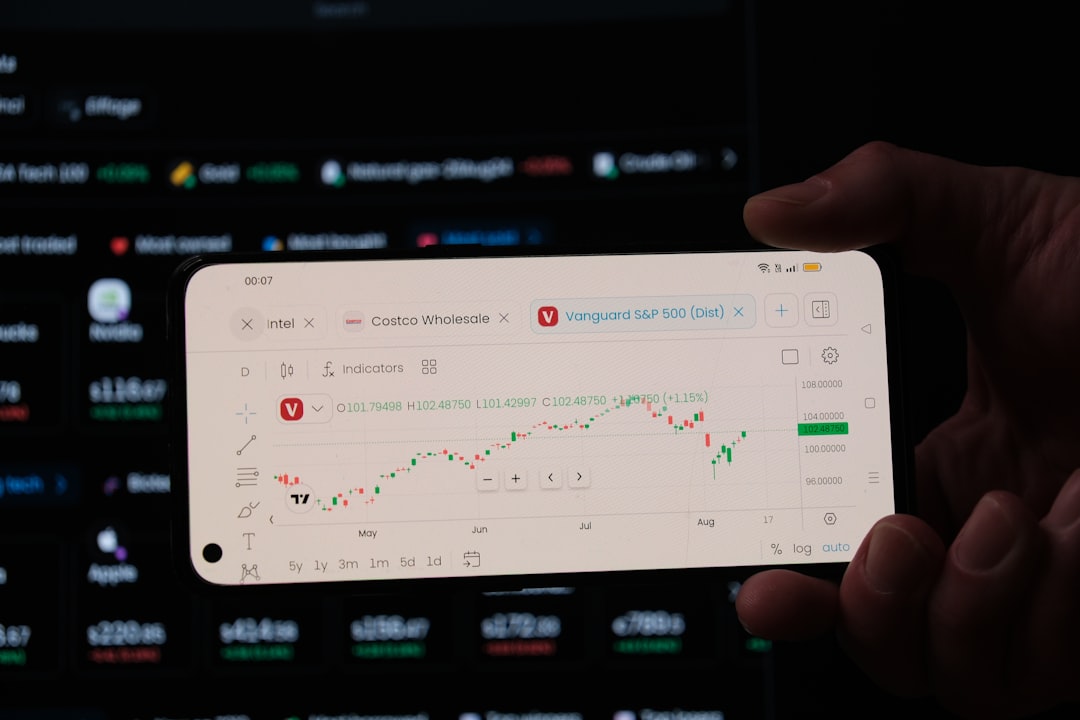
Have you ever felt overwhelmed by the relentless 24/7 nature of the crypto market? The constant price swings, the fear of missing out (FOMO), or the dread of a sudden crash can make consistent profitability seem like a distant dream. But what if there was a method to harness this very volatility to your advantage? That’s where crypto swing trading comes into play. It’s a strategy designed to capture those “swings” in price, offering a middle ground between the high-intensity of day trading and the long-term commitment of “hodling.” Let’s dive into how you can make these market movements work for you! 😊
Understanding Crypto Swing Trading 🤔
At its core, swing trading in cryptocurrency involves identifying potential price movements (swings) over a period of several days to a few weeks, aiming to profit from these short to medium-term trends. Unlike day traders who close positions within a single trading day, swing traders hold positions longer, allowing them to ride momentum and avoid the intense screen time required for scalping or day trading. It’s about spotting assets that are likely to move significantly in one direction and entering a trade to capture a portion of that move.
The crypto market, known for its heightened volatility, provides ample opportunities for swing traders. While Bitcoin’s volatility has shown a long-term downward trend, it still experiences significant price swings, and altcoins typically exhibit even greater volatility. This inherent characteristic of digital assets makes them particularly suitable for swing trading strategies, provided you have a disciplined approach and robust risk management.
Swing trading is often considered more beginner-friendly than day trading because it doesn’t demand constant market monitoring. You can dedicate 30 to 60 minutes a day to analysis rather than being glued to your screen 24/7.
Why Swing Trading in 2026? Market Trends & Statistics 📊
As of July 2026, the cryptocurrency market continues its dynamic evolution, marked by both innovation and fluctuating prices. The global cryptocurrency market size, valued at USD 6.3 billion in 2025, is projected to grow to USD 7.0 billion in 2026, with a significant CAGR of 14.5% from 2026 to 2033. This growth, coupled with ongoing market volatility, presents a fertile ground for swing traders. For instance, recent reports indicate a general downward trend in major coins like Bitcoin ($63,720) and Ethereum ($1,853) on July 24, 2026, reflecting ongoing market volatility that swing traders can capitalize on.
Regulatory progress and accelerating institutional integration are deepening crypto’s role in the core financial system, leading to transformative growth. However, this doesn’t eliminate volatility; instead, it often creates new patterns and opportunities. The introduction of spot crypto ETFs and digital asset treasuries in 2025 has further linked crypto with traditional finance, amplifying certain price movements. Therefore, understanding these trends and adapting your swing trading strategies is crucial for success. The market’s continuous sentiment-driven nature means that sharp, medium-term price swings remain a constant feature.

Swing Trading vs. Other Strategies
| Category | Swing Trading | Day Trading | HODLing (Long-Term) |
|---|---|---|---|
| Holding Period | Days to Weeks | Hours, within one day | Months to Years |
| Market Focus | Medium-term trends, price swings | Intraday price fluctuations | Overall market growth, project fundamentals |
| Required Time | Moderate (30-60 mins/day) | High (constant monitoring) | Low (periodic checks) |
| Primary Tool | Technical Analysis | Technical Analysis, speed | Fundamental Analysis |
While swing trading offers opportunities, the crypto market remains highly volatile. Never risk more than you can afford to lose, and always implement robust risk management strategies.
Key Checkpoints: Remember These Essentials! 📌
Made it this far? Great! With so much information, it’s easy to forget the core lessons. Here are three crucial points to keep in mind:
-
✅
Swing Trading Capitalizes on Volatility
Instead of fearing crypto’s price swings, this strategy aims to profit from them over days or weeks, making it less demanding than day trading. -
✅
Technical Indicators are Your Best Friends
Moving Averages, RSI, and MACD are fundamental for identifying trends, momentum, and potential entry/exit points. -
✅
Risk Management is Non-Negotiable
Always define your maximum risk per trade, use stop-loss orders, and plan your exits before you enter to protect your capital.
Essential Tools and Indicators for Swing Traders 👩💼👨💻
Successful crypto swing trading heavily relies on technical analysis to identify trends, momentum shifts, and potential entry/exit points. While no single indicator guarantees success, combining complementary tools can provide a clearer market view. Here are some of the most widely used indicators:
- Moving Averages (MA): These smooth out price action, helping to identify trend direction. Exponential Moving Averages (EMA) are often preferred for swing trading due to their responsiveness to recent prices. Common settings include the 20 EMA for shorter swings and the 50/200-day MAs for broader trends.
- Relative Strength Index (RSI): A momentum oscillator that measures the speed and change of price movements. It helps identify overbought (above 70) or oversold (below 30) conditions, signaling potential reversals. RSI is excellent for timing entries and exits around short-term reversals.
- Moving Average Convergence Divergence (MACD): This indicator blends trend and momentum, showing the relationship between two moving averages of an asset’s price. It helps confirm momentum shifts and trend strength.
- Bollinger Bands: These measure market volatility and can help identify overbought or oversold conditions relative to the price’s recent average. They consist of a middle band (SMA) and two outer bands (standard deviations from the SMA).
- Volume: Often overlooked, volume confirms the strength of price movements. Increased volume on a breakout, for example, suggests stronger conviction behind the move.
Don’t clutter your chart with too many indicators. Most profitable traders use 3-4 indicators maximum. The key is to understand how they complement each other to reveal different layers of the market.
Practical Example: Executing a Swing Trade 📚
Let’s walk through a hypothetical swing trade scenario using the indicators we’ve discussed. Imagine it’s early July 2026, and you’re eyeing “AltCoin X,” which has been in a clear uptrend but is currently experiencing a pullback.
Trader’s Situation
- Asset: AltCoin X (highly volatile, good liquidity)
- Observation: Price has pulled back to its 50-day EMA, which is acting as dynamic support. RSI is near 40 and starting to curl upwards. MACD shows declining bearish momentum, with the MACD line nearing a cross above the signal line. Volume is decreasing during the pullback, suggesting selling pressure is easing.
Execution Process
1) Entry: You decide to enter a long position as AltCoin X bounces off the 50-day EMA, confirmed by the RSI turning up from 40 and MACD signaling a potential bullish cross. You set your entry at $1.50.
2) Stop-Loss: To manage risk, you place a stop-loss order just below the 50-day EMA and a previous support level, say at $1.40. This limits your potential loss to $0.10 per coin.
3) Take-Profit: You identify a previous resistance level and a 1.618 Fibonacci extension as potential take-profit targets, setting your first target at $1.80 and a second at $2.00, aiming for a favorable risk-reward ratio.
Final Outcome
– After a few days, AltCoin X rallies, hitting your first take-profit target at $1.80. You secure partial profits and adjust your stop-loss for the remaining position to your entry price, effectively making the trade risk-free. The market continues its upward trajectory, eventually reaching your second target at $2.00, confirming the swing.
This example highlights the importance of confluence – multiple indicators aligning to support a trade idea – and meticulous planning with predefined entry, stop-loss, and take-profit levels. Remember, not every trade will be a winner, but consistent application of a well-defined strategy, coupled with disciplined risk management, is key to long-term profitability.
Wrapping Up: Key Takeaways 📝
The world of crypto trading can feel like a rollercoaster, but with swing trading, you gain a powerful technique to navigate its twists and turns. By understanding market dynamics, utilizing technical indicators, and prioritizing risk management, you can transform volatility from a threat into an opportunity for profit. It’s about being strategic, not reactive, and letting the market’s natural rhythm work in your favor.
Ready to put these strategies into practice? Start with a demo account to hone your skills without risking real capital, and remember that continuous learning is your best asset in this ever-evolving market. If you have any questions or want to share your swing trading experiences, please leave a comment below! 😊