Have you ever felt the thrill of catching a big market move right as it starts? That exhilarating feeling of being in sync with the market’s pulse? For many Forex traders, that’s the magic of breakout trading! It’s one of those strategies that, when applied correctly, can open up significant profit opportunities. If you’re looking to add a powerful technique to your trading arsenal and understand how to navigate volatile markets, you’ve come to the right place. Let’s explore the world of FX breakout trading together! 😊
What Exactly is FX Breakout Trading? 🤔
At its core, FX breakout trading is a strategy where you enter a position when the price of a currency pair moves beyond established levels of support or resistance. Think of it like a ball bouncing within a confined box; when it finally finds a hole and escapes, it tends to roll freely in that new direction. In trading, these “boxes” are consolidation zones where buyers and sellers are in a temporary balance. When price breaks above resistance or below support, it signals a shift in market sentiment, often triggering a sharp and sustained move in the direction of the break.
This strategy is particularly appealing because it allows traders to enter trends early, potentially before the broader market fully recognizes the shift. It’s a fundamental approach that works across various financial markets, including Forex.
Breakouts can be categorized into two main types: Continuation Breakouts, which occur during an ongoing trend, and Reversal Breakouts, which suggest a possible change in the prevailing trend.
The Current Landscape: FX Market Trends in 2025-2026 📊
The Forex market continues to be the most liquid and heavily traded market globally. Recent data from the Bank for International Settlements (BIS) indicates that the average daily global FX trading volume reached an impressive $9.5 trillion in April 2025, a significant 28% increase from $7.5 trillion in 2022. This rapid expansion is projected to continue, with the global foreign exchange sector expected to climb towards a market size of $1.16 trillion by 2030, maintaining a compound annual growth rate of roughly 6.9%.
In early 2026, daily FX trading volume updated from $7.51 trillion in 2025 to $9.6 trillion, sustaining high liquidity. Retail trading activity also saw an escalation from approximately $30 trillion monthly in 2025 to $37 trillion monthly CFD volume. The US dollar continues its dominance, featuring on either side of 89% of all traded currency pairs worldwide. However, market volatility in 2026 is shortening reaction windows, pushing retail traders towards smaller exposure and clearer risk rules.
Key FX Market Statistics (Early 2026)
| Metric | Value (Early 2026) | Trend/Note |
|---|---|---|
| Daily Trading Volume | $9.6 trillion | Increased from $7.51T in 2025 |
| Retail CFD Volume | $37 trillion monthly | Escalated from ~$30T monthly in 2025 |
| US Dollar Dominance | 89% of trades | Most traded currency |
| Market Volatility | Relatively subdued (Q4 2025) | Shortening reaction windows in 2026 |
While breakout trading offers significant opportunities, the risk of false breakouts is a major concern. These occur when the price briefly moves past a key level only to reverse quickly, trapping unsuspecting traders. Robust risk management is absolutely crucial.
Key Checkpoints: What You Must Remember! 📌
You’ve made it this far! With all this information, it’s easy to forget the essentials. Let’s recap the three most important takeaways you should always keep in mind when diving into FX breakout trading.
-
✅
Identify Clear Levels:
Always ensure that the support and resistance levels are clearly defined and have been tested multiple times before considering a breakout. Ambiguous levels lead to ambiguous trades. -
✅
Confirm with Volume and Retests:
Increased trading volume during a breakout and a subsequent retest of the broken level are crucial confirmations that can help filter out false signals. -
✅
Implement Strict Risk Management:
Never trade without a clear risk management plan. Set stop-loss orders, determine your risk tolerance (e.g., 1-2% of capital per trade), and avoid over-leveraging.
Executing Your Breakout Strategy: Tools and Techniques 👩💼👨💻
Successfully trading breakouts isn’t just about spotting them; it’s about executing your trades with precision and discipline. Technical indicators play a vital role in confirming breakout strength and filtering out noise. Tools like the Moving Average Convergence Divergence (MACD) and the Relative Strength Index (RSI) can help measure the momentum and trend strength behind a potential breakout.
Many traders also employ the “breakout and retest” strategy. Instead of entering immediately after a breakout, they wait for the price to break through, and then retest the newly formed support (if it was resistance) or resistance (if it was support) level. If the retest confirms the breakout, and the price resumes its movement in the direction of the breakout, it offers a higher-probability entry point.
For more reliable breakout signals, look for instances where the price has tested the support, resistance, or trend line at least three or four times before breaking through. This indicates a stronger, more significant level.
Practical Example: Trading a EUR/USD Breakout 📚
Let’s walk through a hypothetical scenario to see how a breakout trading strategy might work in practice. The EUR/USD pair is often favored for breakout trading due to its high liquidity and tendency to produce cleaner, more sustained moves.

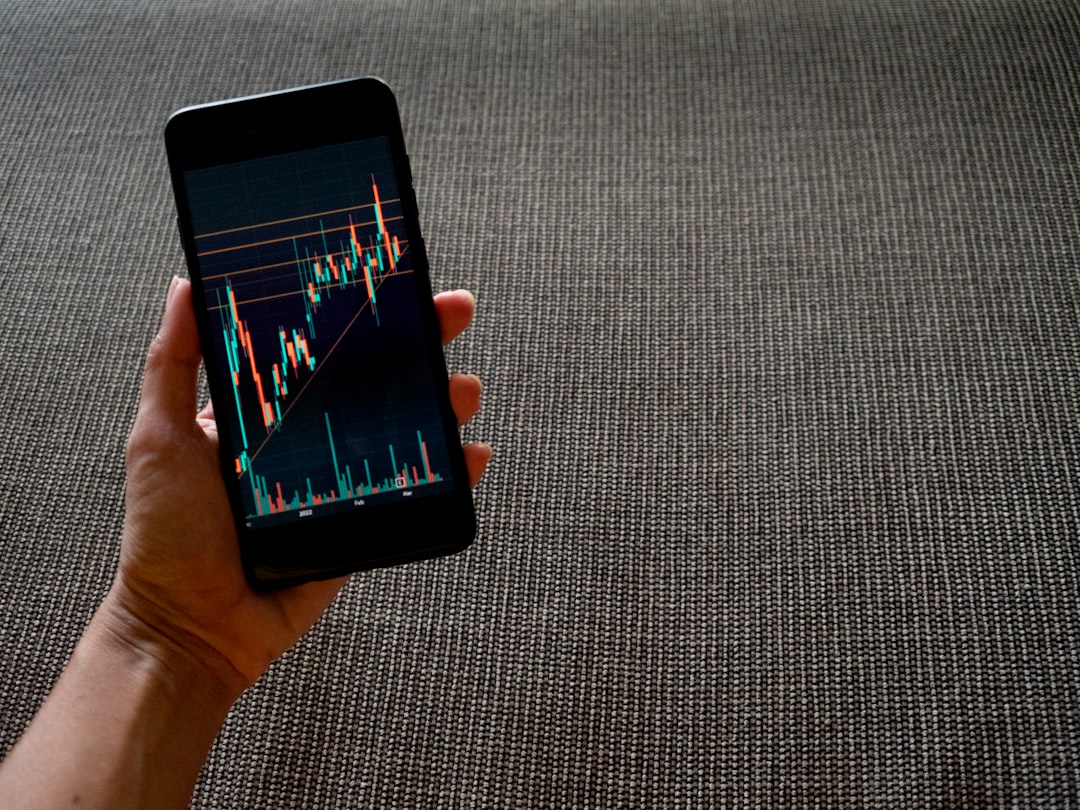
Image: A visual representation of price action on a Forex chart, ideal for identifying breakout opportunities.
Trader Sarah’s Situation
- Currency Pair: EUR/USD
- Market Condition: Price has been consolidating within a tight range for several hours, with a clear resistance level at 1.0850.
- Risk Tolerance: Sarah risks no more than 1% of her trading capital per trade.
Trading Process
1) Identification: Sarah identifies the strong resistance at 1.0850 and observes increasing volume as price approaches this level. She also notes a bullish divergence on the RSI, suggesting growing upward momentum.
2) Entry Strategy: Instead of entering immediately, Sarah decides to wait for a confirmed breakout and retest. The price breaks above 1.0850, closes strongly above it, and then pulls back to retest 1.0850, which now acts as support.
3) Execution: Upon confirmation of the retest (a bullish candlestick forming off the 1.0850 level), Sarah enters a long position at 1.0855.
4) Risk Management: She places her stop-loss order just below the newly established support at 1.0840 (a 15-pip stop). Her profit target is set at 1.0925, aiming for a 1:5 risk-to-reward ratio (70 pips profit).
Final Outcome
– Result: The price continues its upward momentum after the retest, hitting Sarah’s profit target at 1.0925.
– Profit: Sarah secures a profit of 70 pips, effectively utilizing the breakout strategy with sound risk management.
This example highlights the importance of patience, confirmation, and strict risk management in breakout trading. While no strategy guarantees profits, a structured approach significantly increases your chances of success.
Wrapping Up: Your Path to Breakout Success 📝
Breakout trading offers an exciting avenue to capitalize on significant price movements in the dynamic Forex market. By understanding how to identify key support and resistance levels, confirming breakouts with volume and retests, and rigorously applying risk management principles, you can position yourself to potentially profit from these powerful market shifts. Remember, consistency and discipline are your best friends in this journey.
The Forex market continues to evolve, with daily trading volumes surging and volatility creating both challenges and opportunities. Stay informed, stay strategic, and always prioritize protecting your capital. Do you have any favorite breakout setups or tips you’d like to share? Feel free to drop your thoughts in the comments below! 😊
Breakout Trading Essentials
Frequently Asked Questions ❓