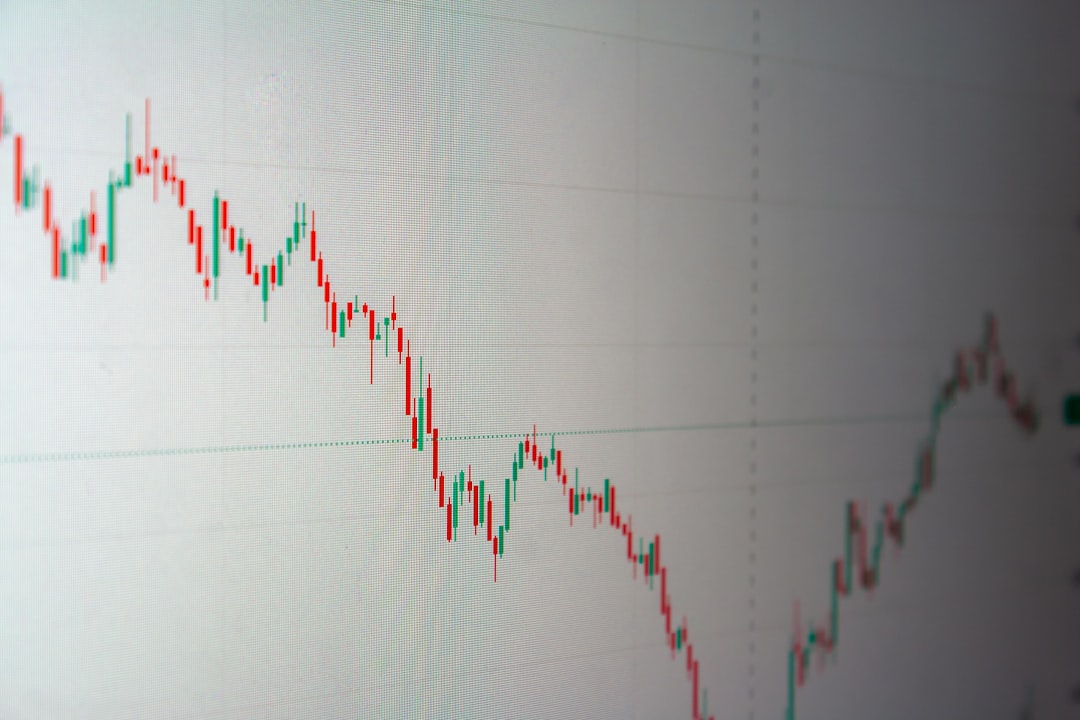
Have you ever felt overwhelmed by complex indicators and conflicting signals in the Forex market? Trust me, you’re not alone. Many traders, myself included, have spent countless hours trying to decipher charts cluttered with lines and oscillators, only to find themselves more confused than when they started. But what if I told you there’s a simpler, more intuitive way to understand market dynamics and make profitable trading decisions? Enter Price Action Trading – a methodology that cuts through the noise and focuses on the purest form of market data: price itself. In today’s rapidly evolving financial landscape, especially with the increased volatility and geopolitical shifts observed in 2025, mastering a clear and adaptable strategy like Price Action is more crucial than ever. Let’s dive in and explore how this powerful technique can transform your trading journey! 😊
What Exactly is Price Action Trading? 🤔
Price Action Trading is an approach to analyzing financial markets and making trading decisions based solely on the historical price movements of an asset, without relying on lagging indicators or complex technical analysis tools. It’s about reading the “story” the market is telling through candlestick patterns, trend lines, support and resistance levels, and overall market structure.
Traders who employ this strategy believe that all necessary information for future price prediction is already embedded within the price data itself. By understanding how buyers and sellers have interacted in the past, price action traders aim to anticipate future price dynamics. This method simplifies trading by concentrating only on what the market is doing, making it easier for traders to react quickly.
Price Action Trading is often considered a subset of technical analysis, providing a valuable tool to understand market behavior without the clutter of multiple indicators. It’s a skill that never becomes obsolete as long as markets exist.
Why Price Action Shines in Today’s FX Market (2025) 📊
The Forex market in 2025 is characterized by significant shifts, including increased volatility driven by geopolitical factors, trade wars, and divergent central bank monetary policies. In this dynamic environment, Price Action Trading offers distinct advantages:
- Clarity and Simplicity: Unlike indicator-based strategies that can be lagging and misleading, Price Action provides real-time insights into market sentiment. A clean chart allows for easier identification of trends and patterns.
- Adaptability: Price Action strategies are versatile and can be applied to any financial instrument, including Forex, stocks, commodities, and cryptocurrencies, across all timeframes and market conditions – trending, ranging, or volatile.
- Improved Risk Management: By focusing on price structure, traders can set more logical stop-loss orders and profit targets based on support and resistance levels, helping to manage risk effectively.
- Early Trend Recognition: Price action helps traders recognize market trends early, allowing them to capitalize on opportunities before they become widely visible.
The global FX trading volume reached an impressive $9.6 trillion per day in April 2025, a 28% increase from 2022. This immense liquidity, coupled with the market’s dynamic nature, underscores the need for a robust and adaptable trading methodology. While retail trader profitability saw a slight drop to 23% in 2025 from 29% in 2022, this highlights the importance of refining strategies and adapting to market changes, which Price Action facilitates.
Key Forex Market Statistics (April 2025)
| Category | Statistic | Source | Notes |
|---|---|---|---|
| Average Daily Turnover | $9.6 trillion | BIS Triennial Survey 2025 | Up 28% from 2022 |
| Most Traded Instrument | FX Swaps ($4 trillion/day) | BIS Triennial Survey 2025 | Followed by spot trading ($3 trillion) |
| Most Traded Currency | US Dollar (89% of trades) | BIS Triennial Survey 2025 | Followed by Euro and Yen |
| Largest Trading Hub | United Kingdom (37.8% of total) | BIS Triennial Survey 2025 | US at 18.6%, Singapore at 11.8% |
While Price Action offers clarity, it demands discipline, patience, and practice. The market’s dynamic nature means no strategy guarantees certainty, and success rates (some reported 60-75%) depend heavily on a trader’s skill and market conditions.
Key Checkpoints: Remember These Essentials! 📌
You’ve made it this far! With all the information, it’s easy to forget the most crucial points. Let’s recap the three key takeaways you absolutely need to remember.
-
✅
Price Action is Pure Market Data:
It’s about reading raw price movements, not lagging indicators. This offers real-time insights into market psychology. -
✅
Adaptability is Key:
Price Action works across all markets and timeframes, making it a versatile tool for any trader. -
✅
Risk Management is Paramount:
Always define your risk per trade and set stop-losses based on market structure to protect your capital.
Common Price Action Patterns to Watch 👩💼👨💻
Mastering Price Action involves recognizing recurring patterns that signal potential market movements. These patterns are visual representations of supply and demand dynamics, offering clues about future price direction. Here are a few widely recognized patterns:
- Pin Bars (Pinocchio Bars): These are candlesticks with a long wick (or “nose”) extending significantly from the body, indicating a strong rejection of a particular price level. A bullish pin bar suggests buying pressure rejected lower prices, while a bearish pin bar indicates selling pressure rejected higher prices.
- Inside Bars: An inside bar is a candlestick completely contained within the high and low of the preceding “mother bar.” It often signals a period of consolidation or indecision, potentially preceding a breakout.
- Engulfing Patterns: A bullish engulfing pattern occurs when a large bullish candle completely “engulfs” the previous bearish candle, indicating a strong shift to buying pressure. A bearish engulfing pattern is the opposite.
- Head and Shoulders (and Inverse Head and Shoulders): These are classic reversal patterns. A head and shoulders pattern signals a potential bearish reversal, while an inverse head and shoulders suggests a bullish reversal.
- Double Tops and Double Bottoms: These “M” or “W” shaped patterns indicate a market that has attempted to break a certain price level twice and failed, suggesting a reversal is imminent.
While these patterns are powerful, always consider the market context and confirm patterns with subsequent price movements before entering a trade. Higher timeframes generally generate more dependable signals.
Practical Example: Trading a Bullish Pin Bar 📚
Let’s walk through a hypothetical scenario to illustrate how a Price Action trader might identify and execute a trade using a bullish pin bar at a key support level.

Trader’s Scenario: EUR/USD on a Daily Chart
- Market Context: EUR/USD has been in a downtrend but is approaching a significant historical support level at 1.0800 that has held multiple times in the past.
- Observation: As price reaches 1.0800, a strong bearish candle forms, pushing below the support, but then quickly reverses, closing well above the support level, forming a clear bullish pin bar with a long lower wick.
Trading Process
1) Identify the Setup: The bullish pin bar at a strong support level signals a potential rejection of lower prices and a possible reversal to the upside.
2) Entry: The trader decides to enter a long position on the opening of the next candle, confirming the bullish sentiment.
3) Stop-Loss Placement: To manage risk, the stop-loss is placed strategically just below the low of the pin bar’s wick, which is also below the key support level of 1.0800. This ensures that if the market continues to fall and invalidates the bullish premise, losses are limited.
4) Profit Target: The profit target is set at the next significant resistance level, perhaps at 1.0950, aiming for a favorable risk-reward ratio (e.g., 1:2 or 1:3).
Final Outcome
– Result: The market indeed reverses, moving upwards and hitting the profit target. The trade is successful, demonstrating the effectiveness of identifying clear price action signals at key levels.
– Lesson: This example highlights how focusing on pure price action, combined with sound risk management, can lead to informed and potentially profitable trading decisions.
Remember, consistent profitability in trading comes from a combination of a robust strategy, disciplined execution, and stringent risk management. Price Action provides the framework; your practice and patience will build the success.
Conclusion: Your Path to Smarter FX Trading 📝
In a Forex market that continues to evolve with increasing volatility and new trends in 2025, Price Action Trading stands out as a powerful, clear, and adaptable strategy. By focusing on the raw movements of price, you can gain a deeper understanding of market psychology and make more informed trading decisions, free from the distractions of lagging indicators.
Embracing Price Action means cultivating discipline, patience, and a keen eye for patterns. It’s about simplifying your approach, enhancing your risk management, and ultimately, taking control of your trading journey. If you’re ready to cut through the noise and trade with greater confidence, Price Action is an excellent place to start. What are your thoughts on Price Action Trading? Share your experiences or ask any questions in the comments below! 😊