Have you ever felt overwhelmed by the sheer volume of indicators and complex strategies in the Forex market? I know I have! It’s easy to get lost in the noise, constantly searching for that “magic bullet” that promises consistent profits. But what if I told you that one of the most effective and enduring strategies focuses on the simplest, most fundamental aspect of trading: price itself? In today’s dynamic and often unpredictable FX landscape, understanding how to read raw price movements, known as Price Action Trading, can be your ultimate advantage. Let’s dive in and demystify this powerful approach! 😊
What Exactly is Price Action Trading? 🤔
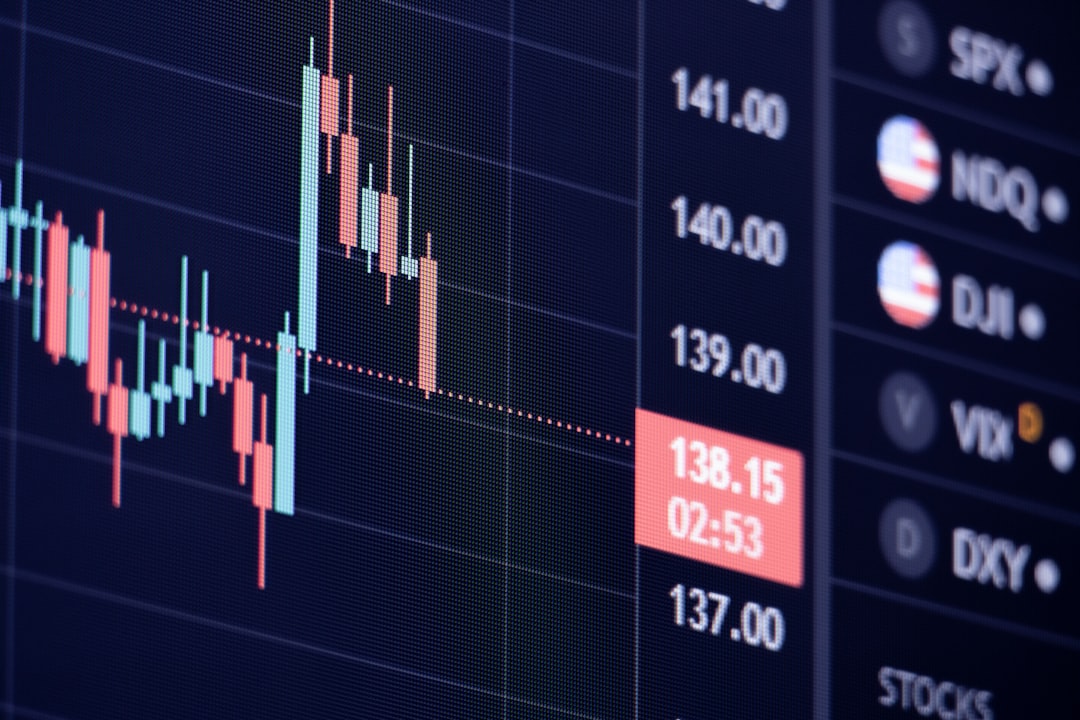
At its core, Price Action Trading is a methodology where traders make decisions based on the analysis of raw price movements on a chart, without relying on lagging technical indicators. It’s about interpreting the “story” the market is telling through candlestick patterns, support and resistance levels, trendlines, and overall market structure. Think of it as reading the market’s language directly, rather than through a translator.
This approach assumes that all relevant information about a market is already reflected in its price. By studying how price has behaved in the past and how it’s behaving now, traders aim to predict future movements. It’s a medium-term strategy that is often recommended for beginners due to its clarity and less stressful nature compared to high-frequency trading styles like scalping.
In early 2026, the global forex market continues to be the most liquid and heavily traded market, with an average daily trading volume of $9.6 trillion. This high liquidity means ample opportunities for price action traders to find setups across various currency pairs.
Why Price Action Trading is Relevant in 2026 📊
The Forex market in March 2026 is characterized by elevated volatility driven by intensifying trade risks, geopolitical friction, and widening central bank policy divergence. Events like US-Iran tensions and central bank rate adjustments are creating sharper moves across major currency pairs. In such an environment, relying on pure price action can be incredibly advantageous.
While algorithmic trading now accounts for over 92% of Forex transactions, the underlying principles of supply and demand, which price action reflects, remain constant. Price action strategies are among the most powerful and popular forex strategies, built on analyzing real price movement, candlesticks, and overall market behavior.
Key Price Action Patterns and Their Reliability
Understanding common candlestick and chart patterns is fundamental to price action trading. Here’s a look at some of the most reliable patterns, based on historical data:
| Pattern Type | Description | Reliability (Approx.) | Market Implication |
|---|---|---|---|
| Head and Shoulders (H&S) / Inverse H&S | Reversal pattern with three peaks/troughs, middle one highest/lowest. | 83% accurate | Strong reversal signal. |
| Bullish/Bearish Rectangles | Consolidation pattern where price moves between parallel support/resistance. | Nearly 80% accurate | Continuation or reversal depending on breakout. |
| Triple Tops/Bottoms | Reversal pattern with three equal peaks/troughs. | 77-79% accurate | Strong reversal signal. |
| Double Tops/Bottoms | Reversal pattern with two equal peaks/troughs. | 75-78% accurate | Reversal signal. |
| Bull/Bear Flags | Continuation pattern after a strong trend, forming a small, tilted rectangle. | ~67% accurate | Continuation of the prior trend. |
While price action patterns can be highly accurate, no strategy guarantees 100% profitability. General day trading statistics show that only about 13% of day traders remain profitable after six months, and a mere 1% achieve long-term success over five years. Always combine pattern recognition with sound risk management.
Key Checkpoints: Remember These Essentials! 📌
Have you been following along? With all this information, it’s easy to forget the most crucial points. Let’s recap the three key takeaways you absolutely need to remember.
-
✅
Focus on Raw Price:
Price Action Trading simplifies your analysis by focusing solely on candlestick patterns, support, and resistance, cutting through indicator clutter. -
✅
Master Key Patterns:
High-reliability patterns like Head & Shoulders or Rectangles offer strong signals in volatile markets. -
✅
Prioritize Risk Management:
No strategy is foolproof. Always use stop-loss orders and proper position sizing to protect your capital.
Implementing Price Action: Beyond the Basics 👩💼👨💻
While identifying patterns is crucial, successful Price Action Trading involves more than just spotting shapes on a chart. It requires understanding the context of the market. This means looking at multiple timeframes to confirm trends, identifying strong support and resistance zones, and paying attention to volume (if available) to confirm breakouts. For instance, a breakout above resistance is more significant if accompanied by increased trading volume.
The current FX market, with its heightened volatility due to geopolitical tensions and central bank policy shifts, makes context even more important. A strong understanding of price action allows traders to react quickly to these shifts without being bogged down by complex indicator calculations.
Risk management is paramount in FX trading. Always define your risk per trade and use stop-loss orders to protect your capital. This is especially critical in volatile markets where sudden price swings can occur.
Practical Example: A Price Action Trade Setup 📚
Let’s consider a hypothetical scenario for a Price Action trade on the EUR/USD pair, a major currency pair with high liquidity.
Trader’s Situation
- **Currency Pair:** EUR/USD
- **Timeframe:** 4-hour chart (suitable for swing trading/medium-term price action)
- **Market Context (March 2026):** EUR/USD outlook remains negative due to Eurozone problems, testing lower support levels. USD is supported by resilient domestic data and safe-haven flows amidst geopolitical risks.
Analysis Process
1) **Identify Resistance:** The trader observes that EUR/USD has repeatedly failed to break above the 1.0850 level, forming a clear resistance zone. This level has been tested multiple times in the past week, indicating strong selling pressure.
2) **Spot Bearish Candlestick Pattern:** As price approaches 1.0850 again, a large bearish engulfing candlestick pattern forms, completely engulfing the previous bullish candle. This is a strong reversal signal, indicating sellers have taken control.
3) **Confirm with Trend:** The overall trend on the daily chart is bearish, with lower highs and lower lows, reinforcing the bearish bias.
4) **Entry, Stop-Loss, Take-Profit:** The trader decides to enter a short position after the close of the bearish engulfing candle, placing a stop-loss just above the 1.0850 resistance level to manage risk. A take-profit target is set at the next significant support level, around 1.0700.
Final Result
– **Outcome:** The market respects the resistance and the bearish engulfing pattern, moving downwards towards the 1.0700 target. The trade is successful, yielding a profit. This demonstrates how combining pattern recognition with market context and strict risk management can lead to profitable outcomes.
– **Key Learning:** The ability to read pure price action allowed the trader to identify a high-probability setup without relying on complex indicators, aligning with the prevailing market sentiment.
This example illustrates how a disciplined approach to Price Action Trading, combined with an understanding of current market dynamics, can lead to informed and potentially profitable trading decisions. It’s about being patient, waiting for clear signals, and always prioritizing capital preservation.
Conclusion: Your Path to Confident FX Trading 📝
In a world where the Forex market is constantly evolving, with daily trading volumes reaching trillions and geopolitical events creating significant volatility, Price Action Trading stands out as a timeless and effective strategy. By stripping away the complexities and focusing on the fundamental language of price, you empower yourself to make clearer, more confident trading decisions.
Remember, consistent profitability in FX trading comes from a combination of a solid strategy, disciplined execution, and unwavering risk management. Price Action provides the framework; your dedication provides the success. Don’t hesitate to practice, backtest, and refine your skills. If you have any questions or want to share your own Price Action experiences, please leave a comment below! Happy trading! 😊
Price Action Trading: Key Takeaways
Frequently Asked Questions ❓