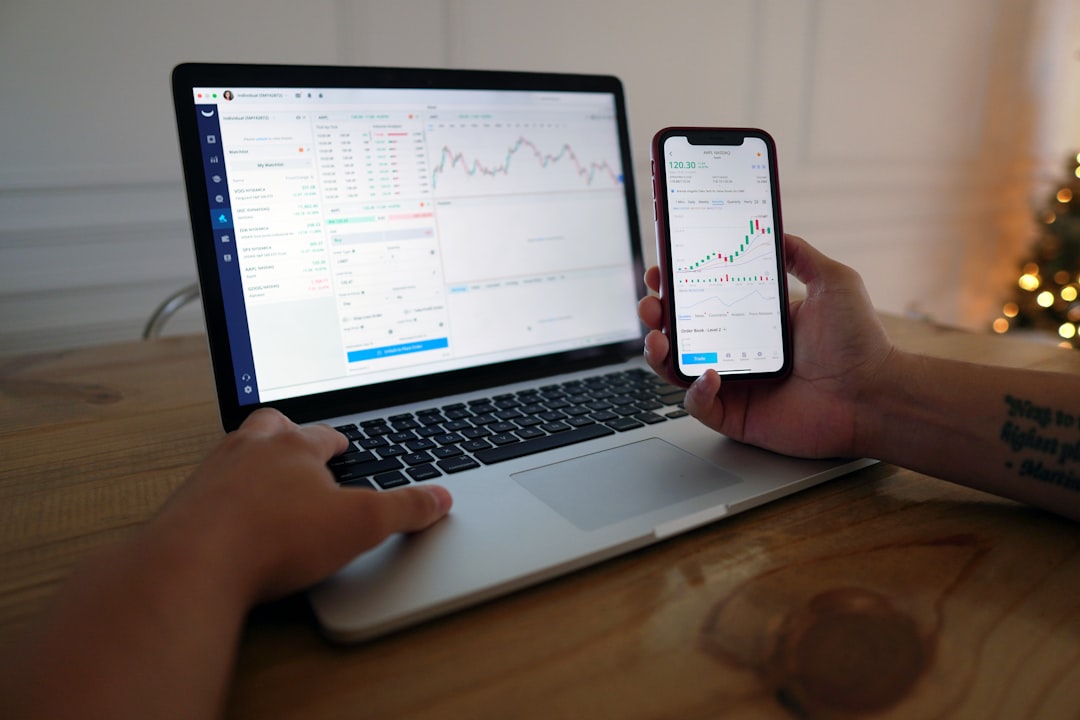
Have you ever felt caught between the rapid-fire decisions of day trading and the slow burn of long-term investing? Many aspiring traders find themselves in this exact dilemma, searching for a strategy that offers both flexibility and the potential for significant returns without requiring constant screen time. That’s where swing trading comes in! It’s a fascinating approach that aims to capture market “swings” over days or weeks, making it an appealing option for those who want to actively participate in the market without making it a full-time job. Ready to explore how you can harness these market movements in 2026? Let’s dive in! 😊
What Exactly is Swing Trading? 🤔
Swing trading is an active trading strategy where traders aim to profit from short-to-medium term price movements, typically holding positions for a few days to several weeks. Unlike day traders who open and close positions within the same trading session, swing traders seek to capture a “swing” or a portion of a broader price move, making it a middle-ground strategy between day trading and long-term investing. This approach allows traders to capitalize on the natural ebb and flow of stock prices, riding momentum while trying to minimize exposure to daily market noise.
The core premise is that prices move in peaks and troughs rather than a straight line. By identifying these movements, swing traders attempt to predict whether an asset’s value is likely to rise or fall next, then take a position accordingly. This often involves a strong reliance on technical analysis to identify potential entry and exit points, as well as managing risk effectively.

Swing trading can be executed in almost any financial market, including stocks, ETFs, and even forex. It’s particularly appealing for those who cannot monitor the market constantly but still want to benefit from price movements.
Why Swing Trading is Relevant in 2026 📊
The market landscape in 2026 continues to evolve, making adaptive strategies like swing trading particularly relevant. According to Morningstar Indexes, stock market volatility in 2026 has been “average” by historical standards, measuring 15% on an annualized basis through April 10. However, this “average” is often skewed by extremes, and recent geopolitical conflicts, inflation spikes, and energy price surges have led to elevated implied volatility, even if realized volatility has remained somewhat contained. This dynamic environment creates ample opportunities for swing traders who thrive on price fluctuations.
Furthermore, market sentiment is heavily influenced by factors like AI investment, which is expected to drive approximately 40% of S&P 500 earnings-per-share growth this year, with major cloud infrastructure companies planning significant spending in 2026. This creates fast-moving sector rotations and thematic trends that swing traders can leverage.
Swing Trading vs. Day Trading: A Quick Comparison
| Category | Swing Trading | Day Trading | Key Difference |
|---|---|---|---|
| Holding Period | Days to several weeks | Within a single trading day | Overnight exposure |
| Time Commitment | Less constant monitoring | Constant monitoring required | Flexibility vs. intensity |
| Risk Exposure | Overnight gaps, less intraday volatility | High intraday volatility | Market gaps vs. intraday fluctuations |
| Primary Analysis | Mainly technical, some fundamental | Primarily technical | Broader context vs. pure price action |
While swing trading offers flexibility, holding positions overnight exposes you to “gaps” caused by news or events that occur when the market is closed. Always have a robust risk management plan, including stop-loss orders, to mitigate potential losses.
Key Checkpoints: Remember These Essentials! 📌
You’ve made it this far! With a lot of information to absorb, it’s easy to forget the crucial details. Let’s recap the most important takeaways. Keep these three points in mind as you consider swing trading.
-
✅
Swing Trading is Mid-Term:
It’s about capturing price movements over days to weeks, not hours or years, offering a balance between active trading and longer-term investing. -
✅
Technical Analysis is Your Compass:
Chart patterns and indicators are crucial for identifying entry and exit points. Think Moving Averages, RSI, and MACD. -
✅
Risk Management is Non-Negotiable:
Always define your risk tolerance, set stop-loss orders, and consider using a demo account before trading with real capital.
Essential Technical Indicators for Swing Traders 👩💼👨💻
Successful swing trading heavily relies on technical analysis to spot patterns and predict price movements. While many indicators exist, some are particularly effective for identifying trends, momentum, and potential reversal points in 2026. Combining a few well-understood indicators can provide a clearer picture without leading to “analysis paralysis”.
- Moving Averages (MA): These smooth out price data to identify trends and potential reversals. Both Simple Moving Averages (SMA) and Exponential Moving Averages (EMA) are popular. EMAs are more sensitive to recent prices. A common strategy involves looking for crossovers between short-term and long-term MAs.
- Relative Strength Index (RSI): A momentum oscillator that measures the speed and change of price movements, ranging from 0 to 100. It helps identify overbought (typically above 70) or oversold (typically below 30) conditions.
- MACD (Moving Average Convergence Divergence): This trend-following momentum indicator shows the relationship between two moving averages of a stock’s price. It consists of the MACD line, a signal line, and a histogram, generating buy or sell signals.
- Bollinger Bands: These consist of a middle band (usually a 20-period SMA) and two outer bands, which are standard deviations from the middle band. They measure volatility and can indicate potential reversal points when prices touch the bands.
- Fibonacci Retracement: This tool helps identify potential support and resistance levels based on Fibonacci ratios (e.g., 38.2%, 50%, 61.8%). Traders often look for price pullbacks to these levels as potential entry points.
- Stock: TechGrowth Inc. (TGI)
- Market Condition (Early May 2026): TGI is in a strong uptrend on its weekly chart and trading above its 200 EMA on the daily chart. The overall market sentiment for tech stocks is positive due to continued AI investment.
- Entry Signal Observed: Price pulled back to within 2% of its 20-day EMA. The RSI is between 40-55, and volume on the pullback is below the 20-day average. A bullish reversal candle has formed right at the 20 EMA.
While these indicators are powerful, remember that signals can sometimes be false or lagging. Always use them in conjunction with other analysis and market context. In 2026, understanding volatility regimes and sector flows is more crucial than ever.
Practical Example: Applying the 20 EMA Mean Reversion Strategy 📚
Let’s walk through a simplified example of a popular swing trading strategy: the Mean Reversion to the 20 EMA (Exponential Moving Average). This strategy is considered reliable in trending markets, particularly for stocks in a clear uptrend on a weekly chart.
Scenario: “TechGrowth Inc.” Stock Analysis
Trading Steps
1) Entry: Enter a long position at the close of the reversal candle, or upon the break of the candle’s high the next day.
2) Stop-Loss: Place a stop-loss order below the low of the reversal candle, or 1.5% below the 20 EMA, whichever is smaller. This protects capital if the trend doesn’t resume.
3) Target: Set the first profit target at the most recent swing high. Consider trailing your stop to breakeven after this target is hit.
Potential Outcome
– Result: If TGI respects the 20 EMA and continues its uptrend, the trade could capture a significant portion of the swing up to the previous high, potentially lasting 3-5 days.
– Risk Management: The predefined stop-loss limits potential losses if TGI breaks below the 20 EMA, signaling a failure of the mean reversion.
This example highlights the importance of having clear entry, exit, and risk management rules before entering a trade. Always backtest your strategies and consider using a demo account to practice before deploying real capital.
Wrapping Up: Your Path to Smarter Trading 📝
Swing trading offers a compelling path for individuals seeking to profit from market movements without the intensity of day trading or the long-term commitment of traditional investing. In 2026’s dynamic markets, understanding technical analysis, leveraging key indicators, and diligently applying risk management are paramount to success. Remember, consistency in practice and a disciplined mindset are far more valuable than chasing quick riches.
As you embark on or refine your swing trading journey, focus on continuous learning and adapting your strategies to evolving market conditions. The market is always changing, and so should your approach. Do you have any favorite swing trading indicators or strategies you’ve found success with? Share your thoughts and questions in the comments below – I’d love to hear from you! 😊