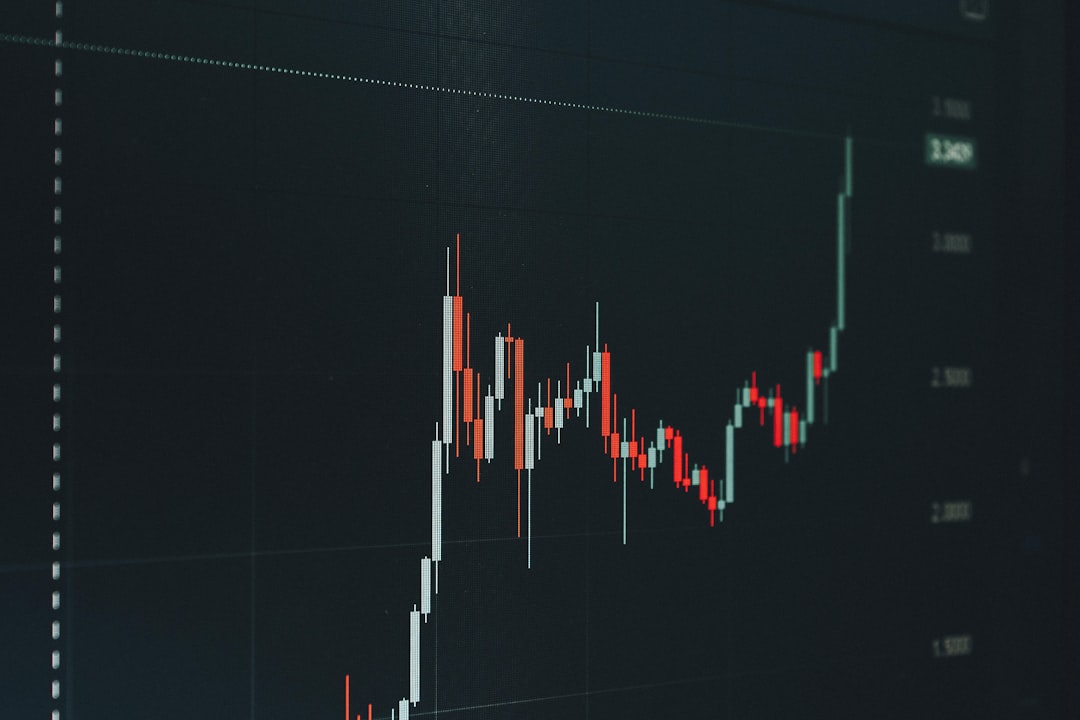
Have you ever felt overwhelmed by the relentless pace of day trading, or perhaps a bit impatient with the slow grind of long-term investing? If so, you’re definitely not alone! Many traders find themselves somewhere in the middle, looking for a strategy that offers a balance of active participation and manageable screen time. That’s exactly where FX swing trading comes in, and honestly, it’s a game-changer for many. It allows you to tap into the massive, ever-moving foreign exchange market without needing to be glued to your screen 24/7. Ready to explore how you can potentially unlock significant profit opportunities? Let’s dive in! 😊
What Exactly is FX Swing Trading? 🤔
At its core, FX swing trading is a strategy designed to capture short to medium-term price movements, or “swings,” within the foreign exchange market. Unlike day traders who open and close positions within a single day, swing traders typically hold their positions for several days to a few weeks. The goal is to profit from a portion of a larger price move, riding the momentum of a currency pair as it “swings” between higher highs and lower lows.
This approach is particularly appealing because it seeks to capitalize on the natural ebb and flow of market trends, giving trades more time to develop than the lightning-fast decisions required in day trading. It’s less stressful than scalping and often offers more opportunities than long-term position trading.
Swing trading targets price swings over hours, days, or weeks, focusing on support and resistance shifts rather than intraday volatility. It’s about identifying momentum and capitalizing on the “mini trends” that occur within broader market moves.
The Allure of Swing Trading: Market Trends & Statistics 📊
The foreign exchange market remains the largest and most liquid financial market globally. In April 2025, the average daily turnover in FX markets reached an astounding $9.6 trillion, a 28% increase from 2022. This massive volume provides ample opportunities for strategies like swing trading to thrive. The global foreign exchange market is projected to grow at a CAGR of 6.31% from 2026-2034, reaching $1.59 trillion by 2034.
While specific profitability statistics for swing trading are often debated and highly dependent on individual trader skill and strategy, research suggests that momentum effects, which swing trading capitalizes on, do exist in financial markets. However, it’s crucial to understand that profitability is not guaranteed and requires a robust framework.
Forex Market Snapshot (April 2025 Data)
| Metric | Value | Change from 2022 | Key Insight |
|---|---|---|---|
| Average Daily Turnover | $9.6 trillion | +28% | Market liquidity continues to grow significantly. |
| Most Traded Currency | USD (89% of trades) | Stable | USD remains the dominant global reserve currency. |
| Retail FX Turnover Share | 2.5% | -3.5 percentage points | Retail share decreased as institutional flows grew faster. |
| Fastest Growing EM Currency | Chinese Renminbi | +56% (3 years to April 2025) | Emerging market currencies are gaining significant traction. |
Reports indicate that 74% to 89% of retail investor accounts lose money in FX trading. This underscores the critical importance of effective risk management and a well-defined trading strategy.
Key Checkpoints: Don’t Forget These Essentials! 📌
You’ve made it this far, and I appreciate your dedication! With all this information, it’s easy to forget the really crucial stuff. So, let me quickly recap the three absolute must-remembers from our discussion so far. Seriously, burn these into your memory!
-
✅
Understand the “Swing”
FX swing trading is about capturing multi-day to multi-week price movements, not intraday noise. It’s a calmer approach than day trading. -
✅
Market is Dynamic
The FX market is huge and growing, offering opportunities, but it also demands respect for its inherent risks. -
✅
Risk Management is Non-Negotiable
Given the high percentage of retail traders who lose money, a solid risk management plan is your absolute bedrock for survival and success.
Building Your FX Swing Trading Strategy 👩💼👨💻
A profitable FX swing trading strategy hinges on several key components: trend identification, using the right technical indicators, and rigorous risk management. Combining different types of indicators is often more effective than relying on a single one.
Essential Technical Indicators for Swing Trading
Swing traders use various technical analysis tools to spot opportunities. Here are some of the most popular and effective ones as of 2026:
- Moving Averages (MA): Both Simple Moving Averages (SMA) and Exponential Moving Averages (EMA) are crucial for identifying trend direction and smoothing out price fluctuations. The 20-period and 50-period MAs are commonly used.
- Relative Strength Index (RSI): This momentum oscillator helps determine if a currency pair is overbought or oversold, signaling potential reversals. An RSI above 70 often indicates overbought conditions, while below 30 suggests oversold.
- MACD (Moving Average Convergence Divergence): MACD reveals changes in the strength, direction, momentum, and duration of a trend. It’s great for confirming trend changes.
- Bollinger Bands: These bands measure volatility and can help identify overbought/oversold conditions and potential price reversals.
- Fibonacci Retracement: Used to identify potential support and resistance levels where price might retrace before continuing its trend. The 50% and 61.8% levels are particularly watched.
Robust Risk Management is Paramount
Risk management is the backbone of long-term trading success. Without it, even the best strategies can lead to significant losses. Here’s what you need to focus on:
- Risk Per Trade: Never risk more than 1-2% of your total trading capital on a single trade. This is a golden rule for preserving capital.
- Stop-Loss Orders: Always use stop-loss orders to automatically close a trade if the price moves against your position beyond a predetermined level. This limits potential losses and removes emotional decision-making.
- Take-Profit Orders: Define your profit targets and use take-profit orders to lock in gains when the price reaches your desired level.
- Risk-to-Reward Ratio: Aim for a favorable risk-to-reward ratio, typically 1:2 or 1:3, meaning your potential profit is at least twice or thrice your potential loss.
- Position Sizing: Calculate your position size correctly based on your risk per trade and stop-loss distance. This ensures consistent risk management.
- Avoid Overleveraging: While leverage can magnify gains, it can also amplify losses. Use it wisely and cautiously, especially as a beginner.
Many successful swing traders spend 30 to 60 minutes a day on analysis, then set their entries, stops, and targets, allowing trades to develop over days without constant monitoring.

Real-World Example: A Hypothetical Swing Trade 📚
Let’s walk through a simplified hypothetical scenario to illustrate how a swing trade might play out in the FX market. Imagine we’re looking at the EUR/USD currency pair.
Trader Sarah’s Situation
- Account Size: $10,000
- Risk Per Trade: 1% ($100)
- Observed Pattern: EUR/USD on a daily chart has been in an uptrend, but recently pulled back to a key support level that aligns with the 50-period EMA. The RSI is also showing signs of turning up from oversold territory (around 35).
Execution Process
1) Entry Signal: Sarah sees a strong bullish candlestick pattern forming at the 50-period EMA support, confirmed by the RSI turning upwards. She decides to enter a long (buy) position on EUR/USD at 1.0850.
2) Stop-Loss Placement: To manage risk, Sarah places her stop-loss order below the recent swing low and the 50-period EMA, at 1.0800. This means a 50-pip risk.
3) Position Sizing: With a $100 risk and a 50-pip stop-loss, Sarah calculates her position size to be 0.2 standard lots (or 2 mini lots). (If 1 pip for a standard lot is $10, then 50 pips x $10/lot = $500 risk. To risk $100, she trades $100/$500 = 0.2 lots).
4) Take-Profit Target: Based on previous resistance levels and a 1:2 risk-to-reward ratio, Sarah sets her take-profit target at 1.0950 (100 pips profit).
Potential Outcome
– If trade goes as planned: EUR/USD rallies over the next few days, hitting 1.0950. Sarah’s profit would be 100 pips x $10/pip (for 0.2 lots, assuming $2/pip) = $200 (2% of her account).
– If trade goes against plan: EUR/USD falls to 1.0800, triggering her stop-loss. Sarah’s loss would be $100 (1% of her account), as planned.
This example illustrates the structured approach of swing trading, where entry, exit, and risk are defined before the trade is even placed. This discipline is absolutely vital for long-term success in the volatile FX market.
Wrapping Up: Your Path to Smarter FX Trading 📝
So, there you have it! FX swing trading offers a compelling middle ground for those looking to engage with the forex market without the constant pressure of day trading. By understanding market dynamics, utilizing robust technical indicators, and rigorously applying risk management principles, you can develop a strategic approach to potentially profitable trading.
Remember, the key to success isn’t just about finding the “perfect” strategy, but about developing a disciplined approach that suits your trading style and risk tolerance. The forex market is dynamic, but with the right tools and mindset, you can navigate its swings effectively. Got any questions or perhaps a swing trading tip of your own? Drop a comment below! We’d love to hear from you. 😊
FX Swing Trading Essentials
Frequently Asked Questions ❓
Copyright © 2025 QHost365.com ®