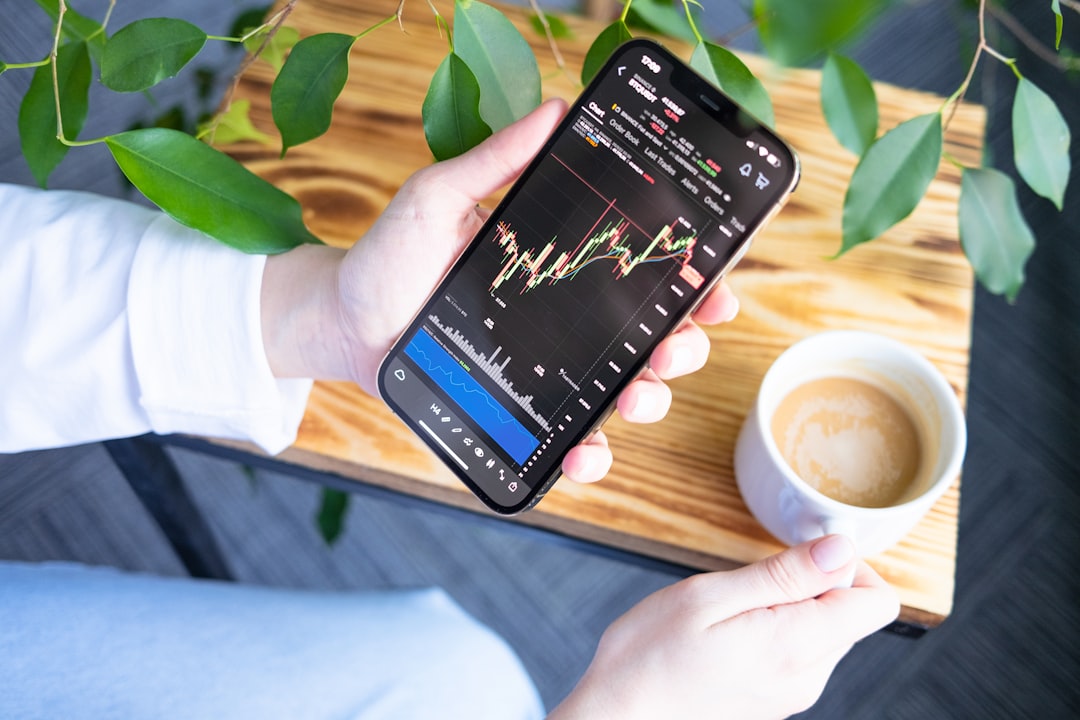
Have you ever felt caught between the slow burn of long-term investing and the high-octane pressure of day trading? It’s a common dilemma for many aspiring traders. We all want to grow our wealth, but finding the right strategy that fits our lifestyle and risk tolerance can be a real challenge. That’s where swing trading comes into play, offering a compelling middle ground. It’s a strategy designed to capture gains over several days to weeks, perfect for those who want to actively participate in the market without being glued to their screens 24/7. Ready to dive in and see how it works? Let’s explore! 😊
What Exactly is Swing Trading? 🤔
At its core, swing trading is a strategy where traders aim to profit from “swings” in stock prices. Unlike day traders who open and close positions within a single day, swing traders hold their positions for a few days to several weeks. This allows them to capitalize on short-to-medium term price movements, making it a less time-intensive approach than day trading but more active than traditional long-term investing.
It’s about identifying potential price trends and momentum, then entering a trade at the beginning of a swing and exiting before it reverses. This method requires a clear understanding of market dynamics, price trends, and patterns. If you can’t constantly monitor the market but still want to benefit from price fluctuations, swing trading could be an excellent fit for your financial goals.
Swing trading can be applied across various marketable securities, including stocks, ETFs, forex, futures, and options, offering incredible flexibility for traders.
Why Swing Trade in 2026? Market Trends & Opportunities 📊
The year 2026 has presented a fascinating landscape for the stock market, marked by continued volatility driven by factors like geopolitical conflicts, inflation concerns, and the transformative impact of AI. While overall market volatility might hover around historical averages, there have been significant daily price movements and periods of elevated implied volatility. This dynamic environment, often seen as a challenge by long-term investors, can actually create fertile ground for swing traders looking to capture these short-term price fluctuations.
Furthermore, the integration of Artificial Intelligence (AI) into trading tools has become a game-changer. In 2026, AI is not just a buzzword; it’s actively reshaping how traders analyze markets, identify opportunities, and manage their strategies. Platforms like Trade Ideas, TrendSpider, and Tickeron are leveraging AI for advanced market scanning, automated technical analysis, pattern recognition, and even generating real-time trade signals. This technological edge allows swing traders to make more structured and efficient decisions, potentially improving their success rates.
Key Indicators for Swing Trading in 2026
| Indicator | Description | Application in Swing Trading | 2026 Relevance |
|---|---|---|---|
| Moving Averages (MA) | Smooths price data to identify trends. | Identifies trend direction and dynamic support/resistance levels. A 50-period MA is popular. | Remains a fundamental tool for trend identification in volatile markets. |
| Relative Strength Index (RSI) | Measures the speed and change of price movements. | Spots overbought (>70) or oversold (<30) conditions, signaling potential reversals. | Crucial for identifying momentum shifts in fast-moving stocks. |
| MACD (Moving Average Convergence Divergence) | Shows the relationship between two moving averages of a stock’s price. | Generates buy/sell signals and confirms trend strength or reversals. | Considered a vital indicator for determining bullish/bearish outcomes. |
| Fibonacci Retracement | Horizontal lines indicating potential support and resistance levels. | Helps identify potential reversal zones for entry and exit points. | Essential for price action traders to determine market structure. |
| Williams %R | A momentum indicator measuring overbought and oversold levels. | Identified as highly effective for stable and solid swing trading results. | Outperformed other indicators in terms of risk-adjusted returns in recent studies. |
While AI tools offer significant advantages, they cannot guarantee profits and remain subject to market risk. The most effective approach often combines AI-powered insights with human judgment and robust risk management.
Key Checkpoints: Remember These Essentials! 📌
You’ve come this far, which means you’re serious about mastering swing trading! It’s easy to get lost in the details, so let’s quickly recap the absolute essentials. These three points are crucial for your success:
-
✅
Develop a Solid Trading Plan & Stick to It!
Before every trade, define your entry, exit (profit target), and stop-loss levels. This pre-planning is vital for discipline and risk management. -
✅
Master Risk Management: Protect Your Capital First!
Always use stop-loss orders to limit potential losses. Position sizing is equally important; never risk more than a small percentage of your portfolio on a single trade. -
✅
Embrace Continuous Learning & Practice!
Swing trading success isn’t built overnight. Invest in ongoing education, utilize paper trading to practice strategies without real money, and refine your approach constantly.
Beyond the Basics: Advanced Considerations 👩💼👨💻
While the core principles of swing trading remain constant, successful traders in 2026 are looking at advanced techniques and tools. Combining multiple indicators can provide stronger signals and filter out false entries. For instance, pairing a Moving Average with the Relative Strength Index (MA + RSI) can help confirm trends and momentum.
Furthermore, understanding market structure and anticipating potential reversals is key. Indicators like the Zig Zag can help determine swing highs and lows, especially when combined with price action analysis. The ability to adapt your strategy to the current volatility regime and continuously tune your framework is what truly sets profitable traders apart.
AI-powered platforms like TrendSpider can automate multi-timeframe analysis and trendline detection, saving you valuable time and helping you maintain a structured approach to technical analysis.
Practical Example: A Hypothetical Swing Trade 📚
Let’s walk through a simplified hypothetical example to illustrate how a swing trade might unfold. Imagine it’s June 2026, and you’ve identified “TechCorp (TCORP)” as a potential swing trade candidate using your AI scanner and technical analysis.
Trader’s Situation
- Observation: TCORP has pulled back to its 50-day moving average (a strong support level) after a recent uptrend. The RSI is showing an oversold condition, indicating potential for a bounce.
- Entry Point: $100 per share (just as the price starts to rebound from the 50-day MA).
- Stop-Loss: $97 per share (below a recent swing low, limiting potential loss to 3%).
- Profit Target: $108 per share (at a previous resistance level, aiming for an 8% gain).
Trading Process (Hypothetical)
1) **Entry:** You buy 100 shares of TCORP at $100 per share, totaling $10,000 investment. You immediately place a stop-loss order at $97 and a take-profit order at $108.
2) **Monitoring:** Over the next few days, TCORP’s price rises, confirming your analysis. You monitor the volume and other indicators to ensure the uptrend remains strong.
3) **Exit:** After 5 days, TCORP reaches $108 per share, and your take-profit order is executed.
Final Result
– **Total Revenue:** 100 shares * $108 = $10,800
– **Initial Investment:** $10,000
– **Gross Profit:** $800 (8% return)
This example highlights the systematic approach of swing trading: identifying opportunities, defining risk, and setting clear profit targets. While not every trade will be a winner, adhering to a disciplined plan significantly increases your chances of consistent profitability.
Wrapping Up: Your Path to Trading Success 📝
Swing trading, especially in the dynamic markets of 2026, offers a powerful way to generate profits by leveraging short-to-medium term price movements. With the increasing sophistication of AI-powered trading tools and a clear understanding of technical indicators, retail traders have more resources than ever to make informed decisions. Remember, success in trading isn’t about constant wins, but about consistent discipline, rigorous risk management, and an unwavering commitment to continuous learning.
Don’t let the fear of volatility deter you. Instead, embrace it as an opportunity. Start with a solid plan, practice with paper trading, and gradually implement your strategies. The journey of a profitable swing trader is one of continuous adaptation and refinement. What are your biggest questions about swing trading? Let me know in the comments below! 😊
Swing Trading Essentials: Your Quick Guide
Frequently Asked Questions ❓
Copyright © 2025 QHost365.com ®