
Have you ever felt caught between the fast-paced world of day trading and the slow burn of long-term investing? Many traders find themselves in this exact spot, yearning for a strategy that offers both active engagement and a bit more breathing room. That’s where swing trading comes in! It’s a fantastic middle-ground, allowing you to capitalize on market “swings” over days or weeks, rather than hours. With market volatility being a significant factor in early 2026, understanding how to navigate these movements is more crucial than ever. Let’s dive into how you can make swing trading a profitable part of your investment journey! 😊
What Exactly is Swing Trading? 🤔
At its core, swing trading is a strategy designed to capture short- to medium-term gains in a financial instrument by holding positions for a few days to several weeks. Unlike day traders who open and close positions within a single trading day, swing traders aim to profit from price “swings” or fluctuations within a larger trend. This approach allows for less constant market monitoring compared to day trading, making it appealing to those with full-time jobs or other commitments.
In fact, recent statistics from January 2026 show that swing trading is the preferred style for 43.3% of traders, significantly more than day trading at 28.3%. This popularity stems from its ability to offer a more relaxed trading experience with more rule-based and structured decision-making.
Swing trading typically involves analyzing daily or 4-hour charts, focusing on technical signals and chart patterns to identify potential entry and exit points. This contrasts with the minute-by-minute analysis often seen in day trading.
Key Indicators and Tools for Swing Traders 📊
Successful swing trading heavily relies on technical analysis to identify trends, momentum, and potential reversal points. In 2026, several indicators remain crucial for making informed decisions. These tools help filter out market noise and provide clearer signals.
One of the most fundamental tools is the Moving Average (MA), which smooths out price data to identify trends. Swing traders often use 20-day or 50-day moving averages to identify the trend, and a 200-period moving average for a broader market perspective. Another popular choice is the Relative Strength Index (RSI), a momentum oscillator that measures the speed and change of price movements, signaling overbought or oversold conditions.
Common Swing Trading Indicators (2026)
| Indicator | Purpose | Key Use in Swing Trading |
|---|---|---|
| Moving Averages (MA) | Identifies trend direction and potential support/resistance. | Confirms overall market direction; entry/exit signals from crossovers. |
| Relative Strength Index (RSI) | Measures momentum, identifies overbought/oversold conditions. | Spots potential short-term reversals; helps with timing entries. |
| MACD (Moving Average Convergence Divergence) | Shows the relationship between two moving averages, identifying trend strength and momentum. | Confirms trend direction and potential reversal points. |
| Bollinger Bands | Measures market volatility and identifies potential overbought/oversold levels relative to a moving average. | Helps anticipate sharp price movements after periods of consolidation. |
While indicators are powerful, no single indicator is foolproof. Always use a combination of tools and confirm signals across multiple timeframes to avoid false positives. Backtesting your strategies is also crucial.
Key Checkpoints: Remember These Essentials! 📌
You’ve made it this far! With so much information, it’s easy to forget the core principles. Let’s quickly recap the most important takeaways from our discussion on swing trading. Keep these three points in mind:
-
✅
Swing Trading is a Balanced Approach
It offers a middle ground between day trading and long-term investing, allowing for active participation without constant screen monitoring. -
✅
Technical Indicators are Your Allies
Moving Averages, RSI, and MACD are powerful tools for identifying trends and potential reversals. -
✅
Discipline and Backtesting are Non-Negotiable
Consistently reviewing your trades and verifying strategies with historical data is key to long-term success.
Risk Management: The Foundation of Sustainable Swing Trading 👩💼👨💻
No matter how promising a trade looks, effective risk management is the absolute cornerstone of successful swing trading. Without it, you risk losing your capital, especially in today’s fast-moving and volatile markets. It’s not just about finding lucrative opportunities; it’s about protecting your capital.
Key practices include always using stop-loss orders to automatically exit a position if the price moves against you, limiting potential losses. Position sizing is equally vital, where you limit the risk per trade by allocating a predetermined percentage of your capital. A common guideline is the “1%-2% rule,” meaning you shouldn’t risk more than 1-2% of your total trading capital on any single trade. As of January 2026, position sizing is the most popular risk management tool among traders (43.1%), followed by stop-loss orders (27.5%).
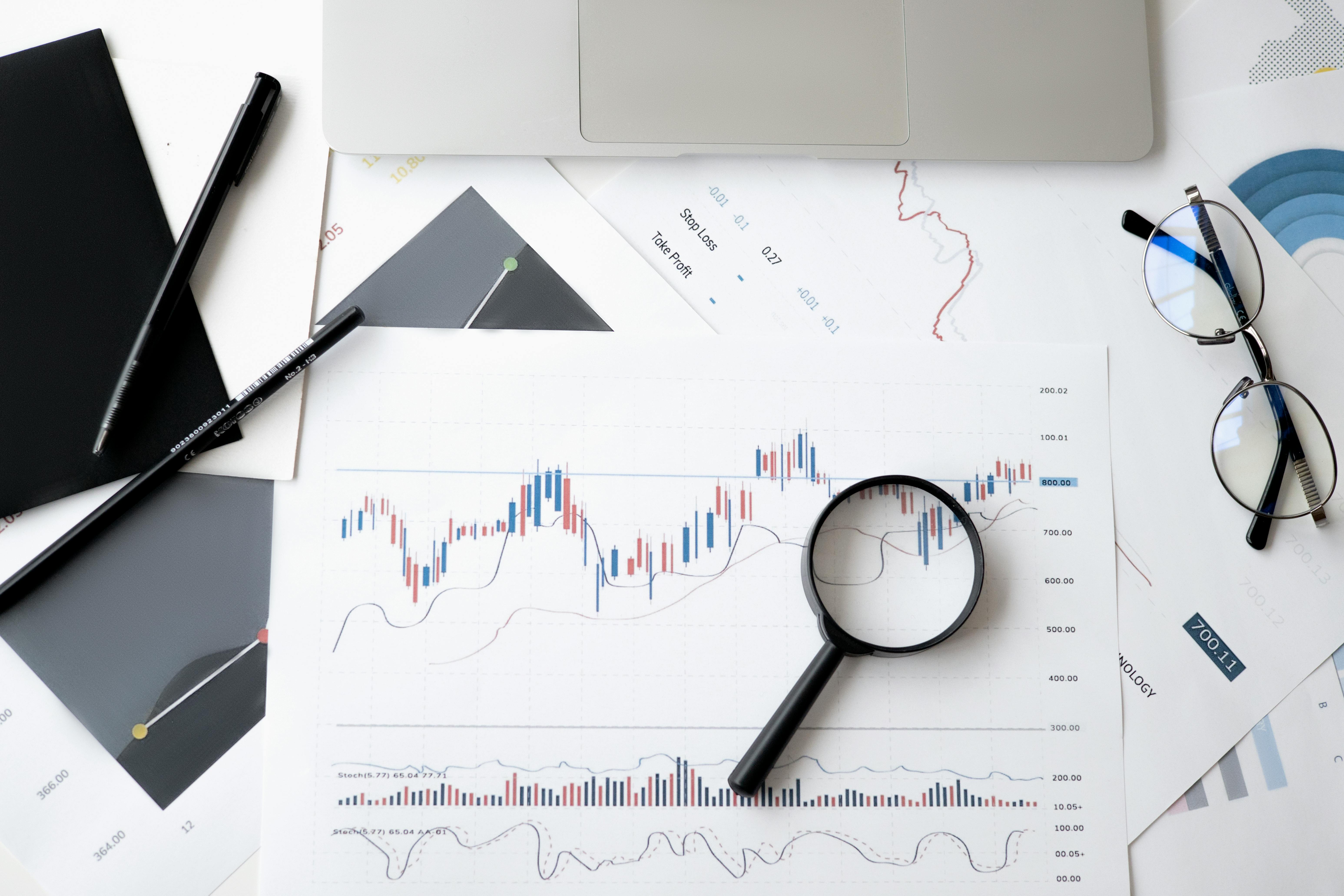
Always define your risk-reward ratio before entering a trade. Aim for trades where the potential profit significantly outweighs the potential risk (e.g., 1:2 or 1:3). This allows you to be profitable even if you have more losing trades than winning ones.
The Evolving Landscape: AI in Swing Trading 📚
The trading world is constantly evolving, and 2026 is seeing a significant rise in the adoption of Artificial Intelligence (AI) tools to enhance decision-making. AI trading tools are transforming how traders analyze markets, detect opportunities, and manage risk, offering a powerful edge in a competitive environment. These tools process vast amounts of real-time data much faster than humans, helping traders respond quickly and objectively.
Platforms like Tickeron use AI for real-time pattern recognition and trade signals, even offering “AI Robots” with audited track records. TrendSpider automates tedious technical analysis, drawing trendlines and detecting patterns across multiple timeframes. Even comprehensive platforms like Intellectia.ai offer AI Stock Pickers and Swing Trading signals for mid-term investors. The ability of AI to filter through market “noise” makes it indispensable for swing traders in 2026.
Case Study: Leveraging AI for a Swing Trade
- **Scenario:** A swing trader, Sarah, uses an AI-powered scanner (e.g., Tickeron) to identify stocks showing a strong bullish “flag” pattern on a 4-hour chart, indicating potential continuation after a brief consolidation. The AI assigns a high confidence level to the pattern.
- **Information:** The stock, “Tech Innovations Inc. (TII),” is in an overall uptrend, trading above its 50-day and 200-day moving averages. The RSI is pulling back from overbought territory but remains above 50, suggesting healthy momentum.
Execution Process
1) **Entry:** Sarah enters a long position as TII breaks above the upper trendline of the flag pattern, confirmed by increased volume, as alerted by her AI tool. She sets her entry at $105.00.
2) **Stop-Loss:** Based on the 1% rule of her $50,000 capital, she risks $500. Her stop-loss is placed below the low of the flag pattern at $100.00, risking $5 per share. This means she buys 100 shares ($500 / $5).
3) **Take-Profit:** Aiming for a 1:2 risk-reward ratio, her target profit is $10 per share, setting a take-profit order at $115.00.
Final Result
– **Outcome:** Over the next week, TII continues its upward trajectory, hitting Sarah’s take-profit target. She exits the trade at $115.00.
– **Profit:** Sarah realizes a profit of $1,000 (100 shares * $10 profit/share), successfully achieving her 1:2 risk-reward target.
This example illustrates how combining robust technical analysis with modern AI tools and strict risk management can lead to successful swing trades. The AI helps in identifying high-probability setups, while the trader’s discipline ensures capital protection and profit realization.
Wrapping Up: Your Path to Swing Trading Success 📝
Swing trading offers a compelling path for those looking to actively participate in the stock market without the intense demands of day trading. By understanding its core principles, mastering key technical indicators, and rigorously applying risk management strategies, you can significantly increase your chances of success. The integration of AI tools in 2026 further empowers traders, providing advanced analytics and automation to refine their strategies.
Remember, consistency comes from review, not from adding more indicators. Always journal your trades, learn from both your wins and losses, and adapt your approach to the ever-changing market environment. The journey to becoming a profitable swing trader is one of continuous learning and disciplined execution. What are your thoughts on swing trading in today’s market? Share your insights or ask any questions in the comments below! 😊